



After its Christmas break concludes, Congress is set to return in January with a host of unfinished business that could shape the political terrain of 2026.
A short-term funding bill that ended the historic government shutdown in November expires on Jan. 30. Legislators have yet to implement healthcare reform following a new public focus on affordability in a GOP-controlled Congress bracing for the 2026 midterm elections.
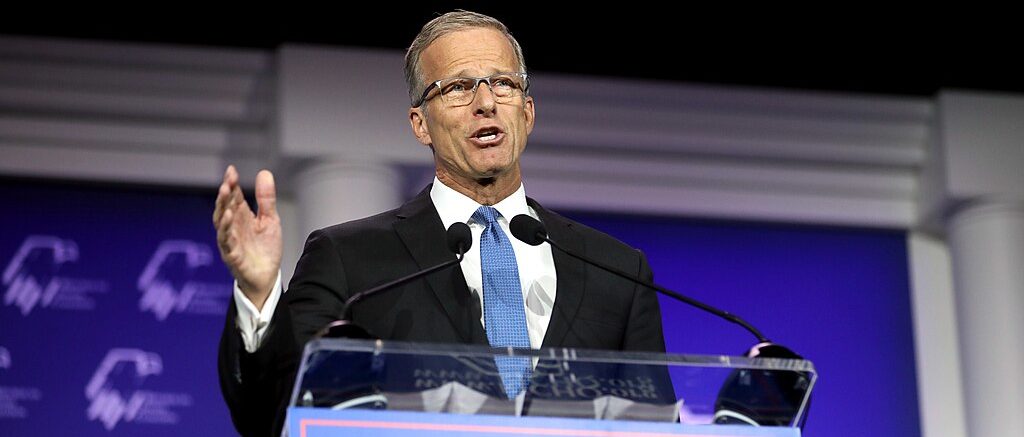
“When I became the majority leader, I made it very clear that I was committed to funding the government through the regular order of consideration of appropriations bills, not through an omnibus or long-term [continuing resolution], oftentimes written behind closed doors,” Senate Majority Leader John Thune said in his session-closing remarks on the Senate floor on Dec. 18. “The regular order process gives senators from both parties the fullest chance to make their voices and the voices of their constituents heard. Which is why I’m disappointed that we’ll not be moving to our second package of appropriations bills tonight. Republicans were ready to go. But, unfortunately, my Democrat colleagues are not there yet. Hopefully, they will get there.”
The Senate, facing a Jan. 30 funding deadline, is preparing a package of five funding bills that would bring Congress closer to completing its annual budget process.
This package was the subject of much negotiation prior to the Senate’s Dec. 18 departure. That week, Democrats were calling for votes on dozens of amendments, a list had been negotiated down to a set of 15 amendments by the close of Congressional business, according to reporting from The Hill.
After the Senate approves the package, it will be sent to the House, and if the lower chamber passes it, the measure will then go to President Donald Trump’s desk for approval. This will leave only a handful of departments remaining to be funded before Jan. 30. These bills, or another stopgap spending bill, must be passed within 24 days — and even fewer legislative days — to avoid another government shutdown.
“Democrats want to get our work done to finish the bipartisan appropriations process. Our goal is a bipartisan bill that funds the government through fiscal year 2026,” Senate Minority Leader Chuck Schumer said on the upper chamber’s floor on Dec. 18. “It will still take some time for us to work through our amendments so that we can finish the minibus in January … It’s not easy. Obstacles always remain. No side is going to get everything they want.”
The appropriations process has highlighted a central issue in the current Congress — healthcare reform. On Nov. 12, Trump signed a short term funding package approved by both chambers of Congress to reopen the government. A standoff over the issue of enhanced Obamacare tax credits set to expire on Dec. 31 sparked the 43-day shutdown, the longest in U.S. history — with Democrats voting 14 consecutive times to prolong it.
The House passed a reform plan introduced by Republican Iowa Rep. Mariannette Miller-Meeks on Dec. 17. Miller-Meeks’ legislation, if approved by the Senate, would attempt to lower costs by expanding association health plans and targeting pharmacy benefit managers. The bill, which does not extend the tax credits, is the only legislation approved by either chamber of Congress addressing healthcare reform since the shutdown.
On the same day, a petition led by House Minority Leader Hakeem Jeffries secured a majority of signatures forcing a vote on a three-year extension of the enhanced Obamacare tax credits. This petition, though, had to “ripen” for seven legislative days, allowing Speaker Mike Johnson to delay the vote until returning for the new year.
In the Senate, a cascade of competing proposals circulated among the Republican conference throughout November and December. A single GOP proposal, a joint effort from Louisiana Sen. Bill Cassidy and Idaho Sen. Mike Crapo, was brought before the Senate on Dec. 11, the same day Democrats brought a three year Affordable Care Act (ACA) extension deal to the floor. Both proposals were shot down.
“Because of Republican total inaction on health care, huge damage has already been done, and nothing we do after January 1 can undo so much of that damage,” Schumer said on Dec. 18. “As I’ve said before, the toothpaste is out of the tube. However you want to say it, the point is this — because of Republicans, it is now impossible, sadly, to prevent people from having to pay hundreds, if not thousands more, on their premiums next year. It’s going to start January 1.”
“Even if we can figure out a way to stop the bleeding next year, that’s a very big if, Republicans are still in shambles and have no plan themselves,” Schumer said. “For too many people, it’s going to be too late, because Republicans chose to let these ACA tax credits expire. They had an easy opportunity to join us in our three-year clean extension of the ACA credits, and they refused.”
With a government funding deadline looming and health care premiums set to climb, both parties return to Washington in January knowing the next few weeks could shape not just federal policy, but the political battlefield of 2026.
All content created by the Daily Caller News Foundation, an independent and nonpartisan newswire service, is available without charge to any legitimate news publisher that can provide a large audience. All republished articles must include our logo, our reporter’s byline and their DCNF affiliation. For any questions about our guidelines or partnering with us, please contact [email protected].