



Have you ever wondered why cars are getting so expensive? Regulation. What about that ridiculous feature that turns your car off every time you come to a stop sign? Regulation. Or why it seems like invisible forces are pushing you toward an electric car? Again, regulation. Specifically, the Endangerment Finding, promulgated under the Obama Administration’s Environmental Protection Agency (EPA). If you drive a car, the EPA has likely made your buying experience more expensive and your driving experience less enjoyable.
These things could go away if the EPA’s recent action to rescind the Endangerment Finding withstands the lawsuits that were filed (a tactic happening all too often when President Donald Trump does something). Critics portray the move as an abandonment of environmental responsibility. But at its core, the rescission is not a scientific judgment. Rather, it is a legal judgment about who decides how the nation reacts to scientific issues such as climate change. Here, the changes were sweeping, so the EPA rightly corrected itself.
The 2009 Endangerment Finding transformed a section of the Clean Air Act so the EPA could authorize itself to regulate greenhouse gas emissions from new motor vehicles based on their supposed contribution to global climate change. The Obama EPA pointed to a provision of the Clean Air Act written in 1967, which gave the EPA authority over vehicle components that “cause or contribute to air pollution…reasonably anticipated to endanger public health or welfare.” For decades, that authority was used to combat local and regional air pollution problems such as smog and tailpipe emissions, not worldwide pollution. This makes sense, in that, these were concerns that society focused on in 1967.
Over 40 years later, the Obama EPA concluded that six greenhouse gases—never identified by Congress—qualified as “air pollutants” whose global atmospheric concentrations contributed to “climate change.” This was not a discussion in 1967, yet that EPA concluded that the statute authorized this shift anyway.
From that finding flowed an ever-expanding regulatory framework that drastically impacted automobile manufacturing and pushed toward mandating electric vehicles. It has influenced billions of dollars in investment decisions and consumer spending.
Since that time the Supreme Court has clarified important limits on federal agency authority. First, in 2022, the Court helped better define the major questions doctrine in West Virginia v. EPA. Now, when an agency claims the power to decide issues of vast economic and political significance, it must point to clear congressional authorization. Broad or ambiguous statutory language is not enough to support sweeping regulatory transformations. When the stakes are high, Congress must speak clearly.
In 2024, the Court overturned “Chevron deference” in Loper Bright Enterprises v. Raimondo. Agencies can no longer find ambiguous or vague statutes and bend them to serve their desired purposes. Courts are now instructed to determine the single best meaning of a statute using independent judgment. Agencies no longer receive automatic interpretive leeway to which courts must defer.
The EPA’s rescission reflects alignment with the current state of the law. The EPA now concludes that the best reading of the Clean Air Act focuses on pollutants that harm public health or welfare through their presence in ambient air, not on globally dispersed gases. This better aligns with Congress’ intentions.
The major questions doctrine reinforces the EPA’s conclusion. Regulating greenhouse gases as a central instrument of national climate policy has sweeping economic consequences. It affects the automotive industry, trade, energy infrastructure, consumer prices, and technological development. If Congress intends to assign that level of authority to an agency, it can do so expressly. Agencies may not “discover” transformative powers in decades-old statutory provisions.
The rescission therefore represents a return to first principles. Congress writes the laws. Agencies implement them within defined boundaries. Courts ensure that those boundaries are respected. This is exactly how the checks and balances system was designed: to prevent any branch of government from becoming too powerful.
The Supreme Court has already shown a willingness to wield the major questions doctrine to strike down policy objectives that have a major impact on the economy. It did so just days before the EPA’s rescission when it struck down President Donald Trump’s tariffs. Like tariffs, car regulations impact every American in significant ways.
Preserving democratic accountability and the separation of powers should not be controversial. By rescinding the Endangerment Finding, the EPA has signaled that enduring climate policy must rest on clear legislative authorization. That approach may frustrate some advocates, but it strengthens the rule of law that ultimately governs us all. In the meantime, your car buying experience may be more pleasant in the near future.
Curtis Schube is the Executive Director for the Council to Modernize Governance, a think tank committed to making the administration of government more efficient, representative, and restrained.
The views and opinions expressed in this commentary are those of the author and do not reflect the official position of the Daily Caller News Foundation.
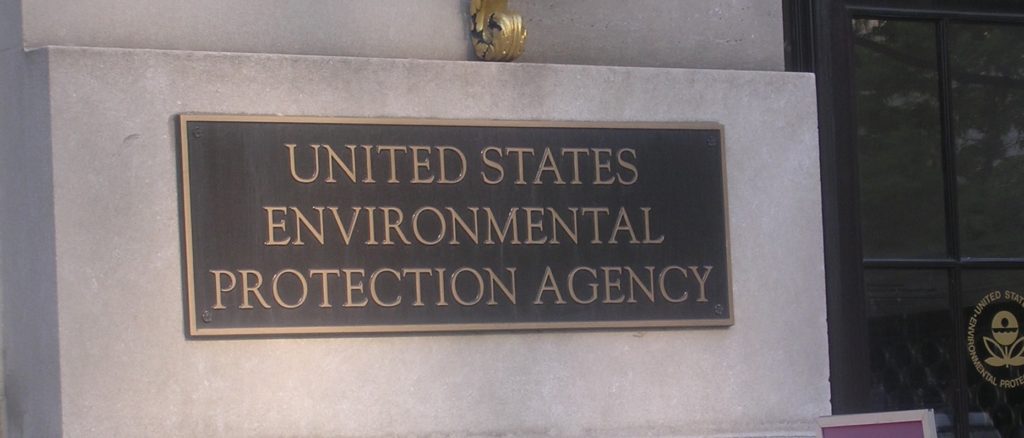
(Featured Image Media Credit: Environmental Protection Agency (EPA). Photo: mccready/Flickr)
All content created by the Daily Caller News Foundation, an independent and nonpartisan newswire service, is available without charge to any legitimate news publisher that can provide a large audience. All republished articles must include our logo, our reporter’s byline and their DCNF affiliation. For any questions about our guidelines or partnering with us, please contact [email protected].