



Recent developments in the Middle East, including U.S. military actions against Iranian targets and reported damage to key export infrastructure like Kharg Island, have once again drawn attention to the vulnerability of global energy supplies.
Iran’s threats to fire on tankers trying to transit the Strait of Hormuz have created an insurance crisis for shippers, forcing oil prices to rise. At the same time, Iranian attacks on Qatar’s LNG infrastructure led the world’s second largest exporter to suspend production.
A new analysis from Enverus Intelligence Research finds that these events introduce a significant risk premium to oil prices, with Brent crude potentially facing an additional $10 to $15 per barrel if disruptions escalate. The firm’s baseline forecast had Brent at around $63, but prolonged instability in the region could push prices higher as markets price in supply concerns. Given that the Brent price had already risen by more than $9/bbl as of Tuesday, this seems a conservative projection unless the situation is quickly resolved.
The Strait of Hormuz remains one of the world’s most critical chokepoints, with 20-22% of global crude supplies passing through it daily, alongside about 20% of the world’s liquefied natural gas (LNG). Any sustained closure or heightened threats in this narrow waterway could remove substantial volumes from the market. Enverus estimates that a one-month disruption alone might draw 400 million barrels from global inventories, enough to shift balances from modest surpluses toward tighter conditions and elevate prices into triple digits under severe scenarios.
Iran’s primary oil export terminal at Kharg Island, if offline for any extended period, could constrain up to 2 million barrels per day of shipments. Such an outcome would compound existing pressures on global oil markets, where OECD inventories currently sit above the five-year average but remain sensitive to sudden supply shocks.
The U.S. Strategic Petroleum Reserve, still replenishing after the Biden Administration’s politically motivated, massive drawdowns, offers limited immediate buffer compared to historical highs. As I wrote at the time in 2022, this was bad policy invoked for all the wrong reasons that would inevitably serve to diminish America’s energy security. Now, that day has arrived.
Enverus says natural gas markets face similar, parallel risks. Qatar’s decision on Monday to suspend its LNG exports will remove 10-11 billion cubic feet per day—about 20% of global LNG trade—from the market. This has already driven sharp increases in spot prices for the Japan-Korea Marker, and U.S. Henry Hub could see upward pressure as global buyers seek alternatives. For American producers, particularly in plays like the Haynesville, tighter international balances might eventually support higher domestic activity and rig counts.
These risks highlight broader questions about energy security and diversification. The U.S. LNG industry has rapidly grown to become the world’s leading LNG exporter since Cheniere Energy shipped its first cargo in February 2016, with export volumes growing dramatically under policies during both Trump presidencies that facilitated new approvals and infrastructure development.
The industry continued to expand even during the Biden years, despite their politically motivated year-long permitting pause and other obstructionist tactics. This expansion has provided reliable supplies to Europe and Asia, helping reduce dependence on more geopolitically volatile sources and contributing to energy price stability in key importing regions.
But policy debates persist. Lingering restrictions on new LNG export permits, rooted in environmental reviews imposed by past presidencies, continue to limit further growth despite demonstrated demand. Enverus notes that extended Hormuz disruptions would represent a meaningful macroeconomic shock, tightening energy balances and raising recession risks amid already elevated global uncertainties.
Renewable energy sources cannot rapidly offset large-scale conventional supply interruptions of this magnitude. The only sensible path forward lies in leveraging America’s abundant resources – through expanded production, exports, and infrastructure – to enhance global resilience and fortify America’s energy security.
In a world where geopolitical flashpoints can quickly translate into market volatility, policies that enable U.S. energy to serve as a stabilizing force offer clear advantages. The current situation serves as a reminder that U.S. energy security remains intertwined with strategic decision-making, both at home and abroad.
Energy policy matters, for better or worse.
David Blackmon is an energy writer and consultant based in Texas. He spent 40 years in the oil and gas business, where he specialized in public policy and communications.
The views and opinions expressed in this commentary are those of the author and do not reflect the official position of the Daily Caller News Foundation.
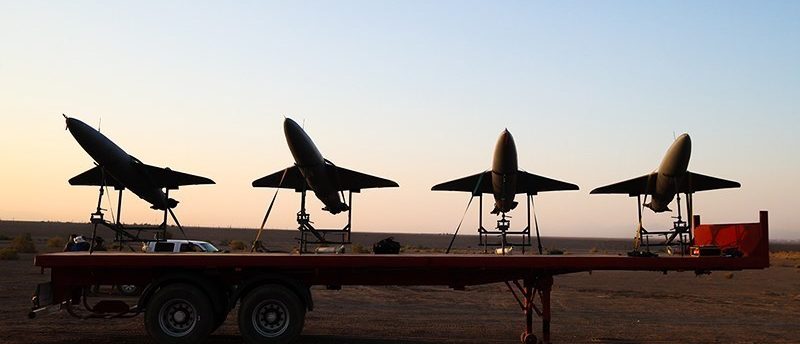
(Featured Image Media Credit: Wikimedia Commons/Public/Tasnim News Agency, CC BY 4.0 <https://creativecommons.org/licenses/by/4.0>)
All content created by the Daily Caller News Foundation, an independent and nonpartisan newswire service, is available without charge to any legitimate news publisher that can provide a large audience. All republished articles must include our logo, our reporter’s byline and their DCNF affiliation. For any questions about our guidelines or partnering with us, please contact [email protected].