



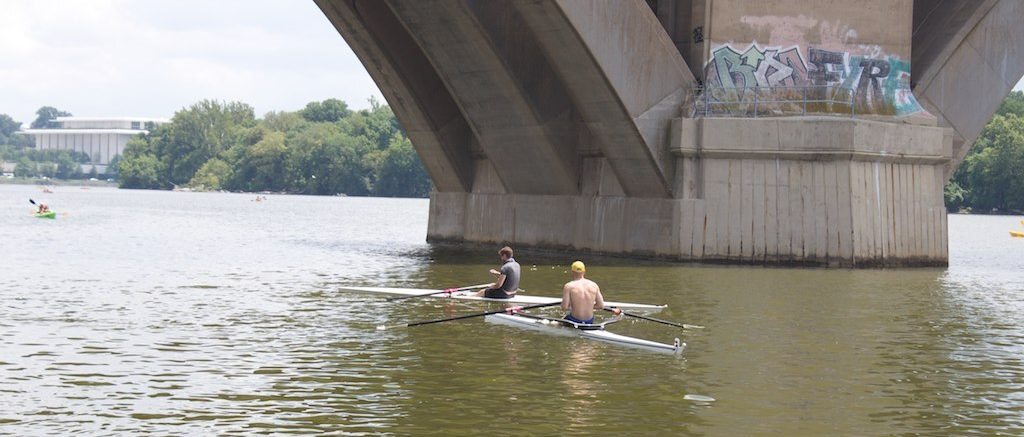
The Potomac River was found to have dangerously high levels of E. coli bacteria when water sample tests were conducted following a sewage pipe rupture, ARLnow reported.
A section of the Potomac Interceptor, which holds up to 60 million gallons of wastewater from Maryland and Virginia, broke on Jan. 19, pumping millions of gallons of raw sewage into the river, The New York Times (NYT) reported. A water sample taken from Fletcher’s Cove in Washington, D.C. on Friday by the Potomac Riverkeeper Network (PRKN) recorded the bacteria level to be 60 times higher than what is considered safe for human contact, according to ARLnow.
PRKN president Betsy Nicholas announced in a press release Monday that the measurements of E. coli bacteria show contamination 12,000 times what authorities limit for human contact.
“Almost 300 million gallons have entered the Potomac River,” said Nicholas in the Monday press release. “The long term impact cannot be overstated. We measured against the standards established by Virginia’s Department of Environmental Quality and Maryland’s Department of the Environment.”
“Our sample data collected right at the sewage outflow revealed shockingly high numbers that could have long term impacts to water quality,” said Potomac Riverkeeper Dean Naujoks in the press release. “The vile and putrid smell from the torrent of sewage discharging to the Potomac River for eight straight days is one of the most disturbing things I have ever seen in 25 years as a Riverkeeper.”
Crews installed six pumps to reroute the wastewater around the damaged Potomac Interceptor, the NYT reported. According to an X post by DC Water on Sunday, containment efforts are proving successful and DC Water estimates the spill to be nearing full containment.
DC Water officials stated that the Interceptor’s break does not impact drinking water because the systems used for wastewater and drinking water are separate.
Naujoks points to infrastructure failure as the main reason for the spillage and said a sewage pipe located this close to the river should have been better maintained. Naujoks maintained skepticism on the effectiveness of the efforts made by DC Water in order to contain the spillage.
“DC Water needs to come up with a better plan than using a one hundred year old dry canal ditch to capture and contain future sewage releases instead of discharging hundreds of millions of gallons of sewage to the river! One of the largest sewage spills in US history could have been avoided,” Naujoks added in the release.
All content created by the Daily Caller News Foundation, an independent and nonpartisan newswire service, is available without charge to any legitimate news publisher that can provide a large audience. All republished articles must include our logo, our reporter’s byline and their DCNF affiliation. For any questions about our guidelines or partnering with us, please contact [email protected].