



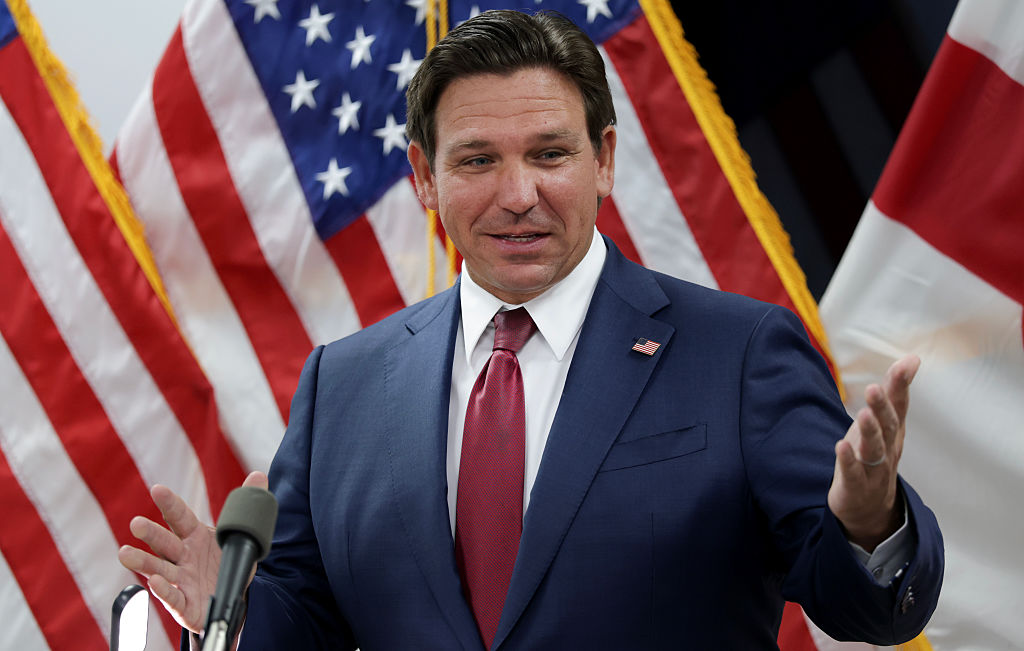
Florida’s political landscape shifted sharply this week after Gov. Ron DeSantis issued an executive order that immediately ignited a legal showdown with one of the country’s most prominent Muslim advocacy organizations.
According to The Associated Press, the governor’s directive, released Monday on X, branded the Council on American-Islamic Relations — widely known as CAIR — as a “foreign terrorist organization.” The order applied the same label to the Muslim Brotherhood.
The move mirrored a recent decision out of Texas and signaled a growing push among some Republican governors to sidestep federal designations and take independent action at the state level.
Although the U.S. government does not classify either CAIR or the Muslim Brotherhood as a foreign terrorist organization, the Florida order directs state agencies to treat them as such.
That means blocking the groups — and anyone deemed to have offered them “material support” — from receiving state contracts, paychecks, or funding from any executive-branch agency.
CAIR responded almost immediately.
In a sharply worded emailed statement, the national office and its Florida chapter said they would take DeSantis to court, calling the decree both “unconstitutional” and “defamatory.”
Founded in 1994, CAIR operates 25 chapters nationwide and has long positioned itself as a civil rights and advocacy organization.
The group made clear it intends to challenge Florida’s directive just as it is challenging a similar proclamation in Texas.
Last month, CAIR asked a federal judge to strike down Texas Gov. Greg Abbott’s designation, arguing in its lawsuit that the move was “not only contrary to the United States Constitution, but finds no support in any Texas law.”
The executive order also pulled the Muslim Brotherhood back into the public spotlight.
Established in Egypt nearly a century ago, the Brotherhood has developed branches across multiple countries. Its leaders insist the organization renounced violence decades ago and now pursues political goals through elections and other nonviolent methods.
Critics across the Middle East maintain that the group remains a destabilizing force.
DeSantis offered no additional comment beyond the language of the executive order, but the fallout is already unfolding as Florida prepares for a high-profile legal battle over the scope of a governor’s power and the limits of state-level terrorism designations.