



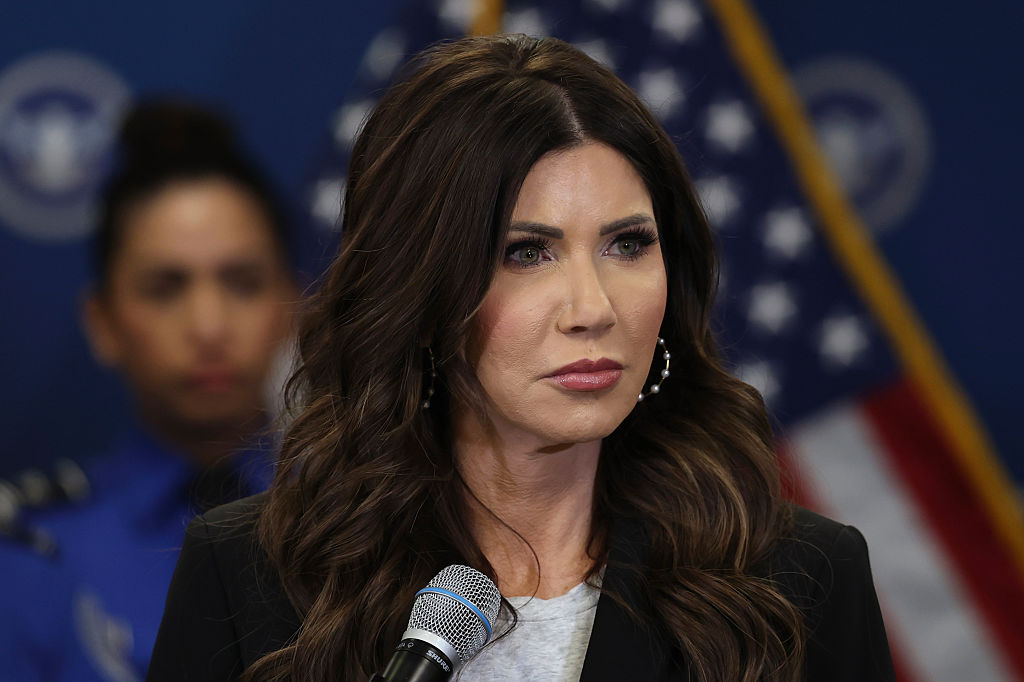
Homeland Security Secretary Kristi Noem announced Monday that federal immigration officers in Minneapolis will begin wearing body cameras, marking a rare concession to reforms Democrats have long demanded amid controversy over immigration enforcement.
According to the New York Post, Noem took to X to share the update, explaining that she spoke with top DHS officials — including border czar Tom Homan, ICE acting director Todd Lyons, and Customs and Border Protection Commissioner Rodney Scott — before making the decision.
“Every officer in the field in Minneapolis will now be wearing body cameras,” Noem wrote. “As funding is available, the body camera program will be expanded nationwide. We will rapidly acquire and deploy body cameras to DHS law enforcement across the country.”
“The most transparent administration in American history—thank you @POTUS Trump,” she added.
The announcement comes in the wake of heightened scrutiny following the fatal shootings of two anti-ICE protesters in Minneapolis by federal agents.
Democrats in Congress have been pushing several reforms for the department, including requiring agents to identify themselves, securing judicial warrants for removals, and banning masks during enforcement operations. Body cameras are considered one of the more widely accepted reforms.
President Donald Trump signaled support for Noem’s initiative during remarks Monday in the Oval Office.
“I leave it to her,” Trump said. “They generally tend to be good for law enforcement, because people can’t lie about what’s happening. So it’s generally speaking, I think 80% good for law enforcement. But if she wants to do that, I’m okay with it.”
The move comes as Congress negotiates a new funding bill for the Department of Homeland Security. Last week, Trump reached a deal with Senate Minority Leader Chuck Schumer to pass a stopgap funding measure, giving lawmakers time to debate the broader reform proposals.
Noem’s announcement signals that, at least in Minneapolis, federal immigration officers will soon face increased transparency measures. While the rollout is initially limited to the city, DHS officials said the body camera program will expand nationwide as funding becomes available.