



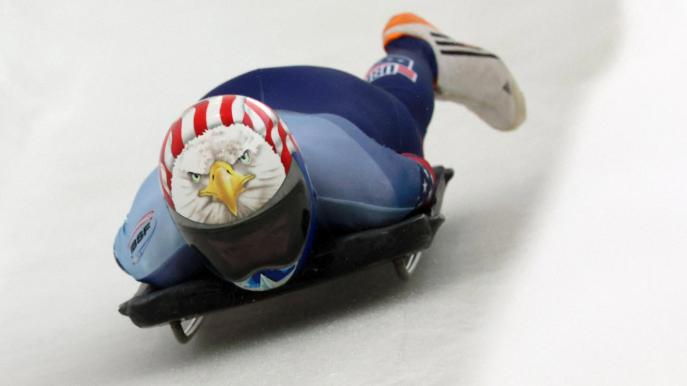
With the Winter Olympics in Milan just weeks away, tensions between Team USA and Team Canada are heating up — and not on the ice, but in the icy depths of the skeleton track.
In a move that’s ignited outrage across the global skeleton community, Canadian coach Joe Cecchini is under fire after pulling four of his six female athletes from a key Olympic qualifying event in Lake Placid, New York. The last-minute scratch? It wasn’t due to injury or illness — it was tactical.
The result: fewer competitors, fewer points available, and a devastating blow to American skeleton legend Katie Uhlaender, who — despite winning her race — didn’t earn enough qualifying points to secure a spot at what would’ve been her sixth Olympic Games.
“You just f***ed us,” Uhlaender reportedly told Cecchini in a tearful phone call after the stunt unfolded. And she didn’t stop there.
“I didn’t know if it hurt more that my friend of 20 years just nailed my coffin,” Uhlaender told DW. “Or that he did something so horrible that hurt so many people.”
What’s behind the outrage? In skeleton, the size of the competition field directly impacts the number of Olympic points awarded. By reducing the field to under 21 competitors, the Canadians ensured fewer points were up for grabs — a move seen by many as deliberately designed to box out rivals and protect their ranking on the International Bobsleigh and Skeleton Federation (IBSF) leaderboard.
Now, four national coaches — including Team USA’s Andrew Blaser — have sent a formal complaint to the International Olympic Committee, accusing Canada of undermining the integrity of Olympic qualification.
“This situation raises serious concerns regarding fair play, ethical governance, and the integrity of the Olympic qualification process,” the letter states.
Bobsleigh Canada Skeleton responded, insisting the decision was about “athlete welfare” and “development,” claiming the pulled athletes were younger and had struggled during a grueling week that included three races instead of the usual two.
But Uhlaender isn’t buying it.
“[Cecchini] did not have to do that. He did it because he could,” she fired back. “And it wasn’t to protect his athletes; it was to manipulate the system.”
With Canada defending the decision and U.S. officials crying foul, what should’ve been a showcase of athletic excellence has turned into a geopolitical grudge match on ice. The IOC now faces mounting pressure to investigate what some are calling a calculated strike that cost a world-class athlete her Olympic swan song.
In the world of Olympic sport, tactics are part of the game. But when they cross the line into sabotage? That’s a different race entirely.












