




“Microstamping” is a technology anti-gun groups have often touted as a crime-solving tool, but one top House Republican expressed doubts Wednesday.
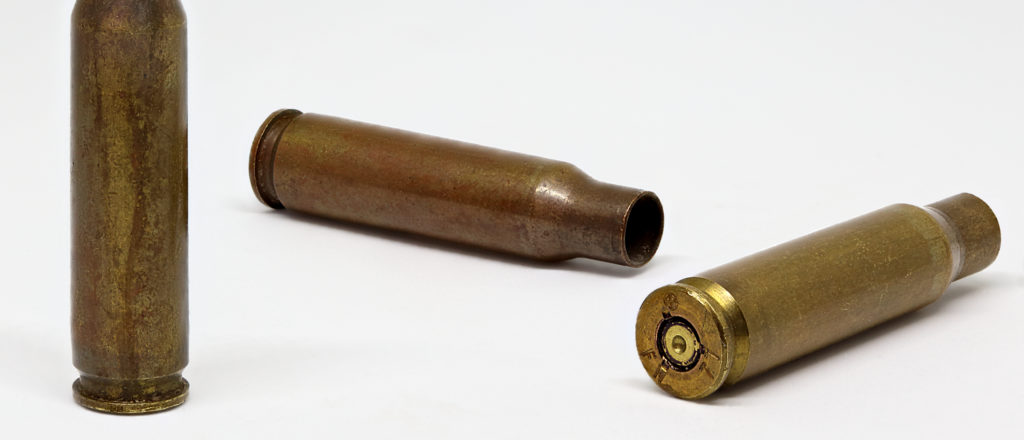
Republican Rep. Brian Babin of Texas, who chairs the House Science Committee, asked the National Institute of Science and Technology (NIST) to answer questions about the reliability, durability, manufacturing consistency and forensic utility of microstamping in the letter provided exclusively to the Daily Caller News Foundation. “Microstamping” involves a firearm using a modified firing pin or other device to leave an identifiable series of marks on a bullet cartridge that could be recovered at the scene of a crime, according to a fact sheet from the National Rifle Association’s (NRA) Institute for Legislative Action.
“Given NIST’s longstanding reputation for scientific objectivity and technical rigor, the Committee believes the agency is uniquely qualified to provide clear, evidence-based responses to these questions,” Babin wrote. “Such information will be essential to informing policymakers and the public about the true capabilities and limitations of microstamping technology before it is considered for broader application.”
Most major anti-Second Amendment groups, including Brady United, Everytown and Giffords, have pushed for legislative mandates to incorporate the technology into firearms. However, only California, New York and New Jersey have passed legislation that will eventually require the technology on firearms, according to The Truth About Guns.
The last time legislation mandating the use of microstamping was introduced was on Jan. 23, 2019, when then-Democratic Rep. Anthony Brown of Maryland sponsored H.R. 719, the Make Identifiable Criminal Rounds Obvious (MICRO) Act, but the bill died in the House Judiciary Committee. The legislation’s text said that a pistol would be considered “capable of microstamping” if “a microscopic array of characters that identify the make, model, and serial number of the pistol is etched into the breech face and firing pin of the pistol” and “when ammunition is fired from the pistol, the characters are copied from the breech face and firing pin onto the cartridge case of the ammunition.”
A firearm’s firing pin is used to detonate the primer, which is an explosive, in a round of ammunition, thereby causing the gunpowder in the cartridge’s casing to burn and to propel the bullet out of the cartridge and through the barrel of the firearm. The legislation only applied to semi-automatic pistols, which eject spent shell casings each time the firearm is discharged.
“Before Congress considers mandating microstamping nationwide, we need clear, evidence-based answers about whether it actually works,” Babin told the DCNF. “There are serious questions about its durability, reliability, cost, and vulnerability to tampering. NIST is uniquely qualified to provide objective technical analysis, and the American people deserve facts—not assumptions—before policymakers move forward.”
Critics of the technology, including the NRA and the National Shooting Sports Foundation (NSSF) cite multiple studies showing that it is unreliable and easily circumvented. The Sporting Arms and Ammunition Manufacturers’ Institute (SAAMI) criticized the proposed legislation in California, declaring its opposition to the measure in 2005 testimony.
“We are unaware of a single peer-reviewed study by a criminalist or forensic science expert that has examined the question of whether micro-laser engraving firearms would be an effective means of reducing the criminal misuse of firearms,” then-General Counsel Lawrence Keene told the California State Assembly.
Republican Rep. Darrell Issa of California sponsored the Modern Firearms Safety Act, H.R. 4676, which would overturn state laws mandating the use of microstamping and other features that anti-Second Amendment groups claim are necessary for firearms safety.
All content created by the Daily Caller News Foundation, an independent and nonpartisan newswire service, is available without charge to any legitimate news publisher that can provide a large audience. All republished articles must include our logo, our reporter’s byline and their DCNF affiliation. For any questions about our guidelines or partnering with us, please contact [email protected].