



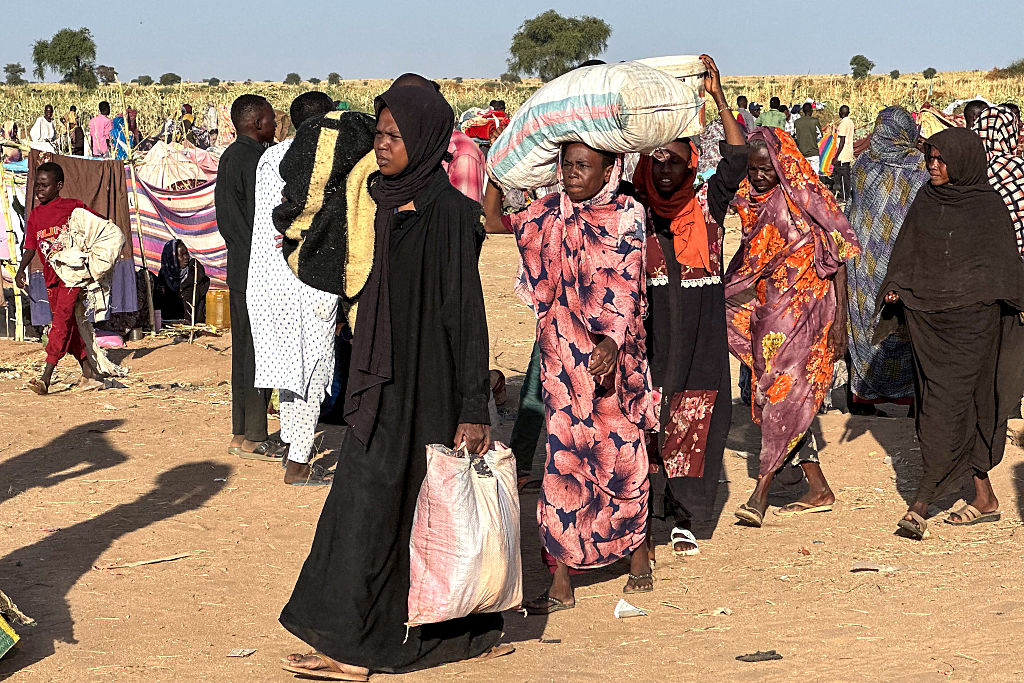
Famine has spread to two regions of war-torn Sudan, including a major city in Darfur where paramilitary fighters have been rampaging for the past week, according to a global hunger monitoring group — marking the latest catastrophe in what has become the world’s largest humanitarian disaster.
According to The Associated Press, the Integrated Food Security Phase Classification (IPC) reported Monday that famine has been confirmed in the Darfur city of el-Fasher and the city of Kadugli in South Kordofan province. Twenty other areas in Darfur and Kordofan, where fighting has intensified in recent months, are also at risk, the report said.
El-Fasher had been besieged by the Rapid Support Forces (RSF) for 18 months, cutting off food and essential supplies for tens of thousands of residents. Last week, RSF fighters seized the city, unleashing widespread killings and attacks that left hundreds dead, according to aid groups. Communication with the region remains limited, and the full scale of violence is unclear.
Kadugli has also been under siege for months, with tens of thousands trapped as RSF fighters attempt to capture more territory from the Sudanese military.
Sudan has been engulfed in war since April 2023, when the military and RSF began fighting for power. The conflict has killed more than 40,000 people, according to U.N. figures — though aid groups say the real number is far higher. More than 14 million people have been displaced, and large parts of the country are facing famine and disease outbreaks.
In its latest report, the IPC classified conditions in el-Fasher and Kadugli as Phase 5 — famine — citing “a total collapse of livelihoods, starvation, extremely high levels of malnutrition, and death.” About 375,000 people have been pushed into famine in Darfur and Kordofan as of September, while another 6.3 million face extreme hunger (Phase 4).
Save the Children said in September that food supplies in Kadugli had completely run out as fighting escalated, forcing thousands of people to flee within the city due to roadblocks preventing escape.
Famine — or IPC Phase 5 — is declared when at least one in five households faces starvation, 30% of children under 5 suffer acute malnutrition, and deaths from hunger exceed two per 10,000 people daily.
The IPC has only confirmed famine a handful of times before — in Somalia (2011), South Sudan (2017 and 2020), Sudan (2023), and northern Gaza earlier this year during Israel’s war with Hamas.
The report said another Kordofan town, Dilling, is likely facing the same conditions as Kadugli but lacked sufficient data for confirmation. Since the military retook the capital Khartoum earlier this year, the RSF has focused on consolidating control in Darfur and Kordofan to secure key supply routes.
The IPC warned that nearby Darfur towns — Tawila, Melit, and Tawisha — are also at high risk of famine. Thousands have fled el-Fasher since the RSF takeover on Oct. 27, and reports have surfaced of atrocities against civilians, including beatings, killings, and sexual assaults. The World Health Organization said at least 460 people were killed inside a local hospital during the violence.
Nationwide, more than 21 million Sudanese — about 45% of the population — faced acute food insecurity as of September, a slight improvement from earlier in the year due to reduced conflict and increased aid access in Khartoum and nearby provinces.
Still, the IPC warned that the gains are fragile as the ongoing war continues to “severely impact the economy, service delivery and productive infrastructure.”
The report urged both sides to agree to an immediate ceasefire, calling it “the only measure that can prevent further loss of life and help contain the extreme levels of acute food insecurity and malnutrition.”