



The back-and-forth surrounding Maine’s Democratic Senate primary is starting to highlight a broader tension inside the party—one that says as much about its direction as it does about the individual candidates.
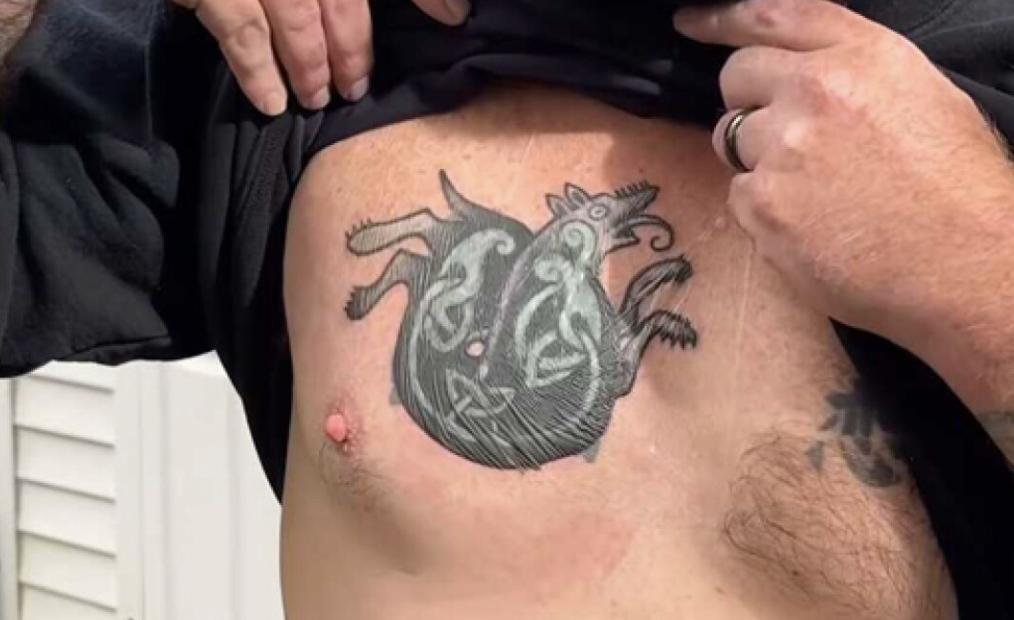
On one side is Graham Platner, a former Marine backed by Sen. Bernie Sanders. Platner’s candidacy might once have been framed simply as another outsider campaign—someone with a military background, running on a more populist or anti-establishment message. But that image has been complicated by controversy, particularly over a tattoo critics say resembles the Nazi-linked Totenkopf symbol. Platner has not fully quieted those concerns, and they’ve lingered as a defining issue in the race.
What stands out isn’t just the controversy itself, but the willingness of Sanders and his wing of the party to support Platner anyway. Sanders has long positioned himself as a candidate focused on economic justice and structural reform, often emphasizing moral clarity in politics.
Backing a candidate dealing with symbolism tied—fairly or not—to extremist imagery introduces a more complicated picture. It suggests that ideological alignment or political viability may, at times, outweigh other concerns that would typically be disqualifying in mainstream Democratic circles.
At the same time, the reaction from figures like Hasan Piker points to another layer of friction on the left. Piker, a polarizing online personality with a large following among younger, highly engaged voters, broke with the Sanders-backed candidate and instead endorsed Gov. Janet Mills.
His reasoning centered on trust and track record. In the clip he shared, Piker read criticism arguing that Platner hadn’t done enough to distance himself from his past or to clearly address concerns about his background. Piker’s takeaway was straightforward: when faced with uncertainty, go with the more established option.
That dynamic—where even voices on the left disagree over what’s acceptable—underscores a shift in how candidates are evaluated. It’s not just about policy anymore. Personal history, symbolism, online perception, and coalition appeal all play a role, and different factions weigh those factors differently.
Piker himself adds to the complexity. While influential, he’s also drawn repeated criticism for past comments, including ones described by critics as antisemitic or sympathetic to authoritarian governments.
His involvement in political conversations, and his ability to mobilize attention, reflects how much the Democratic ecosystem has expanded beyond traditional politicians and media figures. But it also raises questions about who gets to shape the party’s image—and what standards apply to those voices.
Taken together, the situation paints a picture of a party that is still sorting out its boundaries. Sanders’ support for Platner signals a continued push for outsider candidates who challenge the status quo, even if they come with baggage. Meanwhile, figures like Piker—and the backlash they generate—show how unpredictable and, at times, internally divided that broader coalition has become.