



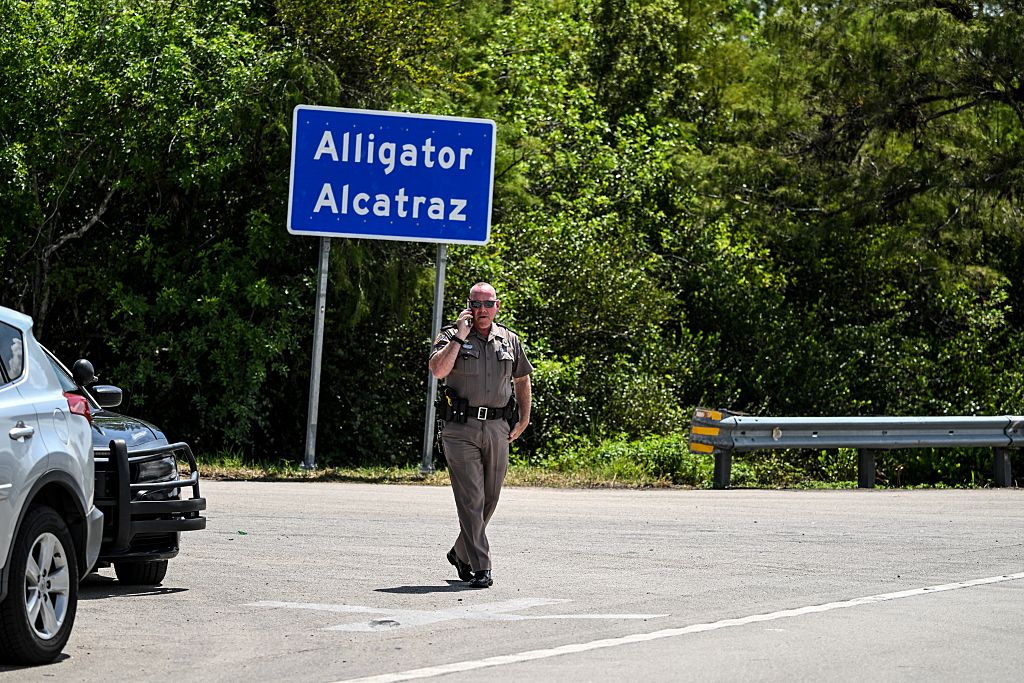
The controversial immigration detention center in Florida’s Everglades — nicknamed “Alligator Alcatraz” — will remain open for now, following a major ruling by a federal appeals court that blocked a judge’s order to shut it down.
On Thursday, the Eleventh U.S. Circuit Court of Appeals sided with the State of Florida and the U.S. Department of Homeland Security, halting a district court’s preliminary injunction that would have required the facility to cease operations within 60 days, according to CNN.
“After careful consideration, we grant the defendants’ motions and we stay the preliminary injunction and the underlying case itself pending appeal,” the three-judge panel wrote in their order.
The decision puts a pause on the case entirely until the appeals process plays out — effectively allowing the facility to continue detaining migrants for the foreseeable future.
Florida Attorney General James Uthmeier didn’t hold back in his response, calling the ruling a clear-cut victory.
“The 11th Circuit not only blocked Judge (Kathleen) Williams’ order to close Alligator Alcatraz, but they blocked her from proceeding with the case until the appeal is complete. A win for Florida and President Trump’s agenda!” Uthmeier said in a post on social media.
The legal battle stems from a lawsuit brought by environmental groups, including Friends of the Everglades, who argue the facility is a danger to both people and the fragile ecosystem of the Everglades. CNN reported the group is reviewing the order, and has yet to issue a full statement.
Built in a matter of days in July, the facility was converted from the Dade-Collier Training and Transition Airport — an isolated, decommissioned runway — into a tent city detention center for migrants. Since opening, it has come under intense fire for alleged inhumane conditions, including extreme heat, bug infestations, and inadequate food.
Even members of Congress and state lawmakers who visited the facility described it as unfit for habitation and called for its immediate closure.
The Miccosukee Tribe of Indians of Florida, whose reservation is located nearby, also raised alarms about the environmental toll, particularly to endangered wildlife in the surrounding wetlands.
“The project creates irreparable harm in the form of habitat loss and increased mortality to endangered species in the area,” U.S. District Judge Kathleen Williams wrote in her late August order.
Despite the backlash, Florida Governor Ron DeSantis is pressing forward. The governor has already announced the opening of another facility, boldly named the “Deportation Depot,” capable of detaining up to 2,000 individuals.
With the appeals court decision now on the books, the future of Alligator Alcatraz — and DeSantis’ broader immigration crackdown — is taking shape as a central legal and political battleground, pitting environmental and human rights groups against a growing state-federal partnership on border enforcement.