



Germany’s political leadership is finally conceding that shutting down the country’s nuclear power plants was a costly mistake.
German Chancellor Friedrich Merz admitted Wednesday that the country’s nuclear phase-out was a “serious strategic mistake,” telling business leaders that the country no longer has sufficient energy generation capacity. Speaking to the German Chamber of Industry and Commerce, Merz said Germany — which still aims to reach “net-zero” emissions by 2045 — is now paying the price of the decision through higher costs and heavy government intervention.
“It was a serious strategic mistake to phase out nuclear energy … we simply don’t have enough energy generation capacity,” Merz said, according to Brussels Signal.
“To have acceptable market prices for energy production again, we would have to permanently subsidise energy prices from the federal budget,” Merz said, adding, “We can’t do this in the long run.”
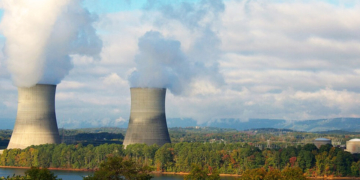
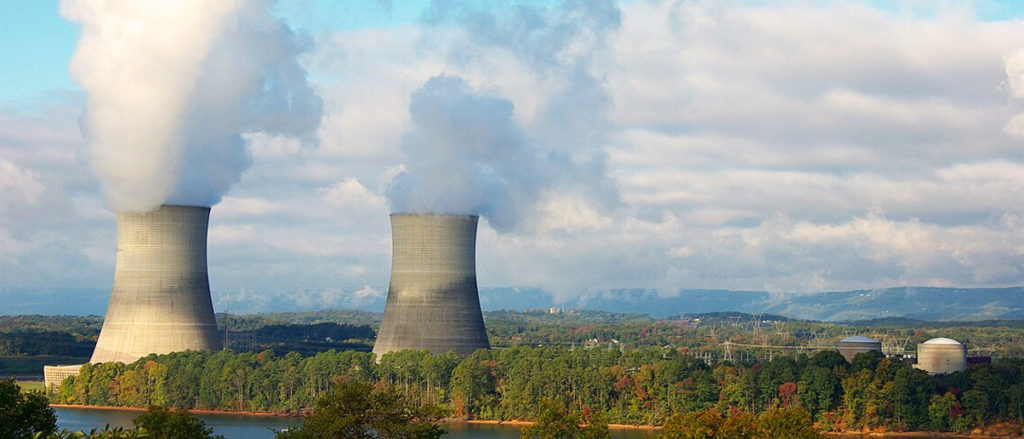
Former Prime Minister Angela Merkel decided in 2011 to eventually shutter the country’s nuclear power plants after the Fukushima nuclear meltdown in Japan. Over the next decade, Germany dismantled its nuclear infrastructure, taking the final three reactors offline in April 2023.
That final shutdown came as Europe grappled with an energy crisis triggered by Russia’s invasion of Ukraine. In 2021, prior to the war, Russia provided over half of Germany’s gas and coal and a third of its oil, according to The Economist.
Germany’s delegation at the UN General Assembly appeared to laugh during President Donald Trump’s 2018 speech when he warned of Germany becoming “totally dependent” on Russian energy — a moment that aged poorly, as CNN’s Scott Jennings pointed out on X.
Merz said Germany should have at least kept its remaining nuclear plants running during that period to preserve electricity capacity.
“If you are going to do it, you should at least have left the last remaining nuclear power plant in Germany on the grid three years ago, so that you at least have the electricity generation capacity that we had up until then,” the chancellor said.
Prior to the final nuclear closures, Germany had been a net exporter of electricity, but it now relies heavily on subsidies and electricity imports from neighboring countries, according to the Radiant Energy Group.
Renewable energy accounted for 55.9% of Germany’s energy production in 2025, according to the Fraunhofer Institute for Solar Energy Systems ISE. Critics have argued that the nuclear exit undermines the country’s goal of achieving climate neutrality by 2045.
German households now pay significantly more for electricity than prior to 2022, averaging 39.6 ct/kWh in 2025, up from 32.8 ct/kWh in 2021.
“So we are now undertaking the most expensive energy transition in the entire world,” he said. “I know of no other country that makes things so expensive and difficult as Germany.”
Despite Merz’s admission, reversing course poses legal and technical challenges as Germany’s nuclear plants have already been defueled and partially dismantled.
“We inherited something that we now have to correct,” Merz said, adding, “But we simply don’t have enough energy generation capacity.”
All content created by the Daily Caller News Foundation, an independent and nonpartisan newswire service, is available without charge to any legitimate news publisher that can provide a large audience. All republished articles must include our logo, our reporter’s byline and their DCNF affiliation. For any questions about our guidelines or partnering with us, please contact [email protected].