



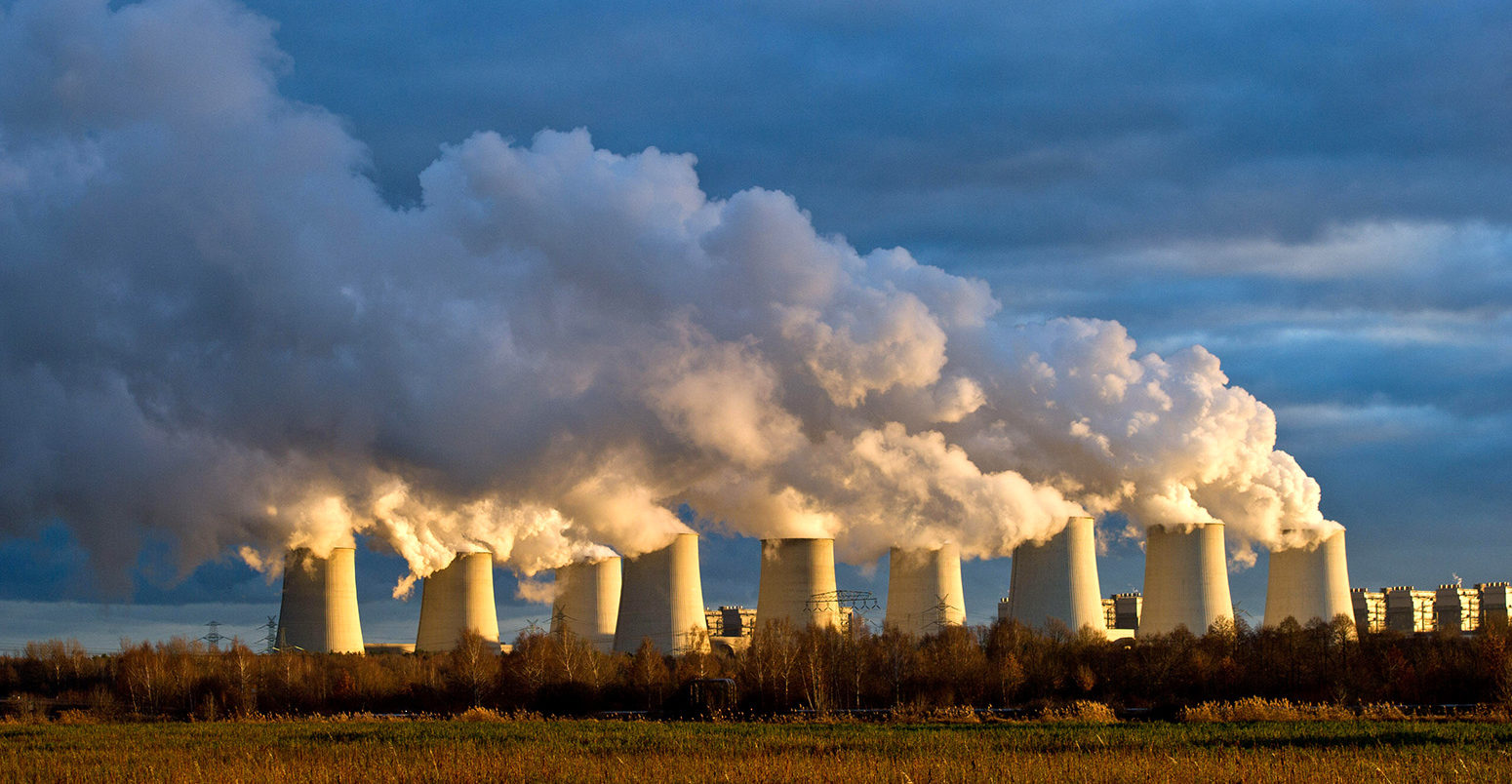

In an interview with Atlantico, Professor Em. Samuel Furfari, a Chemical Engineer and former senior official at the Energy Directorate-General of the European Commission discussed Europe’s energy crisis and related policies. The interview addresses a statement made by former US President Donald Trump during a presidential debate, where he claimed that Germany had ‘failed’ in its energy transition and had reverted to traditional energy sources like coal. This claim was refuted by the German Foreign Ministry. The interview explores the accuracy of Trump’s statement and provides insight into the state of Europe’s energy transition.
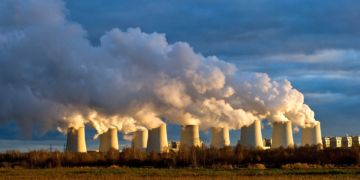
Furfari said that Donald Trump is right on some points, but he is exaggerating. Germany is indeed struggling with its energy transition, commonly known as the ‘EnergieWende’. Although the country has reduced its dependence on fossil fuels, it has not completely eliminated the use of coal. Some coal-fired power stations remain in operation to guarantee a stable supply when wind or sun is not enough. However, Trump is wrong to say that Germany has returned to coal on a massive scale or that it has reopened new power stations. The country has not built any new coal-fired power stations but continues to import coal to power the existing ones. Perhaps the former US President is confusing coal-fired power stations with the new gas-fired power stations that Germany is planning to build to compensate for the closure of its nuclear power stations.
Germany is going through a critical period in its energy transition. Because it is ambitious, the EnergieWende is encountering major obstacles. Wind power, on which Germany was relying so heavily, produces electricity only 23% of the time on average, which makes it difficult to be totally dependent on this source. The report by the Federal Audit Office in March 2024 highlights the enormous costs of the transition and the inability to find reliable solutions to replace fossil fuels; it should be noted that this is not to propose a review of ambition but to criticize the government for not doing enough, which demonstrates if proof were needed that the ‘Germany system’ is convinced of the merits of the EnergieWende. Yet Germany will probably not achieve its 2030 targets, in particular the 80% target for renewable energy in electricity. At present, it is at around 50%, but the challenges ahead are considerable. Increased use of natural gas seems inevitable to stabilize the electricity grid, but this runs counter to the country’s climate commitments.
Germany’s influence on European energy policy is immense for several reasons. Firstly, Germany is the most populous country in the European Union, and its demographic weight translates directly into strong political representation in the European Parliament. With 96 MEPs, it has the casting vote in decisions taken in Brussels and Strasbourg.
Secondly, Germany has established itself as a moral leader in the ecological transition. It was one of the first countries to turn away from nuclear power after the Fukushima disaster in 2011, and it has undertaken ambitious reforms to promote renewable energies. These choices have made Germany a role model in the eyes of many European countries despite the problems it is currently experiencing.
German communication around its energy transition is very skillful: it highlights the successes (such as the rise of renewables) while downplaying the failures (such as the need to maintain coal-fired power stations and its failure to reduce CO₂ emissions). This discourse is seductive and means that few voices dare openly criticize Germany, even though many European leaders – like Trump! – are aware of the difficulties facing that country. The title of my latest book is not chosen by chance; ‘State Lies’ refers to all the things that are left unsaid that hide the harsh reality of the failures of the energy transition. In this, Trump is right. Finally, Germany has very powerful lobbies within the European institutions, working tirelessly to promote the country’s interests. This well-oiled network means that Germany retains a major influence over the Union’s energy policy despite its own shortcomings. What’s more, the arrival of a German as President of the European Commission has strengthened this position.
It’s clear that France and Germany are being treated differently at the European level. There are several reasons for this difference in treatment. Firstly, there is the question of political influence. As I mentioned, Germany has a dominant position in Europe, both politically and demographically. It, therefore, carries a disproportionate weight in discussions on energy policy. Then, there are the internal dynamics in France. For several years, France’s leaders have had to deal with the ecologists to get their support, whether it was François Hollande or Emmanuel Macron during his first term. This has led France to compromise, particularly on the nuclear issue, in order to align itself with German policy.
The targets it has set itself are quite simply unrealistic, particularly as regards the share of renewable energies in the energy mix. The load factor of wind turbines is very low, making it difficult to achieve a transition based essentially on wind power. What’s more, the cost of the infrastructure needed to transport electricity from the wind turbines in the Baltic Sea to southern Germany, where most electricity is consumed, is extremely high, and there is public opposition to the creation of these power lines. This further complicates the transition. The current situation already shows that Germany has to rely on natural gas to maintain the stability of its electricity grid… Yet gas-fired power stations produce more CO₂ than the nuclear power stations that the country has shut down, which runs counter to its climate commitments. A future government, more realistic and pragmatic, may decide to review these targets.
An article in the Brussels Report, with a disclaimer, stated, “The Global South has understood that development requires fossil fuels. “
Produced in association with Brussels Report