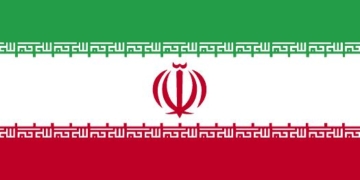



Iran’s dictators continue to thumb their noses at the world. They say their nuclear program remains “intact” despite the U.S. airstrikes in June. They recently threatened to launch “2,000 missiles at once” against Israel and U.S. forces if attacked again. The country faces renewed sanctions, which have emboldened a rising opposition among the desperate Iranian people.
The mullahs-in-charge appear on the verge of facing another revolution because Iran tragically has abandoned the grand promises of the 1979 overthrow of the Shah. Instead of bringing social justice, freedom, democracy, and prosperity, the theocrats cracked down. They brought censorship, death, destruction, and suffering for Iranians trapped in a failed state.
The regime instigates regional instability through threats of nuclear blackmail and the destruction of Israel. It sponsors and spreads proxy wars and terrorism through Hezbollah, Hamas, and militant groups across the Middle East. If the region is a tinderbox, Iran is the match.
Internal and external aggression are often the last gasp of a weak, isolated, and failing regime. So, it is with Iran. The economy is collapsing. A corrupt military oligarchy controls 60 percent of the economy, leveraging it for repression and riches for “Aghazadehs,” sons of the regime’s elites who drive Ferraris to luxury condos past starving children.
For the typical Iranian family, income has stagnated since the 1980s while taxes have quadrupled over the last three years. Food prices have spiked nearly 60 percent since last fall, and bread lines stretch for blocks. Medicine costs have skyrocketed. Large numbers of Iranians live below the poverty line. The most despondent have turned to prostitution or are selling their kidneys to support their families.
Yet Iran spent billions on its nuclear program. The resource-rich nation faces severe shortages of water and energy. The environment is dying, with 90 percent of wetlands in danger. Air pollution exceeds safe levels for two-thirds of the year.
The authoritarian regime, meanwhile, suppresses free expression through media and internet censorship, blocking popular platforms and shutting down online access. Police attack peaceful protests. Executions are a tool of repression, surging by 63 percent, from 550 in 2022 to 1,600 this year. Human Rights Watch reported that the Iranian execution “spree” put to death an average of three people a day from January through May of 2025. More than 5,000 prisoners are on death row, and up to two million are arbitrarily detained each year, caught in a judicial system that ignores due process. Harsh Sharia laws bring sentences of stoning, flogging, amputation, and hanging.
The regime’s fear of the organized opposition is evident in its ruthless campaign against supporters of the MEK, the People’s Mojahedin Organization of Iran. Seventeen MEK activists face execution. This follows recent executions and mass arrests aimed at dismantling MEK Resistance Units, which are composed of young, educated Iranians. The death sentences expose the MEK’s growing influence there.
The flywheel of freedom has begun turning. Iran is becoming more isolated. Its strategic position and regional influence are weakening, especially after the fall of Syria’s Assad regime, once Tehran’s key ally. It has no friends beyond a network of non-state armed groups.
More importantly, after four decades of facing severe repression and corruption, public discontent has evolved into defiance and resistance. Solidarity is growing among Iranians at home and in the diaspora worldwide. Protests are spreading in Iran. Regime insiders called the 2019 protests in nearly 200 cities “unprecedented in 40 years.” It shattered the myth of the regime’s invincibility. The 2024 election boycott reduced turnout by more than 8 percent, the lowest level in 40 years.
The opposition is permanent and organized. It’s led by a younger, more educated generation that rejects both monarchy and theocracy in favor of a democratic, secular, peaceful, non-nuclear republic. It is part of a global movement. The recent Free Iran Convention 2025 in Washington, D.C., brought together Iranian American scholars, professionals, human rights advocates, youth, and community leaders from across the U.S. and the world.
Keynote speaker and resistance leader Maryam Rajavi emphasized that Iran’s transformation is no longer theoretical. She said the regime is in “the final phase of its winter.”
The brave citizens risking their lives to free Iran are serving the greater cause of peace and stability in the region and the world. They appear well on their way to succeeding.
Gregory Tosi, a former congressional aide, is an attorney practicing international trade law in developing countries.
The views and opinions expressed in this commentary are those of the author and do not reflect the official position of the Daily Caller News Foundation.
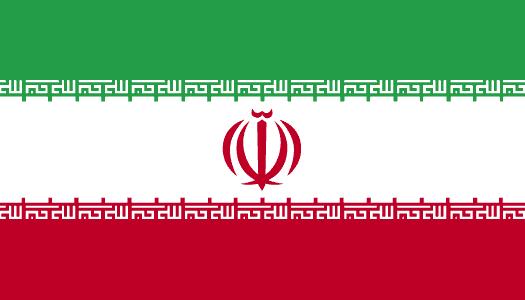
(Featured Image Media Credit: Iran flag By by user:Marc Mongenet, – CIA World Factbook,, CC BY-SA 3.0, https://commons.wikimedia.org/w/index.php?curid=30206)
All content created by the Daily Caller News Foundation, an independent and nonpartisan newswire service, is available without charge to any legitimate news publisher that can provide a large audience. All republished articles must include our logo, our reporter’s byline and their DCNF affiliation. For any questions about our guidelines or partnering with us, please contact [email protected].