



What a turnaround. Two years ago, supporters claimed Ranked Choice Voting (RCV) was “the fastest-growing voting reform in the nation.” Their “hot reform” was used in just two states and some localities but was headed to the ballot in a half dozen states. Yet instead of winning and expanding, RCV has lost almost everywhere and is now banned in many states. And it just lost its biggest fight of 2026.
At one time, groups pushing RCV racked up wins practically unopposed. They spent vast resources on deceptive ad campaigns, convincing voters to pass RCV in Maine in 2016 and Alaska in 2020, as well as in various cities and counties. Yet more recently, the movement has hit a brick wall.
RCV’s fortunes took a turn in 2024 when all six statewide ballot measures failed, in Arizona, Colorado, Idaho, Montana, Nevada, and Oregon. Their inability to win even in blue states was a bad sign for a movement bankrolled by left-leaning billionaires. Fewer local ballot measures also advanced.
On top of that, six more states banned RCV in 2025, bringing the total number of states that have outlawed the system to 17. More are poised to join the list. Legislators in Ohio and Michigan are considering bills that have already passed one chamber. A new bill was introduced in Indiana last month.
To be fair, 2024 wasn’t a complete bust for RCV. Advocates eked out a win in Alaska by defeating repeal ballot Measure 2 by a margin of 743 votes (after weeks of counting). Yet a new repeal campaign is now collecting signatures for another vote, adding pressure to the pro-RCV movement and forcing donors to shell out even more money to defend their floundering election scheme.
RCV had one other win, with Washington, D.C. voters adopting it as part of an open primary system. Even Mayor Muriel Bowser and the local Democratic Party were opposed, and their fears are coming true as the rollout has also been less than stellar. The system continues to struggle with delayed funding and the threat of being further delayed by the city council.
Despite all this, RCV advocates set their sights on Michigan. They launched a campaign last year to put a state constitutional amendment on the ballot in November 2026. Winning a large, swing state like Michigan would be a significant boost for the flailing election reform movement. But luckily for Michiganders, Rank MI Vote was forced to end its 2026 ballot effort before the year even began.
The Rank MI Vote campaign struggled for months to collect enough signatures to qualify for the November ballot. Before abandoning the effort, Campaign Director Joe Spaulding admitted that his proposal had only a 40% chance of making the ballot. Even that turned out to be optimistic—the campaign ended up being about 200,000 signatures short when they surrendered.
One reason they failed was opposition from the Michigan Association of County Clerks, which voted unanimously to condemn the RCV proposal based on concerns about “ complexity, disenfranchisement, and loss of voter trust.” The clerks actually run elections, and they pointed out that “Michigan voters already face some of the longest and most complex ballots in the nation.” RCV would have made things worse, “adding inconsistency, voter confusion, and voter fatigue.”
It’s important to remember that despite their string of losses, ranked-choice voting isn’t dead yet. Left-wing donors continue to prop it up, and “election reform” groups like FairVote continue to promote it. Still, it’s clear that what was once sold as a way to give voters more choices and improve election outcomes is now seen for what it really is: a poorly designed scheme that has failed everywhere it’s been tried.
Harry Roth is the Director of Outreach at Save Our States and Project Manager of the Stop RCV Coalition.
The views and opinions expressed in this commentary are those of the author and do not reflect the official position of the Daily Caller News Foundation.
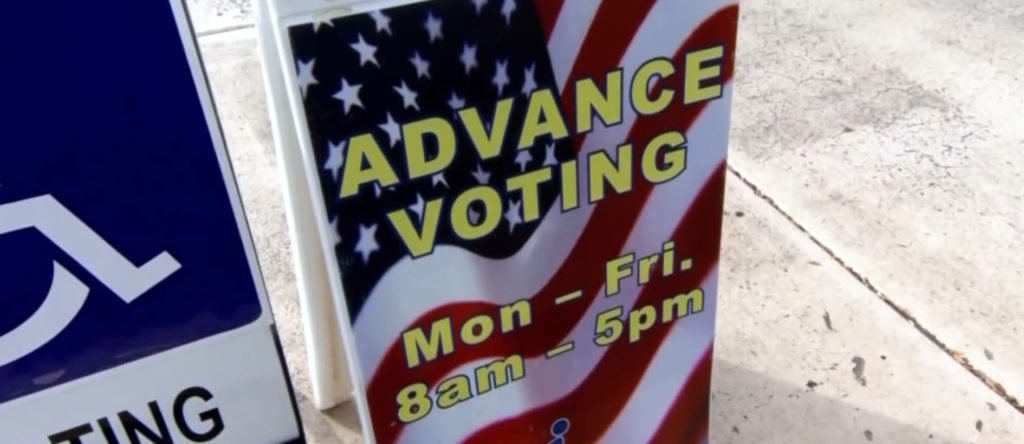
(Featured Image Media Credit: Screen Capture/PBS NewsHour)
All content created by the Daily Caller News Foundation, an independent and nonpartisan newswire service, is available without charge to any legitimate news publisher that can provide a large audience. All republished articles must include our logo, our reporter’s byline and their DCNF affiliation. For any questions about our guidelines or partnering with us, please contact [email protected].