



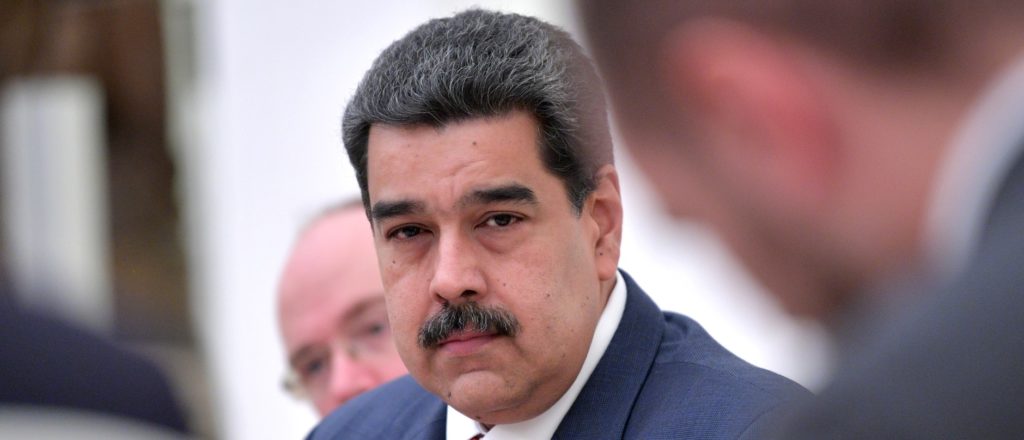
The Trump administration’s capture of socialist Venezuelan dictator Nicolás Maduro has thrown the region into uncertainty while presenting opportunities that could give the U.S. a geopolitical and economic advantage.
Once a global energy powerhouse, Venezuela’s oil sector now produces a fraction of what it did before former dictator Hugo Chávez nationalized the industry. If President Donald Trump’s gambit proves successful, the U.S. could revitalize the Venezuelan oil industry and leverage its resources to refill America’s depleted Strategic Petroleum Reserve (SPR), several energy policy experts and economists explained to the Daily Caller News Foundation.
Former President Joe Biden authorized a massive drawdown and sale of SPR oil in 2022, ahead of midterm elections and record-high gas prices that bogged down his fellow Democrats. After releasing about 200 million barrels from the SPR in the months leading up to the midterms, the Biden administration continued to tap into the U.S. emergency oil stockpile to bring down gas costs ahead of the 2024 election.
Numerous energy experts since cautioned that it could take “decades” to refill the SPR following Biden’s releases, with some experts previously explaining to the DCNF that the former administration’s moves posed a national security concern.
“The Strategic Petroleum Reserve can serve not only a militarily strategic interest, but also an economically strategic interest,” the chief economist at The Heritage Foundation, EJ Antoni, told the DCNF, arguing that refilling the SPR could also position the U.S. government to set a price floor to the benefit of smaller operators and American investors in the event of an oil glut.
Most of Venezuela’s crude oil exports are flowing to China, and some energy policy experts are optimistic that if Trump’s plan to “run” or otherwise partner with the Latin American nation pans out, the U.S. could eventually leverage its resources to benefit both American companies and the Venezuelan people.
Revitalizing Venezuela’s oil industry raises numerous questions, and several industry insiders previously told the DCNF that American companies are cautious about new development under the current uncertainty.
David Blackmon, an energy and policy writer who spent 40 years in the oil and gas business, told the DCNF that U.S. dominance of Venezuela’s oil industry would present a golden opportunity for it to refill America’s oil reserves, though the process would be bogged down by government bureaucracy and take several months.
Trump said in his inaugural speech that his administration would replenish the SPR, though Energy Secretary Chris Wright has confirmed that it will take years to completely refill the reserves. In November, the DOE announced that it is advancing a plan to acquire one million barrels for the SPR.
One industry source that was granted anonymity to speak freely told the DCNF previously that the Venezuela development has not spurred American companies to consider national reserve replenishment possibilities, adding that the administration’s intent to refill the reserve is not dependent on Venezuelan oil.
Jason Isaac, CEO of the American Energy Institute, told the DCNF that “U.S. companies will not commit serious capital to Venezuela without a credible reset on rule of law.”
Isaac continued to note that “the near-term benefit is mostly about refinery optimization and security of supply, not a dramatic global price collapse.” However, a long-term benefit of a U.S. partnership with Venezuela could be critical resource acquisition at discounted rates.
Diana Furchtgott-Roth, director of the Center for Energy, Climate and Environment at The Heritage Foundation, told the DCNF that “expectations of greater supply from Venezuela will lower the prices of oil and make it easier and less expensive to fill the SPR.”
However, Furchtgott-Roth also presented an alternate perspective, arguing the SPR may no longer serve a critical purpose.
“I’m not sure if we need the SPR at all. The biggest SPR we have is right under our feet,” Furchtgott-Roth told the DCNF. “The SPR was conceived of when the United States had very little oil production. … Times have changed.”
The SPR was established in 1975 following the oil crisis in the early 70’s, “primarily to reduce the impact of disruptions in supplies of petroleum products and to carry out obligations of the United States under the international energy program,” according to the Department of Energy (DOE). Following the shale-revolution, America shed concerns about oil shortages, becoming the top producer in the world in 2018.
Trump and his allies are eager to extract America’s vast oil and gas reserves, repeating the mantra, “drill, baby, drill.”
“President Trump’s energy dominance agenda has already brought gas prices down across the country, while gradually replenishing the SPR, and they will continue to drop as we unleash American energy,” White House Spokeswoman Taylor Rogers told the DCNF before America’s capture of Maduro.
“Joe Biden’s disastrous green energy policies sent gas prices soaring across the country, making the past four years painfully unaffordable for Americans filling their gas tanks to commute to work, take their children to school, and travel during the summer and holiday seasons,” Rogers continued. “In a desperate attempt to provide an illusion of relief during his 2024 campaign, Joe Biden irresponsibly depleted our Strategic Petroleum Reserve – shamelessly jeopardizing our economic and national security.”
Trump wrote on Wednesday on Truth Social that “I have just been informed that Venezuela is going to be purchasing ONLY American Made Products, with the money they receive from our new Oil Deal.” A DOE factsheet released Wednesday stated that the energy partnership between Venezuela and the oil means “oil sales begin immediately with the anticipated sale of approximately 30 – 50 million barrels. They will continue indefinitely.”
All content created by the Daily Caller News Foundation, an independent and nonpartisan newswire service, is available without charge to any legitimate news publisher that can provide a large audience. All republished articles must include our logo, our reporter’s byline and their DCNF affiliation. For any questions about our guidelines or partnering with us, please contact [email protected].