
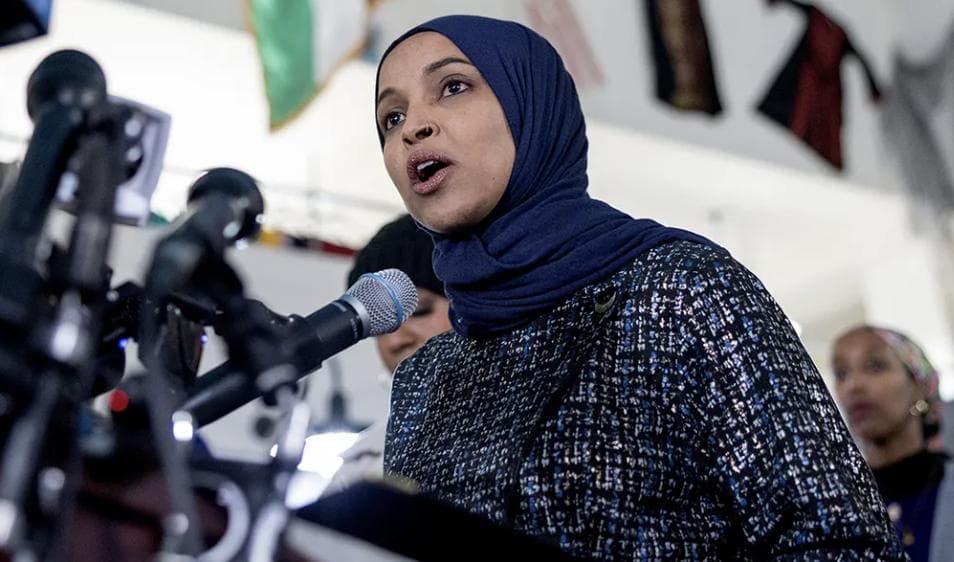
Rep. Ilhan Omar is pushing back against allegations tying her to Minnesota’s massive Feeding Our Future fraud scandal, calling claims that she had prior knowledge of the scheme “flat-out false” while also pointing to the Trump administration’s role in creating the federal program rules at the center of the controversy.
In a statement to Fox News Digital on Wednesday, the Minnesota Democrat defended her actions and argued that the framework blamed for enabling the fraud originated during President Donald Trump’s first term.
“The MEALS Act was signed into law by President Trump and passed with bipartisan support as part of a broader legislative package,” Omar said. “Trump’s USDA Secretary set the regulatory framework during the rollout of the program.”
Omar maintained that her focus has always been on combating child hunger and expanding food access during the COVID-19 pandemic, when many normal oversight systems were temporarily loosened in order to quickly distribute aid.
“I have always championed feeding kids and will continue to ensure our children do not go hungry,” she said.
The Feeding Our Future case has become one of the largest pandemic-era fraud scandals in the country. Prosecutors say fraudsters stole hundreds of millions of dollars intended to feed low-income children through federal nutrition programs. Several individuals connected to the nonprofit have already been convicted or charged.
Omar said that once the fraud became public, she immediately sought accountability from federal officials.
“The moment this fraud came to light, I immediately sent a letter to the USDA Secretary demanding answers and accountability,” she said.
She also sharply condemned those responsible for stealing money intended for children.
“As I stated from the beginning, stealing millions of dollars under the guise of feeding hungry children to bankroll lavish lifestyles and extravagant expenses is reprehensible,” Omar said. “I’m grateful that Aimee Bock and every individual involved in this abhorrent scheme are being held accountable for defrauding taxpayers and betraying vulnerable children.”
Still, criticism surrounding Omar’s role has intensified in recent months. The Minnesota House Fraud Prevention and State Agency Oversight Committee invited Omar to testify regarding what she knew about the program and any communication she may have had with people tied to the scandal. According to the committee, she never responded to the invitation.
Republicans on the panel later attempted to subpoena information from Omar, though Democrats blocked the effort.
The committee’s final report, released last week, argued that the Walz administration fostered a “culture of tolerance” toward fraud that allowed billions in taxpayer money to be improperly distributed across various programs.
The report also criticized Omar’s MEALS Act provisions, arguing they weakened safeguards within federal nutrition programs. Investigators said changes allowing for-profit restaurants to participate and expanded “grab-and-go” meal flexibility made it difficult to verify whether meals were actually being served to children.
Republican state Rep. Kristin Robbins, who chairs the committee, dismissed Omar’s explanation and accused her of attempting to rewrite the timeline.
“She only sent a letter once the fraud was exposed,” Robbins told Fox News Digital. “Prior to that, she sent letters urging the administration to keep the waivers in place — allowing the fraud to continue.”
Robbins has suggested Congress should step in to enforce subpoenas and seek additional information related to Omar’s communications with state education officials and her public promotion of a Minneapolis restaurant later linked to the program.
The dispute has also reignited broader political debate over who bears responsibility for pandemic-era fraud. Omar and some former staffers have emphasized that the federal rules were created under Trump’s USDA, while federal officials argue Minnesota authorities failed to act despite repeated warnings.
A USDA spokesperson told Fox News Digital that state officials had ample evidence that something was wrong long before the scandal exploded publicly.
“Regulations do not force states to ignore fraud,” the spokesperson said. “Blaming federal rules after the fact does not erase Minnesota’s failure to act while taxpayers were defrauded of hundreds of millions of dollars meant to feed hungry children.”
The back-and-forth highlights how the Feeding Our Future scandal has evolved beyond a criminal case into a broader political fight over accountability, oversight, and the handling of pandemic relief programs.