




Nearly 30,000 live animals were rescued worldwide in a sweeping crackdown on illegal wildlife trade, Interpol announced Thursday.
According to The Associated Press, the monthlong effort, dubbed Operation Thunder 2025, took place from Sept. 15 to Oct. 15 and involved authorities from 134 countries.
The operation led to more than 4,600 seizures, including live animals, plant species, and illegally logged timber.
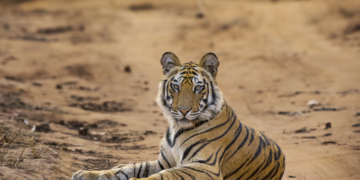
Among the rescued animals were 6,160 birds, 2,040 tortoises and turtles, 1,150 reptiles, 208 primates, and 10 big cats, including endangered tigers.
“Operation Thunder once again exposes the sophistication and scale of the criminal networks driving the illegal wildlife and forestry trade,” Interpol Secretary-General Valdecy Urquiza said.
The crackdown also recovered animal body parts, including 1,900 pieces of elephant ivory, seven tons of pangolin scales and meat, and more than 200 tons of marine species.
Pangolins, sometimes called scaly anteaters, are among the most trafficked animals globally due to demand for their scales in traditional medicine and their meat as a delicacy.
Interpol stressed that wildlife trafficking is a major threat to endangered species and a growing transnational crime, generating at least $20 billion annually.
The operation identified over 1,000 suspects involved in the illicit trade.
Seizures occurred across multiple continents.
In Europe and North America, officials intercepted more than 40 shipments of insects and 80 shipments of butterflies originating in Germany, Slovakia, and the U.K. at a U.S. mail center.
Another North American shipment contained over 1,300 primate body parts, including skulls and bones.
The operation highlights the global scale of wildlife trafficking networks, which often exploit international shipping and mail systems to move illegal animals and plant products.
By combining the efforts of law enforcement, wildlife authorities, and forestry agencies, Interpol called Operation Thunder a major success, rescuing thousands of animals and disrupting networks that threaten biodiversity worldwide.
“The work doesn’t stop here,” Urquiza added. “We must continue to strengthen global cooperation to protect endangered species and preserve ecosystems for future generations.”
The operation underscores the urgency of combating wildlife crime, which remains one of the most lucrative and destructive forms of organized transnational criminal activity.