



A bizarre AI-generated video circulating through state-backed media channels is drawing attention for its explosive imagery and stark anti-American message.
According to the New York Post, the clip, reportedly produced by Iran’s state broadcaster, Islamic Republic of Iran Broadcasting, and later amplified by Russian outlet RT, depicts a series of historical and modern conflicts before culminating in a dramatic attack on one of America’s most recognizable landmarks.
Running about a minute long, the video strings together scenes meant to portray the United States as a global aggressor.
Among the sequences are references to Native American displacement, the atomic bombings of Japan, the Vietnam War, and more recent conflicts in the Middle East.
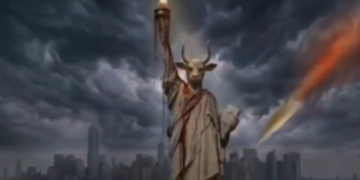
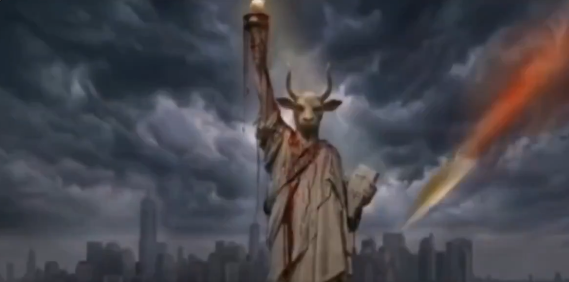
Each segment builds toward a final moment. In the closing scene, a missile painted in Iranian colors flies into New York Harbor and slams into the Statue of Liberty.
The imagery becomes even more surreal as the statue is shown with its head replaced by Baal, a figure described in biblical texts as a false idol. The explosion follows, paired with the video’s closing message: “One vengeance for all.”
The clip is the latest example of AI-generated content being used as propaganda amid heightened tensions tied to the ongoing conflict involving Iran.
The use of artificial intelligence allows for highly stylized and often unsettling visuals designed to provoke strong emotional reactions.
This is not the only recent instance of such content emerging from state-linked outlets.
Just days earlier, China’s state broadcaster, China Central Television, released its own AI-driven video addressing tensions in the Strait of Hormuz.
That production took a different creative approach, featuring animated sequences including martial-arts-fighting Persian cats representing Iran and a human figure with an eagle’s head symbolizing the United States.
Together, the videos highlight a growing trend of governments turning to AI-generated media to communicate political narratives in unconventional and highly visual ways.
While the intent and impact of these productions may vary, the increasingly surreal nature of the imagery underscores how rapidly evolving technology is reshaping the landscape of modern propaganda.












