



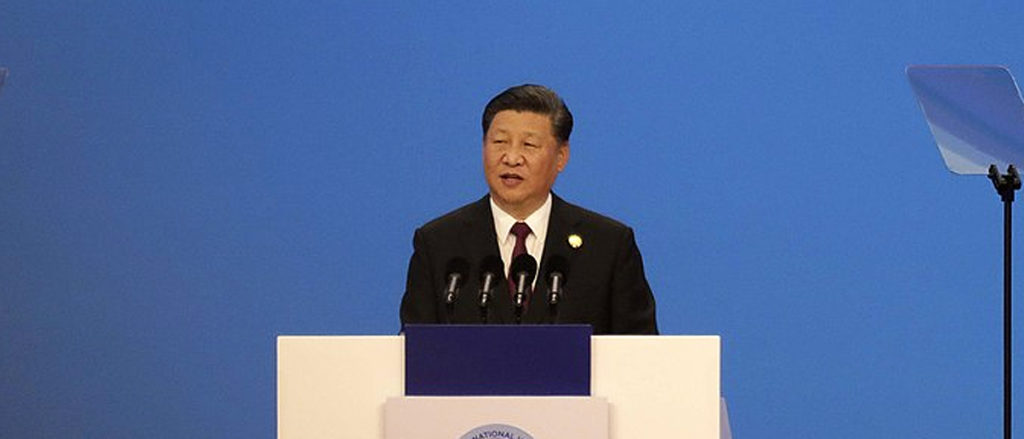

China appears to be quietly backtracking on some of the commitments it made to President Donald Trump in late October during the summit between the countries’ leaders to ease simmering trade tensions.
Washington said Beijing pledged to buy 12 million tons of U.S. soybeans by the end of this year and 25 million tons annually for the next three years. However, imports to the country stalled after an initial surge following the meeting, Bloomberg reported Wednesday. Meanwhile, China is devising a workaround on its pledge to ease restrictions on rare earth exports, to try and prevent them from going to the U.S. military, according to The Wall Street Journal.
A key U.S. goal during the trade talks was securing commitments for China to buy more American agricultural products, as farmers suffered from reduced exports. China halted most soybean imports earlier this year, leaving many producers without major buyers for the fall harvest.
“I was extremely honored by the fact that President Xi authorized China to begin the purchase of massive amounts of Soybeans, Sorghum, and other Farm products. Our Farmers will be very happy! In fact, as I said once before during my first Administration, Farmers should immediately go out and buy more land and larger tractors,” Trump wrote on his Truth Social platform following the meeting.
Despite Chinese commitment, ample supplies of cheaper Brazilian beans and a lingering 13% tariff have made American soybeans less competitive, according to Bloomberg.
Whether the purchases will pick up remains uncertain, but this would not be the first time China has failed to meet its trade promises to the U.S. In late October, the U.S. Trade Representative’s office launched an investigation into China’s “apparent failure” to comply with the Phase One trade deal signed in 2020, under which Beijing committed to $200 billion in additional purchases of U.S. farm goods, manufactured products, and energy, as well as improvements to intellectual property protections, but never met the targets.
In addition to the slowdown in soybean orders, China is reportedly crafting a system to block the U.S. military and producers of dual-use goods from obtaining rare earths, despite promising Trump it would expedite the flow of these critical minerals, according to The Wall Street Journal. Companies with both civilian and military clients — such as those in the automotive and aerospace business — may face difficulty obtaining the necessary licenses, the outlet reported.
The U.S. imports 80% of the rare earths it consumes, primarily from China, which controls the vast majority of the world’s rare earth mining and 92% of refining capacity.
Historically, Beijing has used its dominance over rare earths as a bargaining chip in trade negotiations and to exert territorial and military pressure. After Trump’s “Liberation Day” tariffs announcement in April, China intensified these pressures.
Although a June framework agreement between the two sides called for Beijing to ease those restrictions and expedite shipments, China delayed approvals, leading to widespread supply chain disruptions.
“China’s move to block rare earth exports to companies involved in dual-use products is a stark reminder that the Chinese government, not private industry, controls a strategic monopoly over these materials,” Nick Myers, CEO and co-founder of one of the few rare earth processing companies in the U.S., told the Daily Caller News Foundation. “That level of leverage is dangerous for the United States and any nation that may oppose Beijing, as supply chain pressure can be just as powerful as missiles or drones.”
Myers’ company Phoenix Tailings has developed a new process for extracting rare earth metals from raw materials and mining waste without generating toxic byproducts or emissions, all while remaining independent of the Chinese economy.
“While I would never compare our work to the sacrifice of our soldiers, it highlights why investing in American rare earth production is essential so our private sector can defend the country’s interests on this new battlefield,” Myers said.
Ahead of the October Trump-Xi summit, some analysts had warned that China’s long history of broken promises should give the president pause.
“It’s almost impossible to imagine a comprehensive deal that the Chinese don’t win on, because they won’t keep their side of the deal,” Derek Scissors, senior fellow at the American Enterprise Institute and chief economist of the China Beige Book, told the DCNF at the time.
The White House did not respond to the DCNF’s request for comment.
All content created by the Daily Caller News Foundation, an independent and nonpartisan newswire service, is available without charge to any legitimate news publisher that can provide a large audience. All republished articles must include our logo, our reporter’s byline and their DCNF affiliation. For any questions about our guidelines or partnering with us, please contact [email protected].