




As Ukraine and the U.S. try one more time to reach agreement on terms for a peace deal to end the war with Russia, questions remain about whether a resolution is still possible after multiple stalled rounds of negotiations.
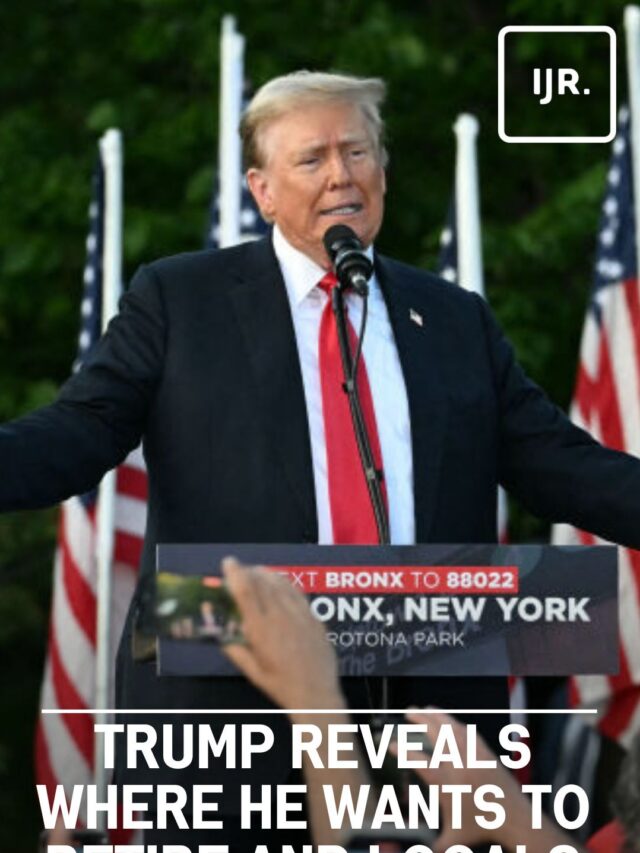
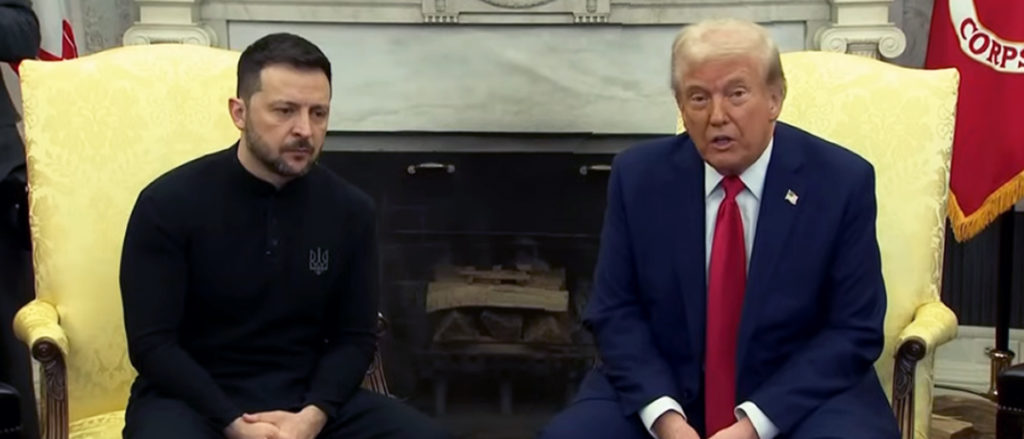
President Volodymyr Zelenskyy of Ukraine is set to meet with President Donald Trump at Mar-a-Lago on Sunday to discuss the current proposal for ending the war. The terms and language of the proposed deal have undergone substantial revisions since it was first presented in November, largely due to objections from Ukraine and other European powers.
Despite multiple rounds of peace negotiations fizzling out over the past year, foreign policy and defense experts told the Daily Caller News Foundation that Trump still has a chance to make peace if he can convince Putin that the cost of waging war outweighs the benefits, but that it’s unlikely any of the parties will leave the table satisfied.
“The President’s team sees that stark reality, but also envisions a golden future for Ukraine once the fighting stops—a prosperous, strong, independent nation could rise from the ashes we see today,” Morgan Murphy, former Trump White House official and current Republican Senate candidate in Alabama, told the DCNF. “To get there will take a deal that likely leaves all parties—Ukraine, Russia, and Europe—unhappy when they leave the negotiation table.”
While Russia has signaled some willingness to make compromises, most recently saying it would accept Ukrainian European Union membership, Putin has so far not agreed to any ceasefire in the interim. U.S. officials previously told the DCNF that they resolved “90%” of the issues between Russia and Ukraine in the new deal, but stopped short of elaborating on the outstanding issues.
Zelenskyy expressed cautious optimism about his ongoing talks with Trump’s team in an X post on Christmas Day, but emphasized that a few “sensitive issues” still need to be worked out. While those points of contention weren’t specifically named, Ukraine has long objected to any territorial concessions to Russia and has sought additional security guarantees from the U.S. and European allies.
It is important if we succeed in organizing what we discussed today with President Trump’s envoys. Some documents, as I see it, are nearly ready, and some documents are fully prepared. Of course, there is still work to be done on sensitive issues. But together with the American… pic.twitter.com/kCmrNOaQBQ
— Volodymyr Zelenskyy / Володимир Зеленський (@ZelenskyyUa) December 25, 2025
A number of foreign policy experts, including those who spoke to the Daily Caller News Foundation, warn that excessive concessions to Moscow could embolden U.S. adversaries around the world, including China.
“A rushed or weak settlement would do real damage to U.S. national security,” Carrie Filipetti, executive director of the Vandenberg Coalition, told the DCNF. “It would tell Putin that aggression pays and signal to adversaries like China that borders and sovereignty are negotiable. That is not peace, it is an invitation for the next crisis.”
Putin has continued to strike Ukraine relentlessly during ongoing talks, mainly targeting critical energy infrastructure. Despite Putin’s continued push to win militarily in Ukraine, Heather Nauert, a former U.S. State Department spokesperson, told the DCNF that his actions come less from a position of strength and more from desperation to quickly end the war before he is forced to concede.
“While Putin likely still thinks he can win, his actions are those of someone who is increasingly desperate,” Nauert told the DCNF. “With Vladimir Putin, you don’t get peace because you ask nicely; you get peace when he sees he can’t improve his position by continuing to wage his war. History shows that Moscow only takes negotiations seriously when the pressure is real and sustained.”
Despite projecting resolve publicly, Moscow has paid a staggering price for its war in Ukraine, with various estimates putting casualties among Kremlin forces at no fewer than 600,000. Russia has nevertheless made slow but steady gains on the battlefield, including taking the town of Siversk on Tuesday.
Putin’s government expected a short conflict and swift victory after the initial invasion of Ukraine. But Russian forces were repelled decisively in the 2022 assault on Kyiv, leading to multiple counter-offensives from Ukraine and the resulting protracted war.
Ukraine has held its ground at great cost to itself, needing significant support from the U.S. and Europe. The U.S. has spent over $180 billion on Ukraine since the war began in 2022, and Trump recently signed a bill allocating $800 million of support for Ukraine over the next two years.
Ukraine is dead set on gaining better future security guarantees from the U.S. in exchange for any peace, and U.S. officials previously told the DCNF that the new provisions offer guarantees that function similarly to NATO’s Article 5, promising mutual defense if one is attacked.
“I am not sure he can cut that deal without a commitment to Ukraine, by the U.S. and our allies, that we will stand behind them until a satisfactory peace deal can be made,” Bruce Carlson, retired U.S. Air Force general and former director of the National Reconnaissance Office, told the DCNF. “In recent negotiations with the Ukrainians and other allies [Trump] has made some compromises. Now, with a very confident Putin, he will have to re-sell this new and modified deal.”
All content created by the Daily Caller News Foundation, an independent and nonpartisan newswire service, is available without charge to any legitimate news publisher that can provide a large audience. All republished articles must include our logo, our reporter’s byline and their DCNF affiliation. For any questions about our guidelines or partnering with us, please contact [email protected].