



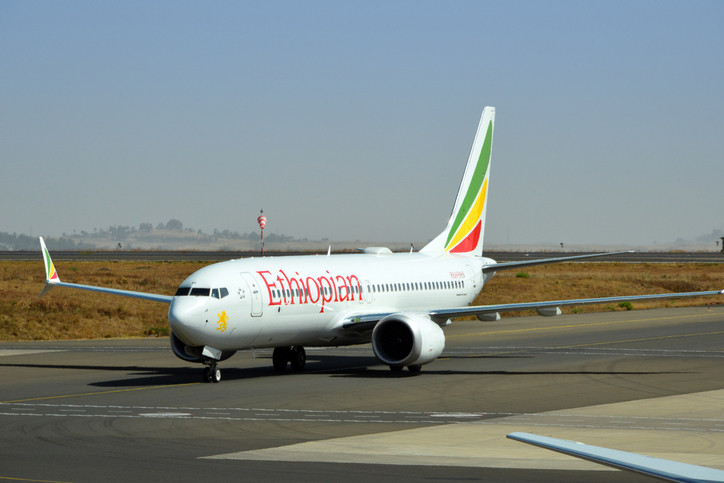
A federal jury in Chicago has ordered Boeing to pay more than $28 million to the family of Shikha Garg, a United Nations consultant who died in the 2019 crash of an Ethiopian Airlines Boeing 737 Max jet — one of two fatal accidents that exposed major flaws in the aircraft and triggered a global grounding.
According to The Associated Press, the verdict, reached Wednesday after just two hours of deliberation, marks the first civil trial stemming from the March 2019 disaster that killed all 157 passengers and crew on Ethiopian Airlines Flight 302.
Boeing, which previously admitted fault for the crash, had already reached out-of-court settlements with most of the other victims’ families.
“We and the family are gratified by the jury’s verdict. It provides public accountability for Boeing’s wrongful conduct,” attorneys Shanin Specter and Elizabeth Crawford said after the ruling.
In addition to the jury’s award, Boeing will pay $3.45 million to Garg’s husband, Soumya Bhattacharya, under a separate agreement reached before the trial. Combined with interest, the total payout amounts to $35.8 million.
At trial, jurors were not asked to determine Boeing’s liability — which the company has already accepted — but to decide how much compensation Garg’s family deserved for her death, including for emotional distress and the loss of future income.
Specter described Garg as a talented, young PhD candidate and newlywed traveling from Addis Ababa to Nairobi for a U.N. environmental assembly. He called her death “senseless” and “preventable.”
Boeing’s attorney Dan Webb, a former U.S. attorney, urged the jury to award what he called “fair and reasonable” compensation. Webb argued that passengers likely did not experience physical pain before impact. “There would not have been time for them to feel any physical pain when they hit the ground,” he said.
The jury disagreed, including $10 million in damages for pain and suffering Garg endured in her final moments.
Investigators found that from the moment Flight 302 took off from Addis Ababa, pilots struggled to control the aircraft as it was repeatedly forced into a nosedive by faulty flight-control software. The plane plunged to the ground just six minutes later, traveling nearly 700 miles per hour.
The crash — and a similar 2018 Lion Air disaster in Indonesia — led to the worldwide grounding of Boeing’s 737 Max fleet. The planes didn’t return to service until late 2020, with Ethiopian Airlines waiting until February 2022 to resume flights.
The verdict comes as a federal judge in Texas approved the Justice Department’s decision to dismiss criminal charges against Boeing related to the crashes. Under the agreement, Boeing must pay or invest $1.1 billion toward fines, victim compensation, and internal safety reforms.
Boeing issued a statement Wednesday apologizing to the victims’ families, saying it “respects their right to pursue their claims in court.”












