




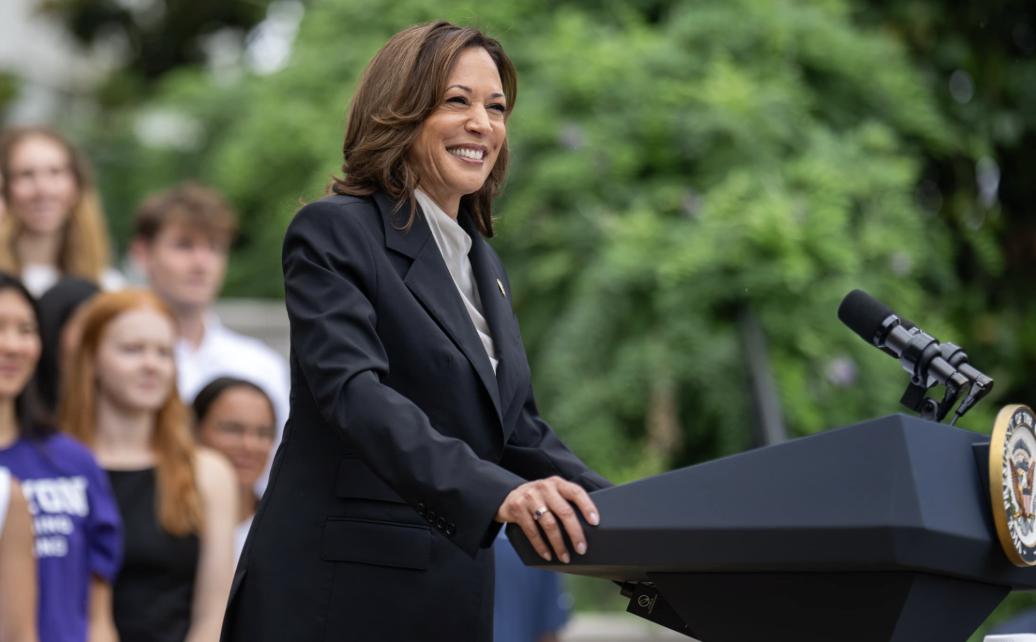
Former Vice President Kamala Harris is encouraging Democratic donors to get involved in an effort aimed at shaping the future of the Supreme Court before any new nominations are even announced.
The push is tied to a campaign led by Demand Justice, a progressive advocacy group that has long focused on the federal judiciary. The group is preparing a significant fundraising effort to oppose potential nominees from former President Donald Trump if he returns to office and has the opportunity to fill additional seats on the court.
Harris drew attention to the effort by sharing coverage of the plan and urging supporters to take the stakes seriously. Her argument is that the ideological balance of the Supreme Court could shift further if new appointments are made, and that groundwork needs to be laid now rather than waiting until nominations are formally announced.
According to organizers, the initial phase of the campaign could cost a few million dollars, with much larger sums expected if vacancies actually arise. The possibility of retirements among older justices has added urgency to the effort, even though no official announcements have been made.
This kind of preemptive organizing reflects a broader shift in how both parties approach the courts. Judicial nominations have become one of the most politically charged aspects of presidential power, with long-term consequences that extend well beyond a single administration. As a result, outside groups are increasingly treating potential vacancies as political battles that begin well before any formal process starts.
Critics of the effort see it differently. They argue that organizing opposition to hypothetical nominees, before names are even put forward, adds another layer of partisanship to an institution that is supposed to operate independently. Some also point to past discussions among Democrats about expanding the size of the court, suggesting that efforts like this are part of a longer-term strategy to reshape the judiciary.
Supporters, however, frame it as a necessary response to recent history, where control of the court has shifted through closely contested nominations.
From their perspective, being proactive is the only way to avoid being caught off guard in a process that moves quickly once vacancies occur.
The debate also highlights a deeper disagreement about the role of the Supreme Court itself. For some, the court has become too influential in shaping policy, making control over its composition even more important. For others, the growing political focus on the court risks undermining public trust in its independence.
What’s clear is that the fight over the judiciary is no longer confined to confirmation hearings in Washington. It now includes fundraising campaigns, advocacy efforts, and messaging strategies that begin long before any official nomination is made.