

A Murder conviction in England has triggered growing questions about police conduct after officers handcuffed an 18-year-old university student moments before he died from stab wounds.
According to Fox News, the case has fueled public debate across Britain, with critics demanding answers about why the victim was initially treated as a suspect rather than someone in need of urgent medical care.
This week, 23-year-old Vickrum Digwa was convicted of murdering Henry Nowak, an 18-year-old finance student at the University of Southampton, during a confrontation on Dec. 3, 2025.
According to court proceedings, officers responding to the scene initially believed Digwa’s claim that he had been racially abused and attacked.
As a result, police treated Nowak as the suspected aggressor when they arrived.
Authorities later realized the severity of Nowak’s injuries. He collapsed and died at the scene despite efforts to save him, according to reports cited in court.
The handling of those critical moments has become a major focus of criticism.

Following the verdict, Hampshire Constabulary publicly acknowledged the controversy surrounding the arrest.
“I’m sorry that he was handcuffed and arrested in the moments before he lost consciousness,” Temporary Deputy Chief Constable Robert France said in a statement reported by Sky News.
The police force has referred the matter to the Independent Office for Police Conduct, the watchdog responsible for investigating police actions in England and Wales.
Prosecutors told jurors that Digwa stabbed Nowak multiple times with a 21-centimeter blade described during the trial as a Sikh kirpan-style weapon.
Digwa argued he acted in self-defense after allegedly being subjected to racist abuse.
Jurors rejected that defense and found him guilty of murder. His mother, Kiran Kaur, was also found guilty of assisting an offender after she removed the weapon used in the attack from the scene.
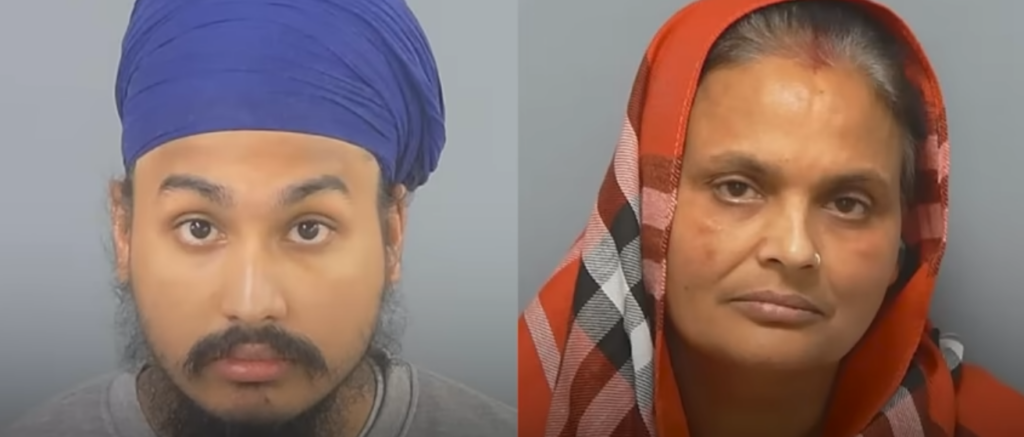
The conviction has not ended the controversy.
Instead, attention has shifted to the actions of responding officers and whether allegations of racism influenced their decision-making.
Alan Mendoza, executive director and co-founder of the Henry Jackson Society, was among those sharply critical of the police response.
“The killing of Henry Nowak shows how far the rot of political correctness has set into the British policing mentality,” Mendoza said.
“The reflex attitude today appears to be to believe any and every claim that mentions racism,” he added. “It clearly trumped actual Murder in this case as a dying Mr. Nowak was arrested on the say-so of his Sikh assailant without any facts being established by the officers attending.”
The case has also drawn political attention.
Speaking on GB News, Reform UK Member of Parliament Robert Jenrick called for the release of officers’ body-worn camera footage if Nowak’s family agrees.
“The officers chose to prioritize the accusation of racial abuse over saving the life of this young man,” Jenrick said. “I think that was a terrible mistake.”
Jenrick also criticized what he viewed as a lack of response from senior government officials.
“The Prime Minister says absolutely nothing. The Home Secretary says absolutely nothing.”
Meanwhile, Sikh organizations have sought to distance the broader community from the crime.
In a public statement following the verdict, community groups condemned the killing and expressed concern about rising tensions.
“Henry’s life has tragically been cut short by a moment of madness by an individual for which there can be no excuses,” the statement said.
The organizations also noted that “the actions of police officers who handcuffed the victim just before he died” had intensified criticism and “unnecessarily stirred up community hatred.”
The watchdog investigation into the officers’ actions remains ongoing.