



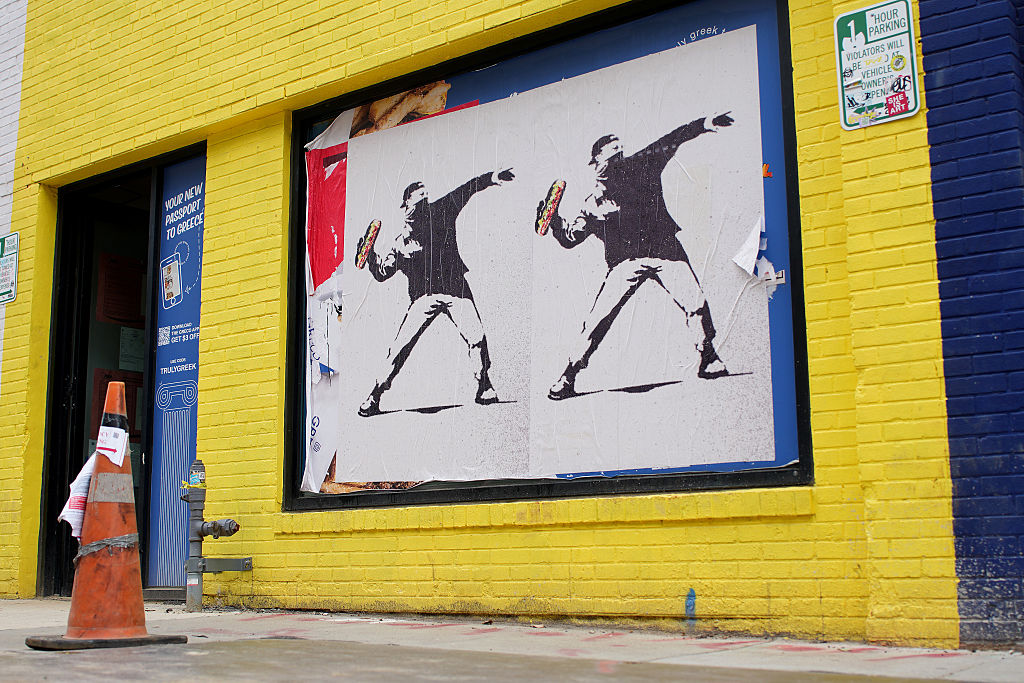
A Washington, D.C., man accused of hurling a sandwich at a federal agent has avoided a felony charge after a grand jury refused to indict him, dealing a political and legal blow to the Trump administration, which had sought to highlight the case as an example of its tough-on-crime stance.
Sean Charles Dunn, who was captured on video throwing the sandwich and shouting at the agent, has now been charged with simple assault, a misdemeanor punishable by up to one year in jail, according to The Associated Press.
According to court documents filed Thursday, prosecutors failed to convince a grand jury to bring the more serious felony assault charge, which carries a sentence of up to eight years.
The outcome undercuts a case that the White House had heavily promoted to show it would aggressively prosecute violence against law enforcement — despite President Trump’s earlier pardons of Jan. 6 rioters who brutally attacked police with makeshift weapons.
The White House had released a dramatic social media video of Dunn’s arrest by federal agents. Jeanine Pirro, Washington’s top federal prosecutor and a prominent figure in the Trump administration, followed up with her own video boasting about the felony charge: “So there, stick your subway sandwich somewhere else.”
Prosecutors rarely fail to secure indictments from grand juries — a reality summed up by the old legal adage that a prosecutor can “indict a ham sandwich.” But Dunn’s case marks one of several recent rejections in the capital, where at least three grand juries have declined to return indictments in high-profile law enforcement cases.
Observers say this could signal growing local frustration with the federal government’s sweeping law enforcement operations in Washington, many of which have brought federal charges for incidents usually handled in local court.
A video showing Dunn throwing a sandwich at a federal agent patrolling the capital quickly went viral after Trump’s August 11 directive deploying federal agents and troops to D.C. in response to unrest and immigration protests.
Authorities said Dunn also shouted and pointed a finger at the agent, calling him a “fascist” and demanding, “Why are you here? I don’t want you in my city!”
Police say Dunn attempted to flee the scene but was caught and arrested. Though initially released, he was re-arrested by federal agents on the felony assault charge before the grand jury refused to indict him.
At the time of the incident, Dunn was working as an international affairs specialist in the Justice Department’s criminal division. He was fired soon after the incident by Attorney General Pam Bondi.
Dunn’s case isn’t isolated. In a similar incident, federal prosecutors failed three times to get a grand jury to indict Sydney Lori Reid, who was accused of assaulting an FBI agent outside the city jail in July. She had been filming the transfer of detainees into ICE custody, another flashpoint under Trump’s expanded immigration enforcement measures.
Despite the triple rejection, Pirro’s office is moving forward with a misdemeanor assault charge against Reid as well.
While the administration’s effort to charge minor confrontations as federal felonies has drawn support from some conservatives, critics argue it reflects political overreach and an attempt to crack down on dissent, particularly related to immigration enforcement and civil unrest.
Trump’s deployments of federal forces to Democratic-run cities, including D.C., have triggered legal challenges and widespread protests, with residents and local leaders decrying federal interference in local matters.












