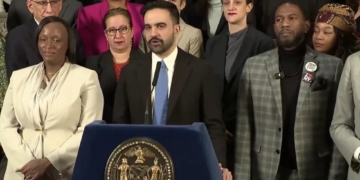




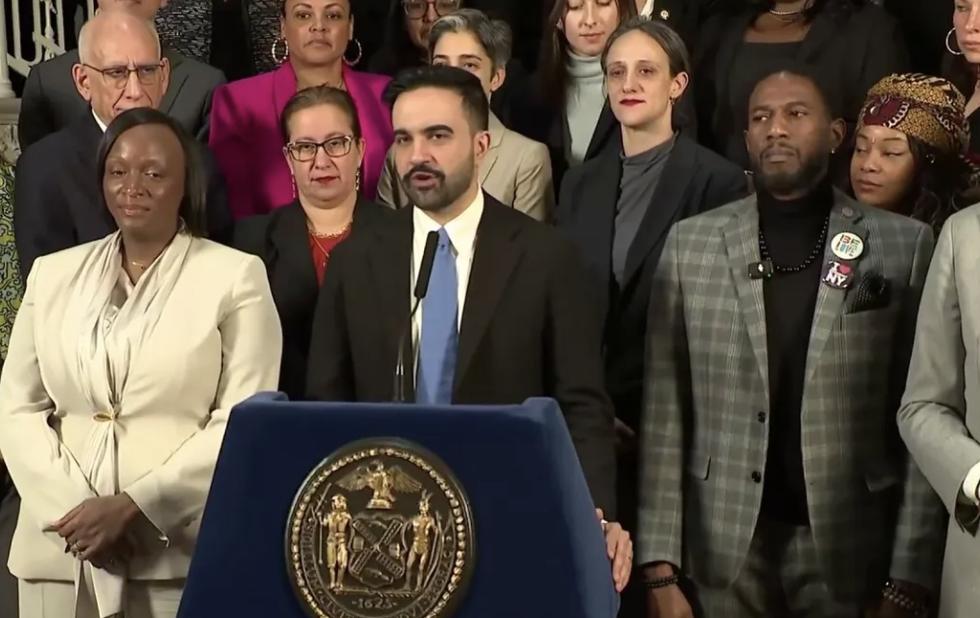
New York City Mayor Zohran Mamdani rolled out his “Preliminary Citywide Racial Equity Plan” on Monday, setting off immediate reactions from both political critics and the Trump administration’s Justice Department. While the mayor framed the plan as a long-overdue effort to address systemic disparities, some conservatives quickly questioned its legality and underlying approach.
According to a press release from City Hall, the report was delivered within Mamdani’s first 100 days in office, as promised. It lays out data showing persistent racial gaps in housing, education, income, and health outcomes across the city.
At the center of the plan is what the administration calls a “True Cost of Living Measure,” meant to more accurately reflect what it takes to afford life in New York and who is struggling most.
Mamdani argued that the findings point to a widespread affordability crisis affecting most New Yorkers, not just a small segment of the population. At the same time, he emphasized that the burden is not evenly shared. Black and Latino residents, he said, continue to face the sharpest challenges, a pattern he linked to longstanding structural inequities.
The plan is designed as a broad framework rather than a single policy. City officials describe it as the first time New York agencies are being required to evaluate their work through a racial equity lens.
Democrat NYC Mayor Zohran Mamdani is launching a “racial equity plan” designed to solve “decades of discrimination” by prioritizing resources for “black and brown” people.
Straight-up racism against White peoplepic.twitter.com/oqFgfC0lh5
— Libs of TikTok (@libsoftiktok) April 6, 2026
Should Mayor Mamdani's Racial Equity Plan be implemented as proposed?
It outlines goals across several areas, including housing, the economy, public health, infrastructure, and public safety. In total, the proposal includes more than 200 agency-specific goals, hundreds of strategies, and a large set of performance indicators intended to track progress.
Supporters within the administration say the scope reflects how deeply rooted these disparities are. Afua Atta-Mensah, the city’s chief equity officer, described the effort as a step toward reshaping how government operates across all levels, rather than addressing inequities in isolated areas.
Critics, however, see it differently. Some conservative voices online characterized the plan as discriminatory, arguing that policies tied to race risk unfairly favoring certain groups over others. A senior Justice Department official signaled that the federal government may take a closer look, posting that the plan would be reviewed.
This isn’t the first time Mamdani has faced pushback on equity-focused policies. During his campaign and early months in office, he drew criticism for proposals that explicitly referenced race, including tax reforms aimed at shifting the burden toward wealthier, predominantly white neighborhoods. His recent budget decisions have also come under scrutiny, particularly the increased funding for offices dedicated to racial equity.
Even so, the mayor’s team appears committed to moving forward. The plan, at least for now, serves as a starting point, laying out how the administration intends to define and measure inequity—and what it believes will be required to address it over time.