



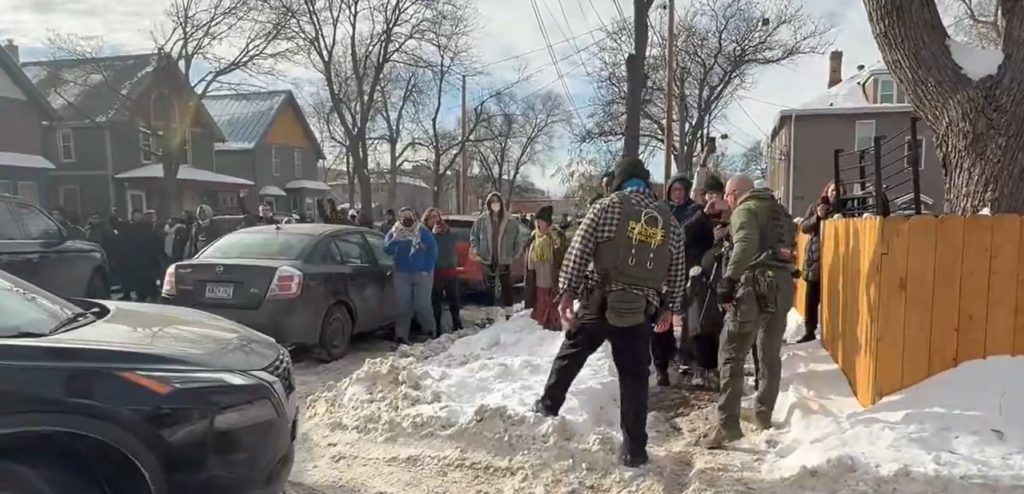

We are in a full-blown national crisis. On Saturday, 37-year-old Alex Pretti was killed during a federal immigration enforcement operation in Minneapolis. Protests spread nationwide. Saturday’s fatal shooting was the foreseeable consequence of continued obstruction, incendiary rhetoric, and a deliberate paralysis strategy leaving federal officers in danger. This is the moment the Insurrection Act was designed for — when federal law is obstructed and leaders refuse to restore order.
For centuries, Congress authorized presidents under the Insurrection Act to act before disorder metastasized into a national crisis, where federal law is obstructed, constitutional rights go unprotected by state or local authorities, and delay invites escalation. The Act exists to prevent collapse, not respond after cities burn down.
Critics claim the Insurrection Act is constitutionally vague and insist it may be used only as a last resort—arguing the President must stand down until clear chaos arrives. In their view, destruction must precede enforcement. That standard is constitutional malpractice, surrendering an affirmative duty in favor of waiting for catastrophe to justify action.
Delay is not an option. Federal authorities are making arrests during immigration enforcement operations as agitators interfere with lawful enforcement and large crowds confront officers. That escalation turned lethal Saturday. Multiple federal officers have been involved in fatal shootings during enforcement operations underscoring the seriousness of the sustained threats. The government has issued rewards for information leading to arrests, a clear sign that intimidation and criminal escalation are real.
Yet even after Saturday’s fatal shooting, opponents from Gov. Tim Walz and Mayor Jacob Frey to Rep. Ilhan Omar frame this as political and insist the President must wait for a collapse. This logic demotes federal authority to reactive theatre rather than a direct constitutional duty to enforce the law.
The Constitution disagrees. Article II does not instruct the President to wait for televised devastation or permission from local leaders. It imposes a duty to ensure the laws are faithfully executed. When federal law is obstructed, law enforcement is directed to stand down, and local governance fractures through refusal or political calculation, the President’s obligation is action.
History confirms this principle. In 1957, President Dwight Eisenhower acted decisively when state officials blocked the desegregation of public schools in Little Rock. Federal intervention arrived to enforce the law and protect citizens because Eisenhower understood the risk of violence and refused to wait for riots.
The cost of delay was tragically clear decades later. In 1992, following the acquittal of LAPD officers charged in the beating of Rodney King, protests in Los Angeles escalated into widespread violence. Federal troops were not deployed until three days later, after local capacity collapsed. By then, 63 people were dead, thousands injured, neighborhoods were destroyed, and nearly $1 billion in damage had already occurred. Delay magnified harm.
From George Washington’s suppression of the Whiskey Rebellion, to Ulysses S. Grant’s dismantling of violent Klan resistance, presidents consistently rely on federal power recognizing that delay emboldens defiance. Saturday’s shooting fits the constitutional and historical pattern for a president to act –obstruction tolerated, escalation permitted, predictable violence follows as federal agents are left exposed and unrest spreads nationwide.
Even with clear precedent, opponents raise objections. First, they claim the Insurrection Act is “authoritarian,” which is a smear. That accusation confuses lawful authority enacted by Congress and bounded by constitutional limits with lawlessness. The Insurrection Act does not suspend elections, censor speech, or criminalize dissent. It narrowly authorizes the use of federal resources to enforce existing law when it is actively obstructed.
Second, critics insist states must request presidential assistance. That ignores the text and purpose of the Act, which exists for situations when state officials refuse or fail to act— when politics override public safety and constitutional duty. Saturday’s events prove local leaders cannot veto federal law enforcement. Under the Supremacy Clause, federal law prevails because lives are at stake when it is obstructed.
Third, opponents warn of “militarization.” But Americans are not choosing between peace and federal intervention. They are choosing between enforcing federal law or accepting deaths, escalating violence, and the deliberate exposure of law enforcement officers to danger.
Lawful, early enforcement prevents far greater harm to civilians, officers, and the economy.
Once executive authority is exercised, Democrats and the mainstream media will claim “authoritarianism” and file injunctions. After weeks of paralysis and continued damage, the same voices will demand taxpayer-funded rebuilding of the cities they allowed to burn.
The Insurrection Act exists to prevent failure before it becomes irreversible. Saturday’s shooting is the cost of delay. Federal authority is a preventive constitutional duty, not a last-resort response to ashes. The Constitution does not ask presidents to wait for cities to burn—it commands them to act before they do.
Mehek Cooke, an attorney and political strategist, was a surrogate for the Trump for President Campaign and the Republican National Convention.
The views and opinions expressed in this commentary are those of the author and do not reflect the official position of the Daily Caller News Foundation.
(Featured Image Media Credit: Screenshot/X/JonahPKaplan)
All content created by the Daily Caller News Foundation, an independent and nonpartisan newswire service, is available without charge to any legitimate news publisher that can provide a large audience. All republished articles must include our logo, our reporter’s byline and their DCNF affiliation. For any questions about our guidelines or partnering with us, please contact [email protected].