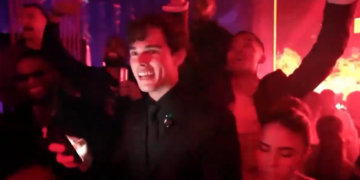




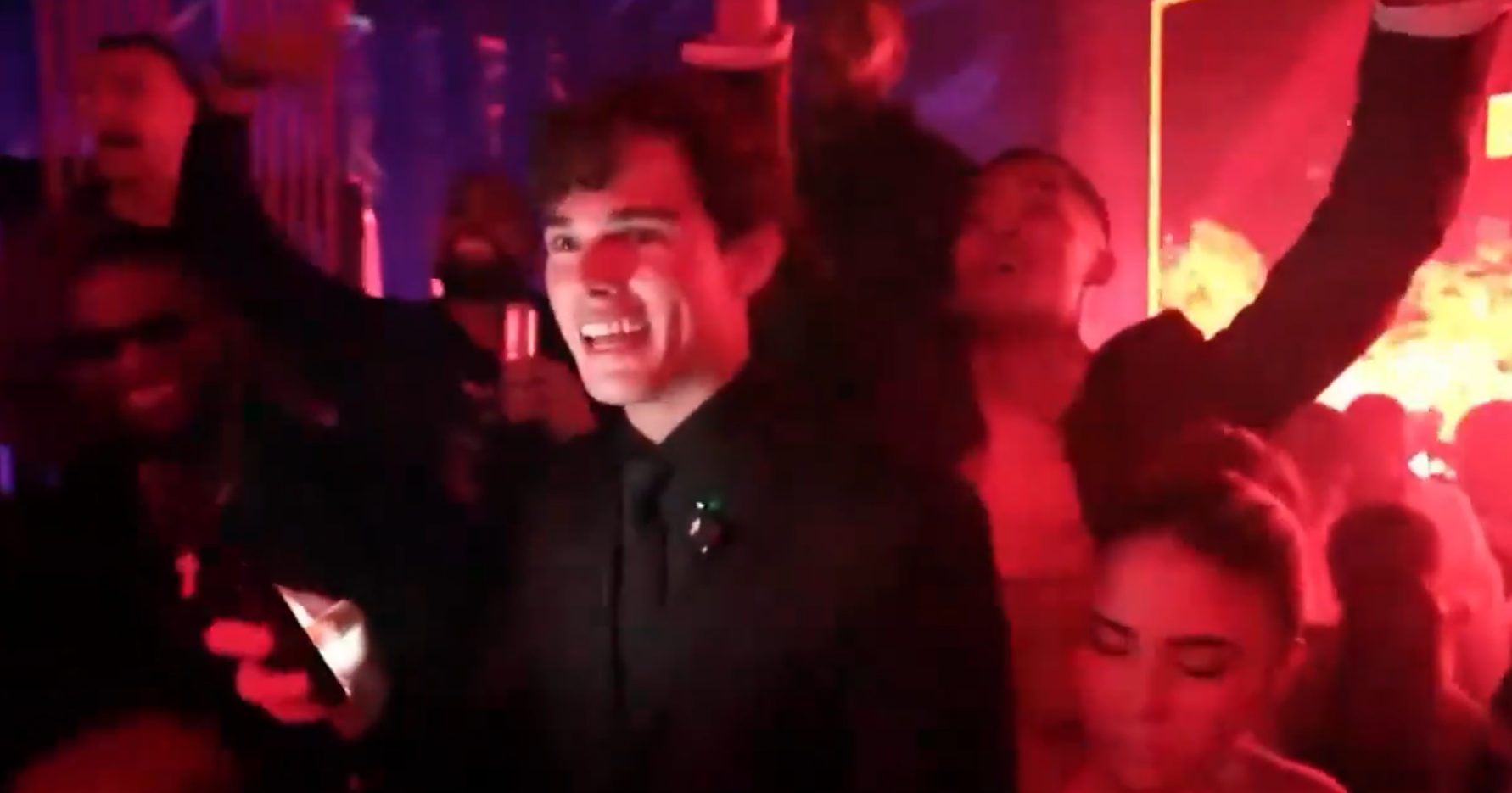
A late-night party in Miami has triggered fresh backlash after a group of high-profile internet personalities were recorded celebrating a song widely condemned for glorifying Nazism.
According to the New York Post, videos circulating online show influencers led by Nick Fuentes and Andrew Tate enthusiastically singing along to Kanye West’s banned track “Heil Hitler” while riding a party bus en route to a Miami nightclub.
Several people in the group appeared to throw Nazi salutes as the song played, prompting swift condemnation from viewers once the footage spread.
The group did not stop with the bus ride. After arriving at the popular nightclub Vendôme, they allegedly persuaded the DJ to play the same song again inside the venue. Additional video clips appear to show the influencers dancing, singing the lyrics, and continuing the celebration during bottle service.
Fuentes, Tate, and his brother Tristan were joined by Clavicular, Sneako, Justin Waller, and Myron Gaines.
In one clip, Gaines can be heard shouting “Jews mad!” immediately after performing a Nazi salute, according to the footage.
The scenes quickly drew outrage on social media, where critics accused the group of openly promoting hate and antisemitism under the guise of shock value and provocation.
The videos show the men laughing, chanting, and appearing energized by the reaction they anticipated the song would provoke.
“These values are fundamentally opposed to who we are and the environments we strive to create.”
Kanye West, now known as Ye, released the song last year amid a series of controversies tied to his repeated public praise of Adolf Hitler. The track was swiftly banned by most major music streaming platforms following its release.
Ye has previously declared admiration for Hitler and even produced merchandise featuring a swastika, actions that have led to widespread condemnation and severed business relationships.
Despite the song’s removal from mainstream platforms, it has continued to circulate in fringe online spaces, where it is often used as a provocation. The Miami incident underscored how that material is still being embraced by a subset of influencers who thrive on outrage and notoriety.
The footage from the nightclub and party bus reignited broader concerns about how extremist rhetoric and symbols are normalized in online culture, particularly when amplified by figures with large followings.
Critics argued that the spectacle was less about music and more about deliberately courting attention through hateful imagery and language.
As the clips continue to spread, the incident has become another flashpoint in the ongoing debate over platforming, accountability, and the real-world consequences of extremist content crossing from online spaces into public venues.












