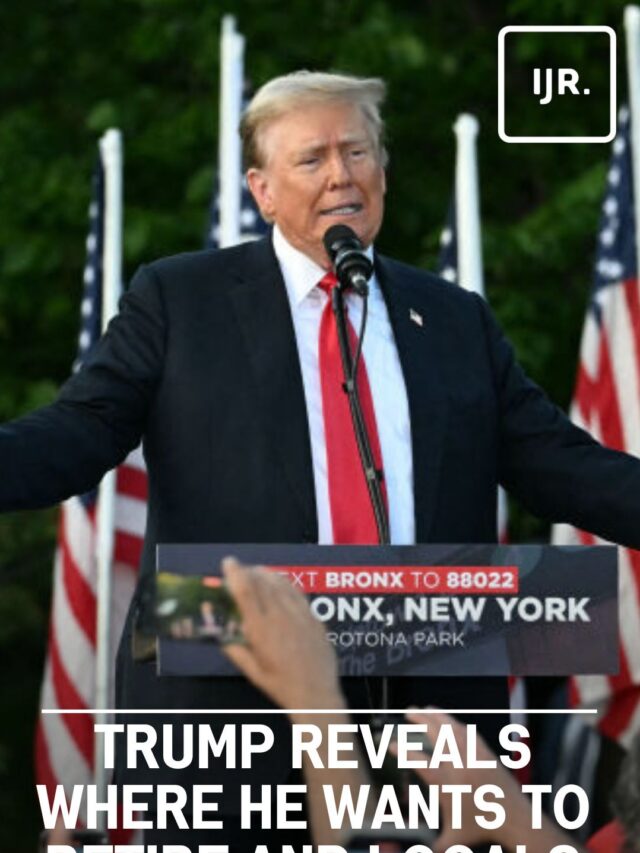




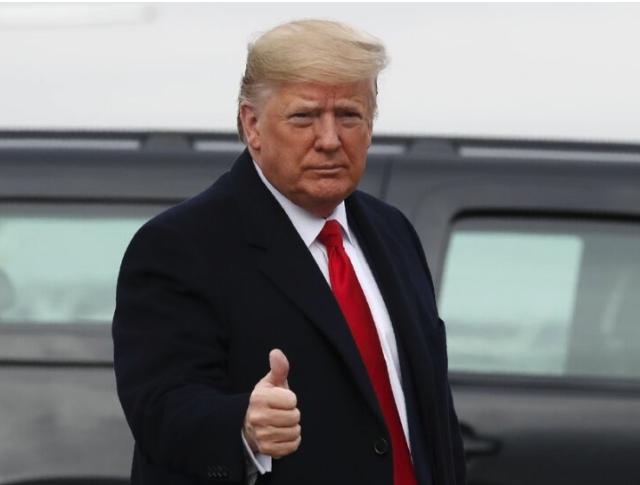
President Donald Trump secured a major international win this week when the United Nations Security Council voted to support his 20-point peace plan for Gaza. The resolution passed on Monday with 13 countries in favor and no vetoes, while only Russia and China abstained. The vote comes after months of negotiations and rising pressure to end the long-standing conflict in the region.
Trump’s plan outlines a ceasefire between Israel and Hamas, establishes a path toward the possible creation of a Palestinian state, and introduces the deployment of an International Stabilization Force (ISF). This force would help secure Gaza, disarm non-state groups, and support humanitarian aid delivery. It also includes the formation of a “Board of Peace,” a temporary governing body which, according to Trump, he would chair through 2027.
On his Truth Social account, President Trump celebrated the vote as a global achievement, calling it “one of the biggest approvals in the History of the United Nations.” He said the plan would promote peace around the world and shared his excitement about upcoming announcements related to the new peace board.

Trump credited the success of the deal to his team, including his son-in-law Jared Kushner and Special Envoy Steve Witkoff. The two recently met with Hamas and Qatari officials in Egypt to finalize the details. U.S. Ambassador to the UN Mike Waltz praised the outcome, describing Gaza as “a hell on Earth” after years of war, and saying the new plan is a “bold, pragmatic blueprint” that replaces rubble and despair with hope and security.
The ceasefire, which took hold on October 10, has already led to the release of 45 hostages by Hamas, according to Waltz. He said more hostages are expected to be returned soon. Despite ongoing violence and tensions in the West Bank, the administration considers the ceasefire a key first step in a larger peace effort.
The resolution also includes provisions for Palestinian self-determination, but only after the Palestinian Authority carries out a list of reforms. Once those reforms are complete and Gaza begins its recovery, the plan says a pathway to statehood may be considered. This part of the deal sparked debate among member nations. Countries like France, Guyana, Pakistan, and Slovenia reportedly had concerns about vague language surrounding a Palestinian state, but agreed to support the resolution after pressure from Arab and Muslim nations.
Those nations — including Egypt, Saudi Arabia, Jordan, Qatar, and the UAE — said they backed the plan to keep momentum going toward peace and to get aid into Gaza. However, they also stressed that Gaza’s territorial integrity must stay intact and that any real peace must include a two-state solution. Algeria’s UN ambassador Amar Bendjama, the only Arab member of the Security Council, stated that peace cannot happen without justice for Palestinians, who have long waited for statehood.
The UK also expressed support for the resolution and said it would continue working with the U.S. and other partners toward peace for both Israelis and Palestinians.
Still, challenges remain. Israeli Prime Minister Benjamin Netanyahu made it clear over the weekend that Israel remains opposed to a Palestinian state, saying their position has not changed. Israeli Ambassador to the UN Danny Dannon echoed that message, saying the main priority is disarming Hamas. He said Israel will not stop until the group no longer threatens its people.
Meanwhile, some of the countries expected to contribute troops to the ISF — including Turkey, Egypt, Indonesia, and the UAE — have reportedly raised concerns about the possibility of clashing with Palestinian militants. They were hesitant to send soldiers without UN approval, fearing their involvement might be seen as an occupation.
To address those concerns, the Trump administration made sure to bring the resolution to the Security Council. However, Russia circulated a competing draft, which said the U.S. plan did not go far enough in supporting a Palestinian state. Their version, which was not adopted, called for more direct action on a two-state solution but did not include the Board of Peace or ISF deployment.
Ambassador Waltz said that waiting any longer would only increase suffering. “Every day without this force, aid trucks lie idle, children starve, and extremists regroup,” he warned.
As of now, the U.S. is moving forward with implementing the plan. Trump’s administration views the UN vote as a turning point and says it will continue working with allies to ensure peace in the region becomes a reality. Whether that goal can be fully reached remains to be seen, but for now, the president is claiming victory — and looking ahead.