



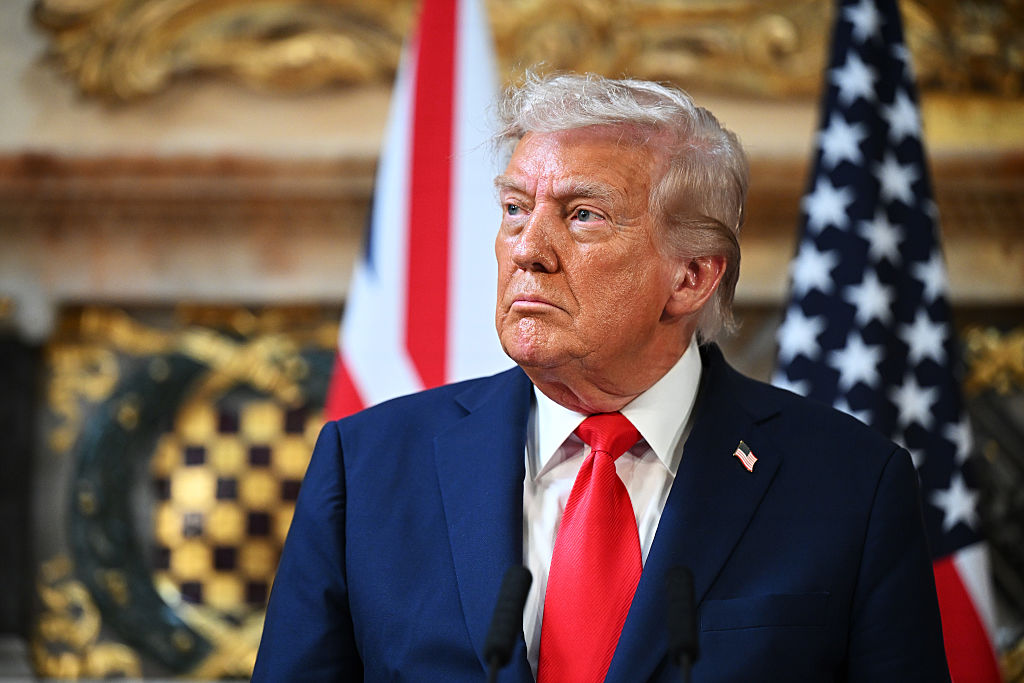
The Senate voted Thursday on a resolution aimed at limiting President Donald Trump’s authority to launch an attack against Venezuela, as lawmakers pressed for more oversight of his administration’s escalating military campaign in the Caribbean.
According to The Associated Press, the measure, introduced by Sen. Tim Kaine (D-Va.), would require congressional approval before any strike on Venezuelan soil. “We’re tired of Congress abdicating this most solemn power to a president,” Kaine said.
While the legislation faces little chance of becoming law, it forced senators to take a public stance on Trump’s approach toward Venezuelan President Nicolás Maduro.
U.S. forces have been building up a large naval presence in the region, including deploying an advanced aircraft carrier. “It’s really an open secret that this is much more about potential regime change,” said Sen. Adam Schiff (D-Calif.), who co-sponsored the measure.
Lawmakers from both parties have demanded more information about recent U.S. strikes on drug-smuggling vessels in the Caribbean and Pacific. Some Republicans expressed frustration that Congress wasn’t consulted.
“It just seems like there’s this pigpen-like mess coming out of the policy shop,” said Sen. Tom Cotton (R-Ark.), criticizing the Pentagon’s policy office.
To address growing unease, Secretary of State Marco Rubio and Defense Secretary Pete Hegseth briefed congressional leaders this week on the legal rationale behind the maritime strikes. They did not, however, address whether a direct attack on Venezuela was being considered.
Democrats and Sen. Rand Paul (R-Ky.) invoked the War Powers Resolution of 1973 to reassert congressional control over military action. A similar vote failed last month by a narrow margin.
GOP leadership urged senators to reject the resolution, with Sen. Lindsey Graham (R-S.C.) defending Trump’s aggressive tactics. “I like the idea that our commander-in-chief is telling narco-terrorist organizations you’re not only a foreign terrorist organization, but…we’re going to take you out,” Graham said.
Some Republicans, however, remained undecided. Sen. Susan Collins (R-Maine) said she was still reviewing the administration’s secret legal opinion on the strikes.
Sen. Thom Tillis (R-N.C.) opposed the resolution but questioned the campaign’s costs, suggesting the funds could be redirected to border security. “If the campaign continues for several months more, then we have to have a real discussion about whether or not we’re engaging in some sort of hybrid war,” he said.
“Congress has got to just stand up and be counted — or not,” Kaine added.












