




The Senate voted 51 to 50 to table a resolution Wednesday that would have blocked President Donald Trump from using future military force on Venezuela.
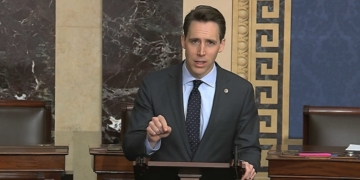
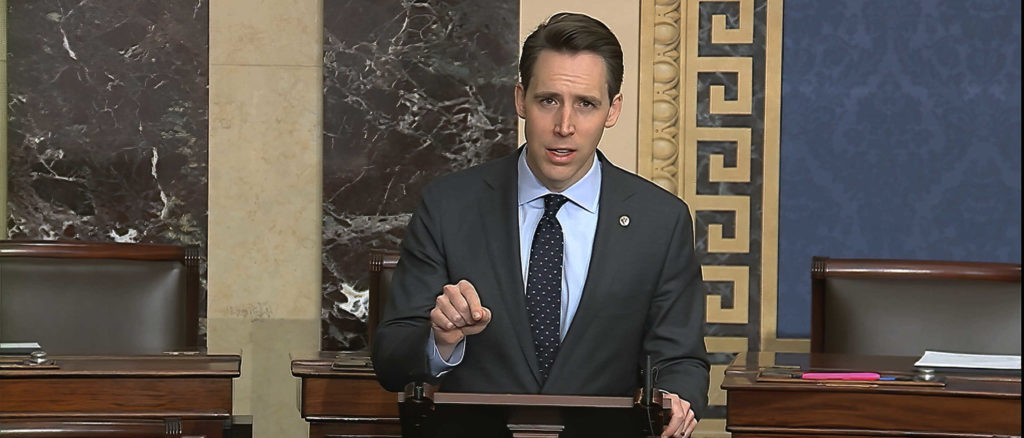
Republican Sens. Josh Hawley of Missouri and Todd Young of Indiana, who bucked Trump on Venezuela on Jan. 8, flipped their votes amid fierce lobbying from the president. Vice President JD Vance cast a tie-breaking vote to adopt the GOP point of order, which effectively killed consideration of the resolution.
If Republicans had failed to reject the measure, Trump could have faced another rebuke from the Senate after Hawley, Young and three additional Republicans voted to advance the war powers measure checking his authority Thursday.
Hawley, who has repeatedly voiced skepticism of regime change, reviewed classified details regarding the administration’s rationale for military action in Venezuela, in the lead-up to the vote. He also told reporters that he spoke to Rubio, who assured him the administration would seek congressional authorization before deploying troops to the country.
After extensive conversations with Trump administration officials, Young said Thursday he also received a commitment that the president would seek congressional approval if he decides to use future military force in Venezuela.
Despite Trump raging at the dissenting GOP lawmakers following the successful procedural vote Thursday, Republican Sens. Susan Collins of Maine, Lisa Murkowski of Alaska and Rand Paul of Kentucky supported advancing the war powers resolution. The president wrote in a Jan. 8 Truth Social post that all five of the Republicans who broke with him that day “should never be elected to office again.”
Murkowski told reporters that Trump did not convince her to flip her vote during their brief conversation.
“No, I am not considering changing my mind,” the maverick Republican said.
All Democrats voted “no” on the effort to table the resolution.
Senate Minority Leader Chuck Schumer, Democratic Virginia Sen. Tim Kaine and Paul were among the leading proponents of forcing congressional oversight regarding Trump’s future use of force in Venezuela.
Senate GOP leadership moved Wednesday to strip the war powers resolution of its “privilege,” arguing that because there is no active fighting in Venezuela nor troops on the ground, the war powers resolution is moot. Secretary of State Marco Rubio told senators Wednesday that there are no U.S. service members currently in Venezuela, in a letter first reported by Punchbowl News.
Republicans also noted their procedural maneuver had recent precedent. Democrats voted to table a resolution offered by Republican Texas Sen. Ted Cruz in 2024 that would have blocked the Biden administration from constructing a reputed humanitarian pier in Gaza.
Senate Majority Leader John Thune criticized the effort to constrain Trump’s authority on Venezuela, calling it a typical case of “anti-Trump hysteria.” The lead Republican also argued Venezuelan President Nicolás Maduro’s capture was “an isolated special forces raid in support of a valid warrant.”
“I don’t remember Democrats trying to tie the president’s hands when Democrat presidents took far more extensive military action that involved thousands of troops and air strikes over weeks and months in Libya, Bosnia, Serbia, and Haiti,” Thune said on the Senate floor Wednesday. “Today, they are claiming the opposite for a couple of hundred troops who were in Venezuela for a matter of mere hours and who have already returned to their bases in the United States or on U.S. Navy ships in international waters.”
The failed effort to check Trump’s authority in conducting further Venezuelan operations comes after a months-long buildup of assets in and around the South American country, which culminated in the capture of Maduro on Jan. 3. The Senate previously rejected a war powers resolution targeting Venezuela in November with only Paul and Murkowski joining Democrats.
“When we did the first [resolution], I had a lot of people say, ‘Okay, you’re amassing some military assets around Venezuela, but it’s probably a bluff…There was a sense that maybe it was premature the first time,” Kaine told reporters in the Capitol on Monday. “It was not theoretical by the time we had that vote last week.”
All content created by the Daily Caller News Foundation, an independent and nonpartisan newswire service, is available without charge to any legitimate news publisher that can provide a large audience. All republished articles must include our logo, our reporter’s byline and their DCNF affiliation. For any questions about our guidelines or partnering with us, please contact [email protected].