



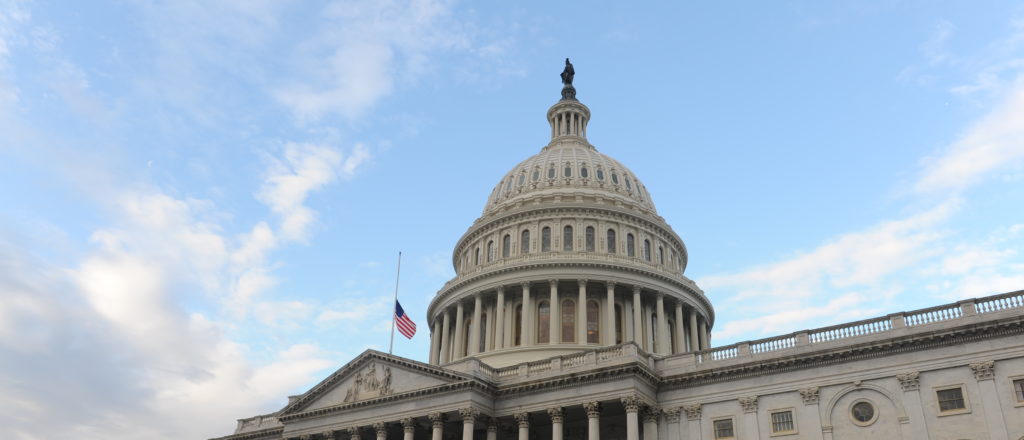

On Dec. 16, I testified before the House Judiciary Subcommittee at a hearing titled “Anti-American Antitrust: How Foreign Governments Target U.S. Businesses.” The phrase “anti-American” is not political theater. It describes a pattern: foreign governments are increasingly using antitrust and new “digital regulation” to impose one-sided obligations that fall overwhelmingly on a narrow set of firms—America’s leading technology companies.
In the United States, antitrust is argued as domestic law enforcement. Did a firm exclude rivals? Did consumers suffer? Abroad, antitrust is increasingly operating as trade policy in disguise. Instead of proving harm case by case, many jurisdictions are moving toward prescriptive rulebooks written in advance, often modeled on the European Union’s Digital Markets Act.
These regimes start by naming “gatekeepers” largely by size. Then they impose conduct codes: don’t favor your own products in rankings, limit product integration, open interfaces to competitors, and provide interoperability and data access. The key shift is that these obligations are imposed without the normal evidentiary burden — without showing that a specific practice actually harmed consumers.
In practice, that is how “regulation” becomes protectionism. It acts as a non-tariff barrier: not a tax at the border, but a dense set of mandates that makes it harder for foreign services to compete. The United States has a clear comparative advantage in digital services. So when rules are designed in a way that predictably targets U.S. platforms, the effect is to restrict America’s strongest export sector.
There is also a strategic dimension. The world is competing between two economic operating systems. One model prizes competition on the merits, property rights, and innovation. The other relies on state direction, distortions, and preferencing state-owned or state-connected firms. If allied regulations end up handing markets to Chinese competitors, the consequences for U.S. economic security are self-evident.
The macroeconomic context is equally sobering. Over the last two decades, growth across the advanced economies has slowed even as technology has improved. In the G7, GDP per capita growth fell from roughly 2.6% a year in the 1970s and 1980s to about 1.9% in the 1990s, 0.7% in the 2000s, and around 1.0% in 2010–2021. The puzzle is not a lack of innovation; it is that policy environments increasingly block innovation from becoming productivity and higher incomes.
Digital regulation built on the wrong model is part of that story. Technology markets are dynamic: firms compete for the market by innovating rapidly. The European approach to digital regulation (the DMA approach) assumes market power is static and permanent. They substitute bureaucracy for competition, mandating interoperability and data access in ways that can blunt investment incentives and disrupt efficiencies associated with scale and network effects. They base these approaches on doctrines that were designed to force government owned utilities to allow access to competitors, far removed from the reality of today’s vibrant digital sector.
Korea shows how quickly this becomes a trade and economic-security issue. Korea’s proposed Online Platform Markets Act—known under several names over time—paired with a more interventionist posture by the Korean Fair Trade Commission, would impose asymmetric burdens on large platforms that are principally American, while leaving domestic conglomerate-linked ecosystems comparatively less constrained.
Using our economic model, we estimate that DMA-style regulation in Korea would be associated with a loss of about $215 billion to the Korean economy over 10 years. When we incorporate recent enforcement trends and the interaction between up-front obligations and case-by-case antitrust, the projected loss rises to roughly $450–$470 billion over a decade, including harm to small and medium-sized enterprises that rely on U.S. platforms to reach markets.
Because these measures function as non-tariff barriers against U.S. digital exporters, the costs do not stop at Korea’s borders. Our analysis suggests that Korean competition policy and KOPMA-style regulation together may impose on the order of $500–$525 billion in long-run losses to the U.S. economy over 10 years, through reduced exports and weaker returns to innovation.
Washington should respond now.
First, treat foreign digital regulation as a core trade and economic-security issue. U.S. trade policy should recognize prescriptive, discriminatory digital regimes as non-tariff barriers and address them directly in bilateral and multilateral engagement.
Second, be prepared to use the full range of tools available—including Section 301 and Section 338 investigations and, where the national security dimension is clear, Section 232 authorities—to deter persistent, discriminatory harm to the U.S. economy. Deterrence is not escalation; it is a signal that massive trade-restrictive effects cannot be imposed on the United States under a regulatory banner without consequence.
Third, require disciplined, quantitative estimates of GDP, export, and investment losses created by foreign measures, and use that evidence to guide a proportionate response.
The strategic message should remain clear: competition policy should protect the competitive process, secure property rights, and keep markets open to rivalry. Rules that instead manage market structure or target firms because of nationality are not pro-competition. They are protectionism—costly to the imposing country, costly to the United States, and strategically beneficial to the very model we should be countering.
Shanker A. Singham, a former cleared advisor to USTR and UK Trade Secretary, is CEO of Competere and President of the Competere Foundation.
The views and opinions expressed in this commentary are those of the author and do not reflect the official position of the Daily Caller News Foundation.
(Featured Image Media Credit: Sadrulk/Wikimedia Commons)
All content created by the Daily Caller News Foundation, an independent and nonpartisan newswire service, is available without charge to any legitimate news publisher that can provide a large audience. All republished articles must include our logo, our reporter’s byline and their DCNF affiliation. For any questions about our guidelines or partnering with us, please contact [email protected].