



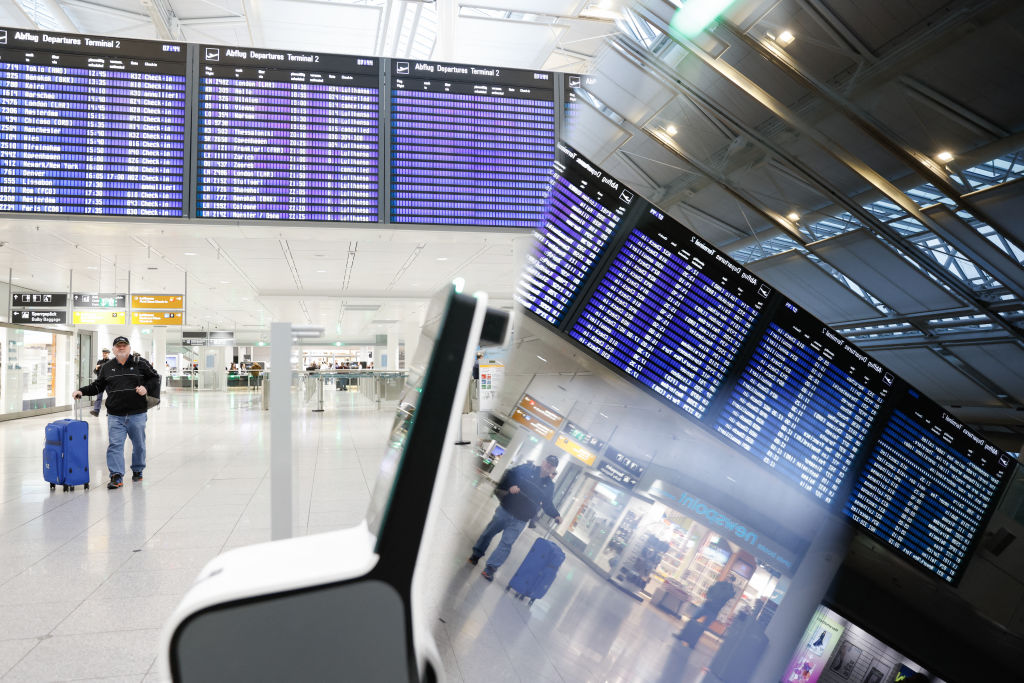
Flights were grounded, passengers were stranded, and questions about security in Europe rose again — all because of drones.
Late Thursday night into early Friday morning, Munich International Airport was forced to shut down operations after multiple drones were spotted near the airfield. German air traffic control first restricted flights at 10:18 p.m., then stopped all departures and arrivals entirely.
In total, 17 outgoing flights were delayed and 15 inbound flights had to be diverted to other cities. Nearly 3,000 passengers were affected overnight, according to the airport. Normal operations resumed by 5 a.m. local time, but the incident has triggered fresh concerns across Europe about how vulnerable its skies really are.
Munich airport, one of Europe’s busiest hubs, is forced to shut down for several hours after unidentified drones were spotted in nearby airspace pic.twitter.com/mhrGvFa86f
— TRT World Now (@TRTWorldNow) October 3, 2025
This isn’t the first drone scare to disrupt major airports in the region. And it likely won’t be the last.
Across the continent, sightings of unidentified drones — sometimes near airports, sometimes in national airspace — have become a regular concern. Some officials now believe they are part of a broader strategy of intimidation and testing by foreign powers, including Russia. Others are unsure of the source but agree that the threat is growing.
The European Union is already drafting a plan to create what it calls a “drone wall” — not a physical wall, but a high-tech shield made of sensors, signal jammers, and interception systems. The goal is to protect its eastern borders from unwanted drone intrusions, especially near Poland, the Baltics, and Romania — all countries that have reported recent drone activity.
Officials say the drones are cheap, fast, and often hard to trace. They can be used to gather intelligence, test air defenses, or in some cases, carry explosives. As the war in Ukraine continues, Russia has been using drones to attack infrastructure and confuse air defense systems — and now some fear those tactics are spilling into neighboring NATO countries.
Eastern European leaders have pushed hard for the drone wall project to be funded and built quickly. But western and southern countries in the E.U. have expressed concern about how much it will cost and how it will be managed. Some leaders also argue that defense investments shouldn’t be focused only on the eastern front.
French President Emmanuel Macron said that while the idea is important, the public should not expect a perfect solution overnight. “There is no wall, a perfect drone wall for Europe,” Macron said Thursday. “We’re talking about more than 3,000 kilometers of border. Do you think it’s totally feasible? The answer is no.”
German Defense Minister Boris Pistorius echoed that message, saying the system is still years away from being fully ready. But E.U. Defense Commissioner Andrius Kubilius said that detection systems could be in place within a year if funding is approved.
Meanwhile, leaders in countries closer to Russia, such as Finland, are urging the rest of Europe not to hesitate. Finnish officials say they stood in solidarity with the rest of the bloc during past crises — including the pandemic — and now expect the same level of commitment when it comes to national security.
Germany’s Munich airport said early on Friday that drone sightings on Thursday evening had forced air traffic control to suspend operations, leading to the cancellation of 17 flights and disrupting travel for nearly 3,000 passengers https://t.co/5wVOXAhk7m
— Reuters (@Reuters) October 3, 2025
Just weeks ago, NATO said fighter jets intercepted multiple drones in Polish airspace and turned away Russian jets near Estonia. Denmark also reported mysterious drone activity that forced temporary airport closures.
No country has officially blamed Russia for the latest incidents, including the one in Munich. But many leaders believe these disruptions are a sign that European airspace is being tested — and that quick, coordinated action is needed before the next drone flies too close.












