




The Trump Environmental Protection Agency just decided to no longer inflate the monetized benefits of EPA air quality regulations with imaginary deaths prevented. This has put the greens into orbit.
The New York Times headline blared “EPA to Stop Considering Lives Saved When Setting Rules on Air Pollution.” The article continues: “In a reversal, the agency plans to calculate only the cost to industry when setting pollution limits, and not the monetary value of saving human lives, documents show.”
EPA chief Lee Zeldin responded on X: “Yet another dishonest, fake news claim courtesy of the New York Times. Not only is the EXACT OPPOSITE of this headline the actual truth, but the Times is already VERY WELL AWARE that EPA will still be considering lives saved when setting pollution limits. The Times’ unyielding commitment to destroying journalism is second to none.”
What is going on?
The evaluation of a proposed rule’s costs and benefits has been a commonsense administrative requirement before setting new regulations since the Reagan administration. Until the Clinton administration, so-called cost-benefit analysis was an effective tool in stopping costly overregulation, particularly at the EPA. But the Clinton EPA figured out how to game the cost-benefit analysis process in order to issue its most expensive regulations – air quality rules that were eventually used by the Obama EPA to destroy half of the U.S. coal industry.
After failing in its first effort to implement an anti-fossil fuel agenda through a “BTU tax,” the Clinton EPA moved to issue more stringent air quality standards for ozone. The problem is that the monetized benefits of the tighter ozone standard (possibly fewer asthma attacks triggered by outdoor air) paled in comparison to the economy-wide compliance costs of the regulation (tens of billions of dollars).
The Clinton EPA’s solution was to pair the ozone proposal with another proposal to regulate, for the first time, a newly invented air pollutant called “fine particulate matter” or “PM2.5,” which is microscopic dust, soot or pollen in outdoor air. As described in great detail in my 2016 book “Scare Pollution,” the Clinton administration developed the false and junk science-based notion that normal levels of PM2.5 in outdoor air could cause people to die prematurely.
How did this help the ozone proposal? The EPA claimed that regulating PM2.5 would prevent 20,000 premature deaths per year. Each prevented death, the EPA claimed, provided economic benefits of $5 million. When you multiply 20,000 premature deaths prevented by $5 million dollars, you get $100 billion in economic benefits, which the EPA claimed would be much greater than any possible compliance costs. So the EPA’s proposed air quality rules passed the required cost-benefit test since the benefits outweighed the costs.
By the time of the Obama administration, the EPA was claiming that PM2.5 was responsible for 570,000 (i.e., about one in five) deaths per year in the U.S. and the value of preventing a premature death had risen to $9 million. Given that EPA determined there was no safe level of inhaling PM2.5, the cost-benefit analyses for its rules could beat back over $5 trillion in claimed compliance costs futilely spent trying to eliminate PM2.5 from the air.
The problem, though, is that the EPA’s claims were all chicanery. Both the alleged deaths caused by PM2.5 and the monetized value of a premature death were each invented out of thin air.
I have been in federal court with the EPA about its scientific claims on PM2.5, where it admitted that its primary line of evidence – i.e., epidemiology data – does not in fact show that PM2.5 outdoors has killed anyone. The EPA has also experimented on real people, including the sick and elderly, with high exposures to PM2.5. Those didn’t harm anyone either.
The monetization of premature deaths is truly bizarre. The $5 million value of a premature death avoided was derived through a type of economic research called “willingness to pay,” in which people are polled for how much they would pay for something of value. In the case of PM2.5, EPA nonsensically asked people how much they would be willing to pay to reduce their risk of premature death by 1-in-100,000.
Let’s say, for example, that your risk of dying prematurely is 50%. Per the results of the EPA’s survey, people would pay $50 to reduce that risk to 49.99999%. That sum multiplied by 100,000 is where the $5 million came from. EPA has arbitrarily raised the willingness-to-pay figure to $9 million per life saved.
Now let’s say you are a 99-year-old who, because of PM2.5, dies “prematurely” today instead of tomorrow, as EPA assumes otherwise would have happened. Because you died “prematurely,” according to the EPA, PM2.5 caused an economic loss of $5 million. Contrast that EPA fantasy with the realistic situation of a 21-year-old young soldier being killed on the battlefield. The U.S. government’s standard valuation of that soldier’s life, paid out in real dollars, is $100,000.
The Trump EPA has now merely decided that it will no longer consider the monetization of imaginary PM2.5 deaths in the cost-benefit analyses of EPA air regulations. This will ensure that air pollution regulations make sense and are not pointlessly burdensome – a welcome change after 30 years of EPA just making things up.
Steve Milloy is a biostatistician and a lawyer. He posts on X @JunkScience.
The views and opinions expressed in this commentary are those of the author and do not reflect the official position of the Daily Caller News Foundation.
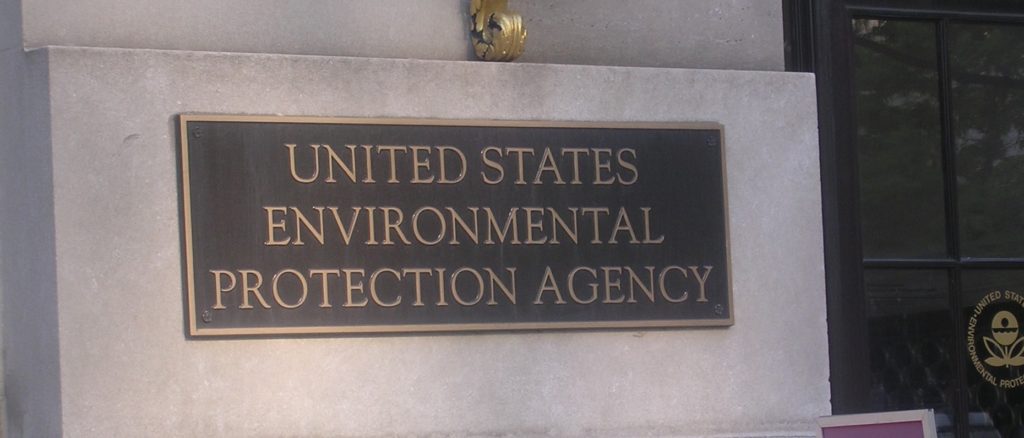
(Featured Image Media Credit: Environmental Protection Agency (EPA). Photo: mccready/Flickr)
All content created by the Daily Caller News Foundation, an independent and nonpartisan newswire service, is available without charge to any legitimate news publisher that can provide a large audience. All republished articles must include our logo, our reporter’s byline and their DCNF affiliation. For any questions about our guidelines or partnering with us, please contact [email protected].