



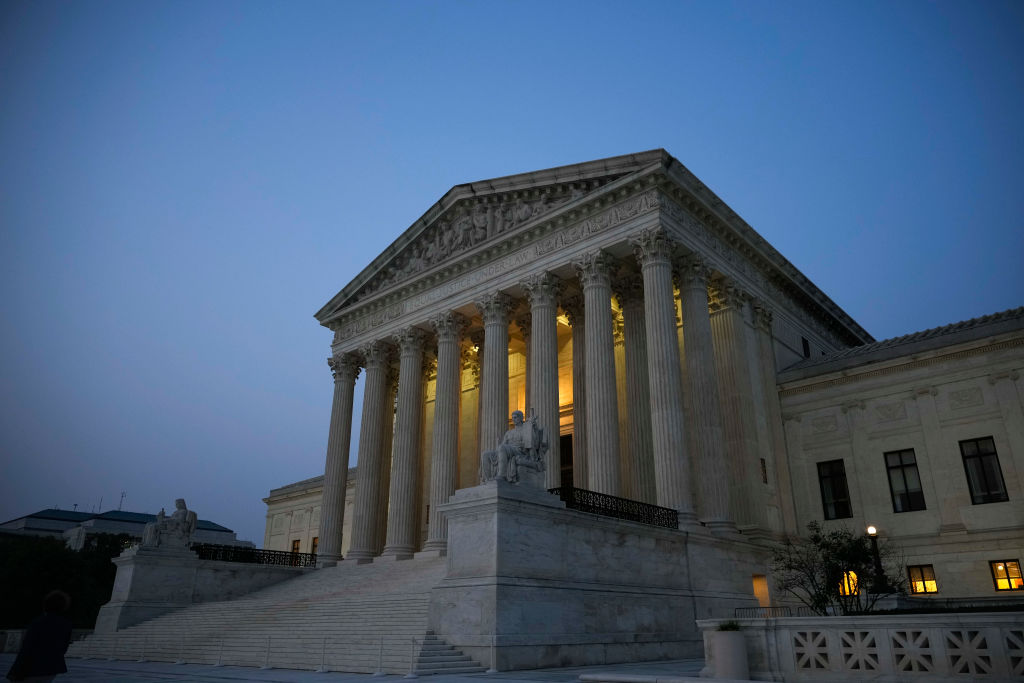
The Supreme Court returned to the center of the campaign finance battle on Tuesday, taking up a Republican challenge aimed at striking down decades-old restrictions on how much political parties can spend in coordination with their candidates.
According to The Associated Press, the case marks the latest clash over federal election rules, unfolding just a day after the justices signaled they are prepared to overturn a 90-year-old precedent governing presidential authority over independent agencies.
Now, the Court is eyeing a 2001 ruling that upheld spending limits first written into law more than half a century ago.
Democrats are urging the justices to leave the law intact, arguing that the limits protect federal campaigns from becoming conduits for wealthy donors seeking to avoid contribution caps.
The restriction at issue is straightforward: donors who max out to a candidate can’t then simply route unlimited cash through a political party that coordinates directly with that candidate.
Republicans, backed by President Donald Trump’s administration, say the rule is outdated, unconstitutional, and inconsistent with the Court’s modern approach to political speech.
That approach has shifted sharply over the past 15 years. Under Chief Justice John Roberts, the Court’s conservative majority has dismantled several congressional efforts to regulate election spending.
The landmark 2010 Citizens United decision paved the way for unlimited independent expenditures and redefined the landscape of campaign finance.
With both the Federal Election Commission and Republican groups now aligned in arguing that the coordinated spending limits violate the First Amendment, the Court took the unusual step of appointing outside attorney Roman Martinez to defend the law.
Martinez, a veteran Supreme Court advocate, told the justices they do not need to reach the merits at all. Because the FEC has no intention of enforcing the rule, he argued, the case is essentially meaningless.
Martinez wrote that there is “no credible risk” of the agency reviving the enforcement of a law it now believes is unconstitutional — a stance that could give the Court an off-ramp if the justices want to avoid a sweeping ruling.
The lawsuit originated in Ohio in 2022, filed by Republican campaign committees for House and Senate candidates along with two GOP lawmakers: then-Sen. JD Vance, now vice president, and then-Rep. Steve Chabot.
Despite the political and legal wrangling, the current coordinated spending limits remain significant.
For Senate campaigns in 2025, party committees can spend between $127,200 in low-population states and nearly $4 million in California. House races operate under a similar structure, with $127,200 allowed in single-district states and $63,600 everywhere else.
Whether those limits survive now rests with a Supreme Court that has repeatedly revisited — and often rewritten — the nation’s campaign finance rulebook.












