



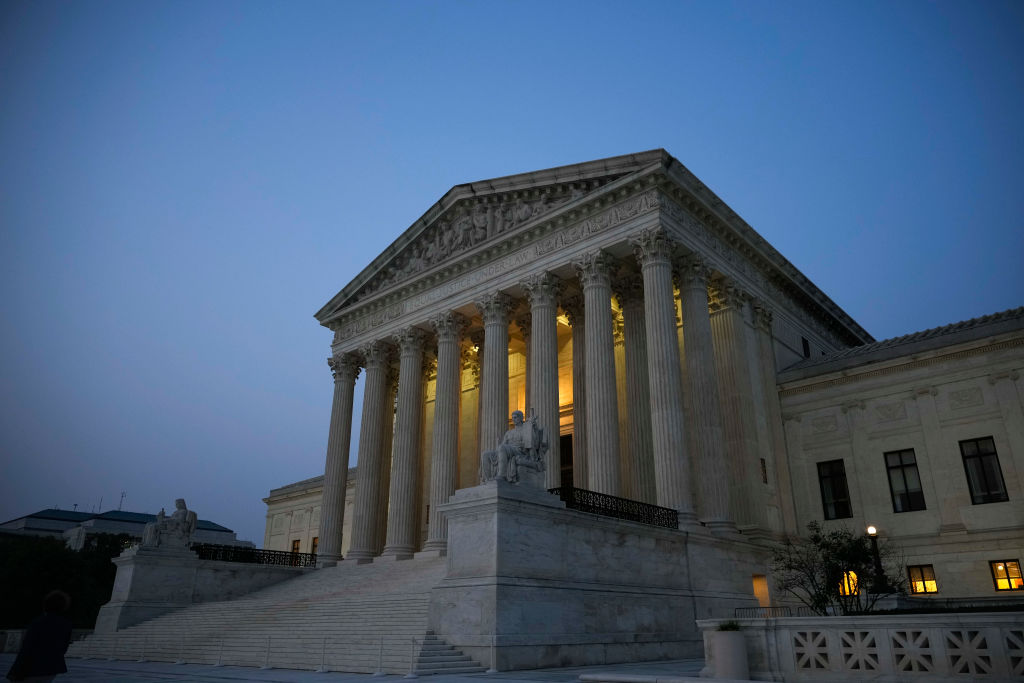
In a 6–3 decision split along ideological lines, the U.S. Supreme Court upheld a Texas law requiring age verification for online access to pornographic material.
The law is one of many across nearly half the states aiming to limit children’s access to explicit material amid growing concerns about smartphone accessibility, according to the Associated Press.
The majority opinion, written by Justice Clarence Thomas, concluded the Texas statute does not infringe upon adults’ free speech rights.
“Adults have the right to access speech obscene only to minors … but adults have no First Amendment right to avoid age verification,” Thomas stated.
The ruling rejected the Free Speech Coalition’s challenge, a trade group representing the adult industry, which argued the law imposed undue burdens on lawful adult content consumption.
Justice Elena Kagan dissented, arguing the Court should have applied stricter scrutiny when evaluating potential free speech infringements.
“The court’s decision … has the potential to upend access to First Amendment-protected speech,” said Samir Jain, policy VP at the Center for Democracy & Technology.
Texas Attorney General Ken Paxton praised the outcome, saying, “Companies have no right to expose children to pornography and must institute reasonable age verification measures.”
Pornhub, citing technical and privacy challenges, has withdrawn its services in Texas and other states with similar laws.
The Free Speech Coalition expressed concern that mandatory data submission by adults creates risks of hacking and surveillance, although it agreed that minors should not access pornography.
Historically, the Supreme Court struck down federal laws aimed at restricting minors’ online access to explicit content in 1996 and 2004, favoring less restrictive alternatives like content filtering.
However, Texas argued that modern technology allows efficient and privacy-conscious age checks, akin to ID checks upheld by the Court in the 1960s for adult stores.
Though district courts initially blocked such laws in several states, appeals courts have reversed those decisions, permitting enforcement.












