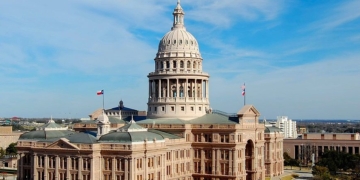






Law schools in Texas will no longer need the American Bar Association’s (ABA) approval after the state supreme court ruled this month that the organization will no longer have the final say on accreditation.
Approval of law schools now rests with the Texas Supreme Court, according to the Jan. 6 ruling. Concerns over ABA’s objectivity have been growing in recent months, and U.S. Attorney General Pam Bondi in February 2025 even accused the organization of subjecting law schools and students “to unlawful race and sex discrimination under the guise of ‘diversity’ mandates” by forcing schools to ensure their student and staff bodies are “diverse with respect to gender, race, and ethnicity.”
“[T]he Court advised that it intends to provide stability, certainty, and flexibility to currently approved law schools by guaranteeing ongoing approval to schools that satisfy a set of simple, objective, and ideologically neutral criteria using metrics no more onerous than those currently required by the ABA,” the court order reads.
In an earlier opinion issued during the court’s review of the issue, the justices explained their reasoning more directly, stating its preliminary view that the ABA “should no longer have the final say on whether a law school’s graduates are eligible to sit for the Texas bar exam and become licensed to practice law in Texas.”
Currently approved schools are not affected by the change, with the court stating it “does not intend to impose additional accreditation, compliance, or administrative burdens” and such schools will “remain approved law schools in Texas.”
ABA is the nation’s sole law school accreditor, giving it immense power until now to set the standards for schools across the country. Bondi’s scathing February letter seemed to open the door for states to ditch the agency.
“The Council’s status as the sole accrediting body of American law schools is a privilege, and mandatory diversity objectives are an abuse of that privilege, which is subject to revocation,” Bondi wrote. “Even if it does not come to that, it is unclear how state bars can lawfully continue to require prospective lawyers to attend ABA-accredited law schools if the Council continues to abuse its privilege in this way.”
Higher education accreditors have been known to force schools to adhere to various diversity, equity, and inclusion (DEI) frameworks in order to earn recognition from the agencies. With the Trump administration’s threats, however, many have backed down from their divisive requirements.
All content created by the Daily Caller News Foundation, an independent and nonpartisan newswire service, is available without charge to any legitimate news publisher that can provide a large audience. All republished articles must include our logo, our reporter’s byline and their DCNF affiliation. For any questions about our guidelines or partnering with us, please contact [email protected].