



The Guardian thought it had a blockbuster. What it delivered instead was another self-inflicted credibility wound that critics say fits a very familiar pattern.
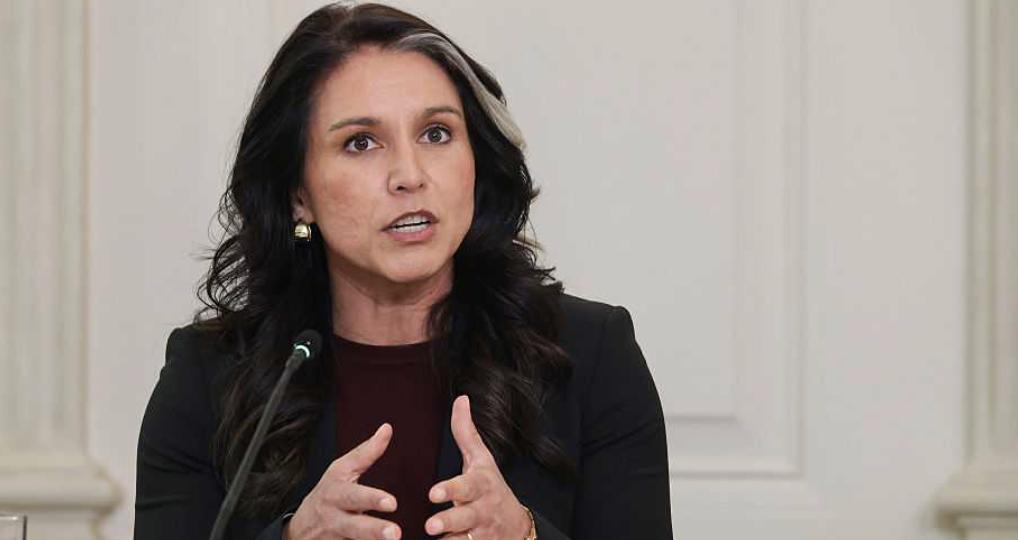
The British outlet published a hit piece centered on a so-called whistleblower targeting Tulsi Gabbard, a figure who has long drawn hostility from entrenched political and intelligence interests. Gabbard flatly denied the allegations from the start, and as the story unraveled, that denial aged far better than the reporting behind it.
Now the Guardian is quietly backpedaling.
The whistleblower at the center of the story, Bakaj, has walked back key elements of the allegations, forcing the paper to issue what it calls a “correction,” though critics note the changes amount to something closer to a retraction. The narrative that was initially framed as explosive has collapsed under scrutiny, leaving behind unanswered questions about how the story came together in the first place.
Those questions become more pointed when you look at the names involved. Observers quickly noticed a lineup of figures that will sound extremely familiar to anyone who followed Russiagate and other anti-Trump efforts over the past decade. Connections tied to Sen. Mark Warner and intelligence community veterans immediately raised red flags among skeptics, who argue this looks less like journalism and more like an operation.
Interesting that this hit on @TulsiGabbard is coming from the British Guardian.
The actual article is bs, of course.
But it shows you who the leaker is, which appears to be Senator Mark Warner’s cutout(s)
Christopher Steele/British intel run the Guardian so that’s probably… pic.twitter.com/D8x7UpamKo
Should the Guardian have published the Gabbard whistleblower story?— Svetlana Lokhova (@RealSLokhova) February 7, 2026
According to critics, routing the story through a UK outlet may not have been an accident. Publishing sensitive or dubious material domestically can trigger legal and national security barriers in the United States. Once the story appears overseas, however, American outlets can safely cite it. The tactic is old, well-documented, and frequently associated with intelligence laundering.
Placing or amplifying questionable narratives through foreign media has long been described as a standard CIA technique, particularly when domestic scrutiny would be too intense. In this case, critics argue, the Guardian functioned as a convenient delivery system, allowing allegations to circulate widely before being fact-checked into oblivion.
The broader accusation is that anti-Trump elements within the CIA and NSA, aligned with political operatives like Warner and assisted by sympathetic foreign media, are once again playing a familiar game. The objective isn’t accuracy. It’s damage. Once the accusation is out there, the retraction never travels as far.
That playbook defined Russiagate. Anonymous sources, breathless headlines, foreign media amplification, and then, months or years later, quiet walkbacks that barely register.
What’s striking is not just that this attempt failed, but that it was attempted at all. The same names, the same tactics, the same outcome. You’d think after years of public exposure and institutional embarrassment, the lesson would have been learned.
The post The Guardian Retracts ‘Whistleblower’ Report Attacking Tulsi Gabbard After Their Dubious Source Is Revealed appeared first on Red Right Patriot.