




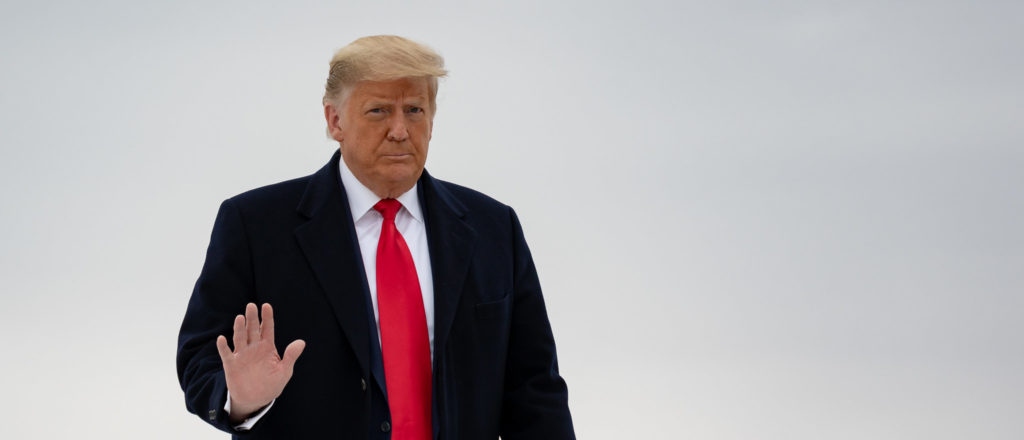

The House of Representatives advanced a defense policy bill backed by President Donald Trump on Wednesday afternoon after a handful of conservative lawmakers threatened to tank the legislation.
House conservatives initially opposed a resolution advancing the $900 billion defense bill setting policy for the Department of War for fiscal year 2026 — only to flip their votes to “yes” while the vote was held open for over an hour. The conservative group railed against the National Defense Authorization Act (NDAA) for various reasons, including the omission of a non-defense provision banning a central bank digital currency (CBDC) favored by Republicans and the authorization of $400 million in new security assistance for Ukraine.
Republican Reps. Marjorie Taylor Greene of Georgia, Anna Paulina Luna of Florida, Tim Burchett of Tennessee and Josh Brecheen of Oklahoma ultimately supported the resolution after initially opposing it. Kentucky Rep. Thomas Massie was the lone Republican to stick to his “no” vote.
The conservative group pointed to several concessions they won in exchange for their votes to advance the mammoth legislation.
Burchett, who has sounded the alarm about taxpayer dollars flowing to the Taliban, said Secretary of State Marco Rubio agreed to cut off all funding to the group. Luna added the group received a commitment to make a CBDC ban permanent. The Florida Republican alleged Democratic Massachusetts Sen. Elizabeth Warren opposed the measure’s inclusion in the bill.
“The House will go to war with the Senate over that,” Luna told reporters following the vote.
The marquee defense policy bill passed the House of Representatives during a vote of 312 to 112 later on Wednesday.
Nearly 20 Republicans voted against the legislation on final passage. All Democratic lawmakers opposed the procedural rule, though nearly 100 Democrats ultimately backed the measure.
Conservative lawmakers excoriated the NDAA despite the White House coming out in support of the defense policy measure Tuesday evening. The Daily Caller News Foundation was first to report on a White House document saying Trump “strongly supports” this year’s marquee defense bill.
“NDAA in current form is NO GO,” Luna wrote on X shortly before the procedural vote on Wednesday. The Florida Republican ultimately supported the procedural rule advancing the sprawling legislation, citing several concessions conservatives won.
Most GOP lawmakers supported the 3,000-page bill heading into Wednesday’s procedural vote. Republicans highlighted provisions that codify more than a dozen of Trump’s executive orders, restrict investment in China and enact a pay increase for U.S. service members.

WASHINGTON, DC – SEPTEMBER 2: Rep. Anna Paulina Luna (R-FL) leaves a meeting with some of Jeffrey Epstein’s accusers at the U.S. Capitol on September 2, 2025 in Washington, DC. (Photo by Kent Nishimura/Getty Images)
Greene, who voted to advance the defense policy bill, has sharply criticized the measure this week, citing provisions authorizing security assistance to a variety of foreign countries, including Ukraine, Israel and Taiwan.
The retiring member also criticized House GOP leadership for failing to secure a CBDC ban in the NDAA, which leadership had promised conservatives in exchange for supporting landmark cryptocurrency legislation in July. Republican privacy hawks argued that a central bank digital currency could grant the federal government widespread surveillance over Americans’ financial transactions.
“As usual, he didn’t keep his promise, it’s not in the NDAA so the CBDC loophole remains,” Greene wrote on X.
Republican Texas Rep. Keith Self introduced an amendment to reinstate the CBDC ban into the NDAA, but the House Rules Committee did not advance the measure.
“We [conservatives] have been forced into a take-it-or-leave-it bill that breaks that promise,” Self wrote on X. “Without that language, I’m inclined to leave it.”
The Texas Republican confirmed to reporters he would help advance the defense bill during a procedural vote, but would oppose the legislation during a subsequent vote on final passage.
Rule votes tend to be partisan exercises even if members of the minority support the underlying legislation on final passage.
The NDAA will now head to the Senate where the defense policy bill could be approved as early as next week.
Republican Kentucky Sen. Rand Paul, who frequently votes against major defense legislation, signaled he would oppose the annual defense policy bill.
“That’s not America First,” Paul wrote on X regarding the legislation’s provisions authorizing new assistance for Ukraine.
Andi Shae Napier contributed to this report.
All content created by the Daily Caller News Foundation, an independent and nonpartisan newswire service, is available without charge to any legitimate news publisher that can provide a large audience. All republished articles must include our logo, our reporter’s byline and their DCNF affiliation. For any questions about our guidelines or partnering with us, please contact [email protected].