



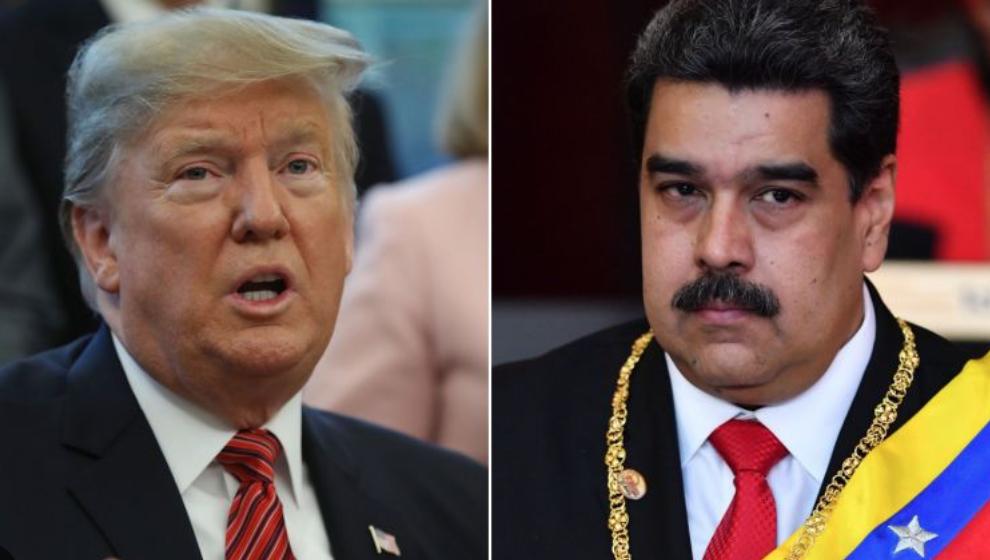
They say the bombers never flew near Venezuela. But the reports say otherwise. And in the middle of it all is a growing wave of tension — one that’s now pulling U.S. foreign policy, military strategy, and international law into the same rip current.
On Thursday, The Wall Street Journal reported that two U.S. Air Force B-1 bombers took off from Dyess Air Force Base in Texas and flew close to Venezuelan territory. According to the report, the bombers stayed in international airspace, but their presence — so close to a country the U.S. has called a “narcoterrorist state” — set off alarm bells. The Journal said this maneuver followed a recent “attack demonstration” by U.S. warplanes in the region.
But President Donald Trump didn’t waste time shooting the story down. “No, that’s not accurate,” he said when asked directly. Still, his next sentence cut through the uncertainty: “But we’re not happy with Venezuela.” That simple statement — vague but loaded — was the only clarity he offered.
Here’s where it gets more complicated. Trump confirmed that land-based strikes could be on the table. He stated that Congress would “definitely” be informed if the administration went that route, though he also implied he may not need their permission to escalate military action. At the same time, his administration continues to tie these military movements to the war on drugs — a war that, according to Trump and Defense Secretary Pete Hegseth, now resembles a counterterrorism operation.
REPORTER: Why not stop the narco-terrorist boats from Venezuela with the Coast Guard instead of striking them with missiles?!
PRESIDENT TRUMP: Because we’ve been doing that for 30 years and it has been totally INEFFECTIVE. They have fast boats…but they’re not faster than… pic.twitter.com/HpxL91GLvm
— Eric Daugherty (@EricLDaugh) October 15, 2025


This week alone, the U.S. military launched its ninth strike on a suspected drug-smuggling vessel in the eastern Pacific Ocean. According to Hegseth, the strike killed three people. Just a day earlier, another vessel was hit, killing two. The Trump administration says these operations are part of a broader campaign that began last month — a campaign that has now taken at least 37 lives. Until recently, most of the strikes were concentrated in the Caribbean. The shift into the Pacific, officials say, marks a broader approach to intercept drug routes before they get anywhere near U.S. borders.
And the language coming out of Washington is only growing more forceful. Hegseth didn’t mince words. “We will treat you like we treated Al Qaeda,” he said, referring to the cartels. “We will find you. We will map your networks. We will hunt you down and we will kill you.” That line — so stark and final — signals a major escalation in both tone and policy.
While the Trump administration sees these moves as decisive, other nations in the region are pushing back. Colombia’s government issued a public plea for the U.S. to stop its attacks and return to diplomatic methods. In a statement, it urged the U.S. to “respect international law” and warned against military moves that could destabilize cooperation. Mexico’s President Claudia Sheinbaum also raised concerns, reminding the U.S. that there are legal limits to how law enforcement operates in international waters.
At the same time, Attorney General Pam Bondi said U.S. law enforcement has been working around the clock to dismantle the infrastructure that supports the cartels. She pointed to large quantities of seized drugs and a sharp uptick in arrests as proof that the administration’s hardline approach is working. The president added that overdose deaths — which spiked during the Biden administration — have finally begun to fall since he returned to office.
But the real flashpoint is still Venezuela. While Trump says no bombers flew near its airspace, The Wall Street Journal insists they did. And even if the truth lies somewhere in between, the real tension comes from what could happen next. If American bombers really did skirt Venezuelan airspace, is it a warning shot? Or a sign of something more?
Maduro offered Trump a dominant stake in Venezuela’s oil, gold, and mineral wealth & agreed to cut ties with Russia and China.
Trump declined and just sent 10,000+ troops and 10% of the entire U.S. Navy to the region.
“Peace president” my ass. Total failure in every way. pic.twitter.com/TDyBEnVmns
— Stew Peters (@realstewpeters) October 17, 2025
The ambiguity might be intentional. The administration has ramped up both rhetoric and action, but it hasn’t drawn a clear line on how far it’s willing to go. Venezuela’s president, Nicolás Maduro, remains defiant. The U.S. still labels him a narcoterrorist. And now, with bombers in the sky — or not — and ships being struck at sea, the next move could determine whether this remains a regional campaign against drugs or spirals into something far more unpredictable.
The biggest question may not be who’s telling the truth — but what story the next set of headlines will tell. Because if the skies near Venezuela really are getting busier, then something larger might already be in motion.