

Few policy initiatives could bring together Health and Human Services (HHS) Secretary Robert F. Kennedy Jr. and Pfizer CEO Albert Bourla.
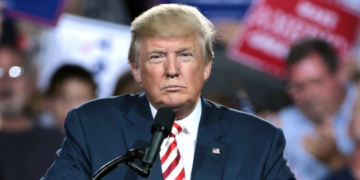
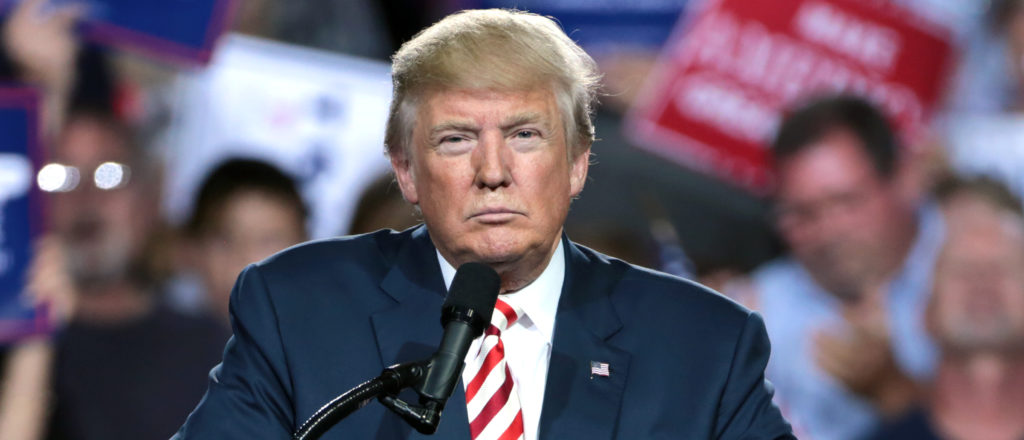
But both men flanked President Donald Trump Tuesday as he announced that the pharmaceutical company had reached an agreement with the administration to bring its prices down for American consumers as part of Trump’s “Most Favored Nation” initiative.
Pfizer will offer all prescription drugs at a “heavily discounted” price through Medicaid, Trump said, while some Pfizer drugs will be available for purchase at discounted prices through a website operated by the federal government, which news reports say will be called TrumpRx. All new Pfizer drugs brought to the U.S. market by the drugmaker will be offered at the Most Favored Nation price. The company has also pledged billions in U.S. pharmaceutical manufacturing in the U.S.
The policy involves examining an index of prices paid by other wealthy countries around the world and using the lowest of those as the starting point of negotiations with the pharmaceutical industry, resulting in steep discounts, officials said, of as much as 80%.
The announcement follows a May executive order that called on pharmaceutical companies to recalibrate U.S. drug prices and bring them into alignment with the lower prices paid in Europe. Trump has accused foreign nations of freeloading off of massive American investments in pharmaceutical research and development. Trump has faulted the European Union in particular for applying pressure on drugmakers to charge much less than in the U.S. market.
“I think this is one of the largest medical announcements that this office has ever made,” Trump said. “We will be paying essentially what other countries pay.”
“We’re ending the era of global price gouging at the expense of American families,” Trump continued.
Trump indicated that the coming weeks will bring further deals with other pharmaceutical companies.
The May executive order called for the U.S. Trade Representative and Commerce Department to ensure foreign countries are paying their fair share in pharmaceutical research and development while tasking HHS with negotiating lower prices in direct-to-consumer sales with the industry akin to what European countries pay.
The administration pledged to implement “an aggressive suite of reforms” targeting pharmaceutical companies that would not come to the table. These could include new rules requiring lower prices in Medicare Part B and Medicare Part D; tackling anti-competitive practices by the pharmaceutical industry through the Federal Trade Commission and the Department of Justice; exploring the reimportation of drugs; and restricting pharmaceutical exports.
Bourla said that the two motivators for his company for coming to the negotiating table were avoiding tariffs and avoiding uncertainty about drug pricing policy. The company will receive a three year “grace period” from tariffs in exchange for onshoring billions in pharmaceutical manufacturing.
“The president is right. Tariffs are the most powerful tool to motivate behaviors,” Bourla said.
Pfizer’s stock price climbed following the news.
Trump thanked Kennedy, Commerce Secretary Howard Lutnick, Centers for Medicare and Medicaid (CMS) Commissioner Mehmet Oz and Food and Drug Administration (FDA) Commissioner Marty Makary.
“This policy is a shield for the chronically ill who have carried the burden of high drug costs for far too long,” Kennedy said. “No family should have to choose between filling a prescription and putting food on the table.”
Kennedy said that while previous administrations had promised to bring down drug prices, they had faltered on the “daunting task.”
Comments by both Kennedy and Oz indicated the negotiations were heated, both from the dealmaker-in-chief and the pharmaceutical company.
Kennedy said the president’s pressure on his cabinet to reach a deal “gave him anxiety.”
“President Trump harangued and harassed us to make this happen. I was getting calls at 11:30, 12 o’clock at night: ‘Oh are you asleep? You gotta get MFN done.’” Kennedy said.
“Now I have to admit that the president has me on speed dial,” Oz added. “And most of the time he would call me … it was about [Most Favored Nation], and he always had reasons we needed to go faster, why people were being hurt today because we were allowing the kinds of pricing that had been tolerated for so many decades in America.”
“Albert Bourla looks very tough up here and very cat-like, but he is ferocious when you get him in a negotiating room,” Oz said. “This is true for all of the pharmaceutical companies we are negotiating with.”
U.S. taxpayers invest hundreds of billions in the basic research driving nearly every drug on the market through the National Institutes of Health: 354 of the 356 drugs that the Food and Drug Administration approved between 2010 and 2019, according to a 2023 study. The U.S. also subsidizes private R&D investment by paying the highest drug prices in the world. Other developed countries pay 24% of the list price that American patients and taxpayers are charged for drugs, according to an American First Policy Institute policy paper.
All content created by the Daily Caller News Foundation, an independent and nonpartisan newswire service, is available without charge to any legitimate news publisher that can provide a large audience. All republished articles must include our logo, our reporter’s byline and their DCNF affiliation. For any questions about our guidelines or partnering with us, please contact [email protected].