




Global energy markets are reeling after the United States and Israel launched a sweeping military offensive against Iran, triggering retaliation that has disrupted critical oil infrastructure across the Middle East and pushed crude prices sharply higher.
The conflict began early Saturday when American and Israeli forces carried out a massive wave of air strikes that reportedly killed Iran’s Supreme Leader, Ayatollah Ali Khomeini, while hitting more than 1,000 military targets across the country. The strikes marked one of the most aggressive joint operations in the region in decades and immediately triggered a wave of retaliation from Tehran.
Iran responded with missile and drone attacks aimed squarely at energy infrastructure in the Persian Gulf. Major facilities tied to Saudi Arabia, Qatar, and the United Arab Emirates were struck, sending shockwaves through global oil markets and threatening one of the world’s most important energy corridors.
Brent crude, the international benchmark used to price oil globally, surged past $80 per barrel following the attacks. According to industry analysts, that jump has already pushed U.S. gasoline prices up by roughly 20 cents per gallon.
Energy analyst David Blackmon explained that American consumers remain tied to global pricing regardless of domestic production levels.
“The price for crude oil is set on a global commodity trading market that is reflected mainly in the Brent crude price,” Blackmon told the Daily Caller News Foundation. “All contracts for sale of crude globally work back from that index price.”
Market data from S&P Global suggests that every $10 increase in Brent crude typically translates into a roughly 24-cent increase at the pump for U.S. drivers. If prices climb to $100 per barrel, gasoline could approach $4 per gallon nationwide.
Iran’s retaliation has targeted the energy backbone of the Gulf Cooperation Council, which accounts for nearly 30 percent of global oil exports.
Drone strikes reportedly forced Saudi Arabia’s massive Ras Tanura refinery to partially suspend operations, while Qatar’s largest liquefied natural gas facility was also taken offline. In the United Arab Emirates, the Fujairah Oil Industry Zone caught fire after additional Iranian attacks, creating further uncertainty in global fuel supplies and delaying tanker refueling operations.
The attacks have also rattled maritime traffic through the Strait of Hormuz, one of the most strategically important shipping lanes in the world. Roughly a quarter of all seaborne oil shipments pass through the narrow waterway.
Following Iranian drone strikes on civilian tankers, maritime traffic through the strait has collapsed to nearly zero. The immediate cause is not just security threats but skyrocketing insurance costs for shipping companies.
“Right now, the stoppage in tanker movements through the Strait of Hormuz is strictly an insurance issue,” Blackmon said, noting that insurers are demanding steep war-risk premiums before allowing vessels to pass through the area.
Despite the turmoil, U.S. gasoline prices have risen more modestly than some analysts feared. Since the start of the operation, average prices have climbed from $2.98 per gallon to about $3.19, according to AAA — still far below the peak levels Americans experienced during the Biden administration.
Part of the cushion comes from America’s surge in domestic energy production. Since 2014, U.S. crude output has increased by roughly 50 percent, while net oil imports have dropped by about 65 percent. Imports from Gulf Cooperation Council countries now account for less than 8 percent of U.S. supply.
Still, global markets ultimately drive pricing.
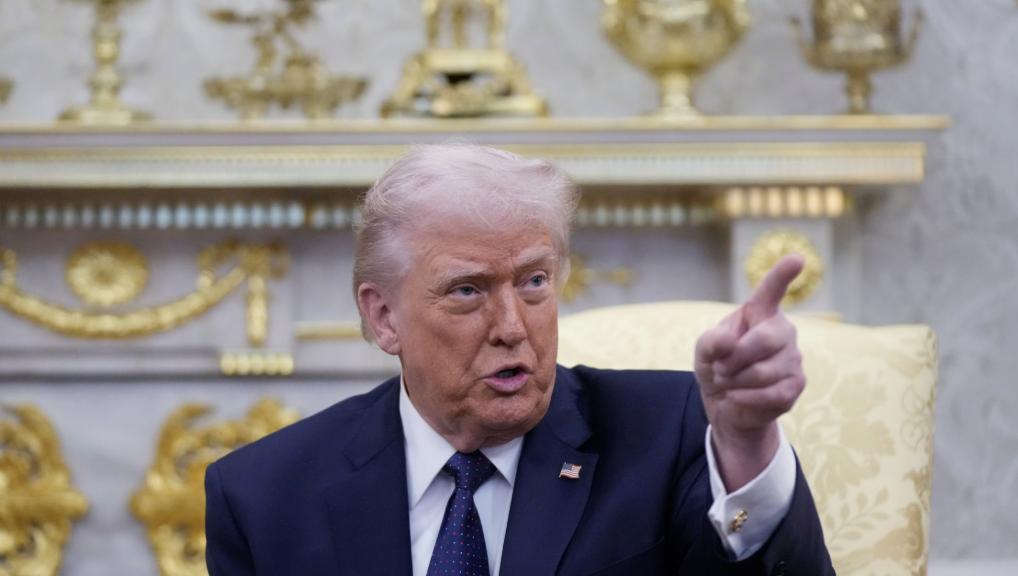
President Donald Trump has moved quickly to stabilize shipping routes. On Tuesday, he announced that the U.S. International Development Finance Corporation would provide political risk insurance for vessels traveling through the Strait of Hormuz. The administration is also considering U.S. Navy escorts for commercial tankers.
Experts say the measures could restore confidence in the short term. If shipping insurance negotiations are resolved within a week, price increases at the pump could remain limited.
But if the strait remains effectively closed for weeks or months, the consequences could be severe.
“If it is closed on a protracted basis, weeks or months, then oil prices would potentially climb to levels unseen in years,” said U.S. Naval Reserve officer and Alabama Senate candidate Morgan Murphy.
For now, tanker traffic through the strait remains down roughly 90 percent, leaving global energy markets bracing for what could become one of the most significant oil disruptions in decades.












