



A powerful 8.8-magnitude underwater earthquake off the eastern coast of Russia has triggered a tsunami that slammed into Hawaii and the U.S. West Coast, sending shockwaves—both geological and human—across the Pacific basin.
Thousands of residents and tourists were forced to flee to higher ground in places like Hilo, Kauai, and Maui as tsunami sirens blared across the islands, according to Fox Weather.
“We do expect damage,” Hawaii Governor Josh Green warned. “If you stay on the beaches, you could risk death.” He added, “It is, again, not just a 3-foot wave. It is a forceful wall of water.”
The Pacific Tsunami Warning Center had issued a Tsunami Warning across the entire state of Hawaii following the quake, which struck just offshore from Petropavlovsk, Russia. That alert has since been downgraded to a Tsunami Advisory, but officials are urging continued caution.
“The Pacific Tsunami Warning Center (PTWC) has downgraded the forecast from a Tsunami Warning to a Tsunami Advisory,” said Maj. Gen. Stephen Logan. “The PTWC continues to monitor for more data to update its forecast and for an all-clear that it may issue later on.”
Even under the downgraded alert, the threat remains real.
“A Tsunami Advisory means that the potential for strong currents or dangerous waves are expected or occurring for those in or near the water,” Logan added. “There may be flooding of beach or harbor areas. Those who have evacuated may safely return home based on county assessment and directives.”
Wave heights reached alarming levels across the state of Hawaii:
Kahului reported a 5.7-foot wave amplitude
Hilo saw 4.9 feet
Haleiwa measured 4 feet
Hanalei logged 3 feet
The tsunami took around six hours to travel the more than 3,500 miles from the quake’s epicenter to the Hawaiian Islands. Sirens went off in 30-minute intervals, including a final wail just before the first wave hit.
Watch the video below:
Meanwhile, the mainland U.S. was not spared.
In California, Crescent City reported a 3.6-foot wave, Arena Cove saw 3 feet, Point Reyes logged 1.6 feet, and Monterey reported 1.4 feet
In Washington and Oregon, waves were smaller but still registered: La Push and Charleston reported waves just under 1 foot
Tsunami Advisories remain in effect for Hawaii, parts of Alaska, and the U.S. West Coast, while a Tsunami Warning is still active for portions of the Northern California coastline.
The damage response stretched far beyond the beaches. In Hilo, airport operations were suspended to aid evacuations from Keaukaha, according to the Hawaii Department of Transportation. The U.S. Coast Guard ordered all commercial vessels to leave port and head out to sea, and all harbors were closed to incoming traffic.
Even air travel was affected. Some inbound flights were rerouted back to Los Angeles, and roughly 200 passengers sheltered at Kahului Airport after flights were canceled.
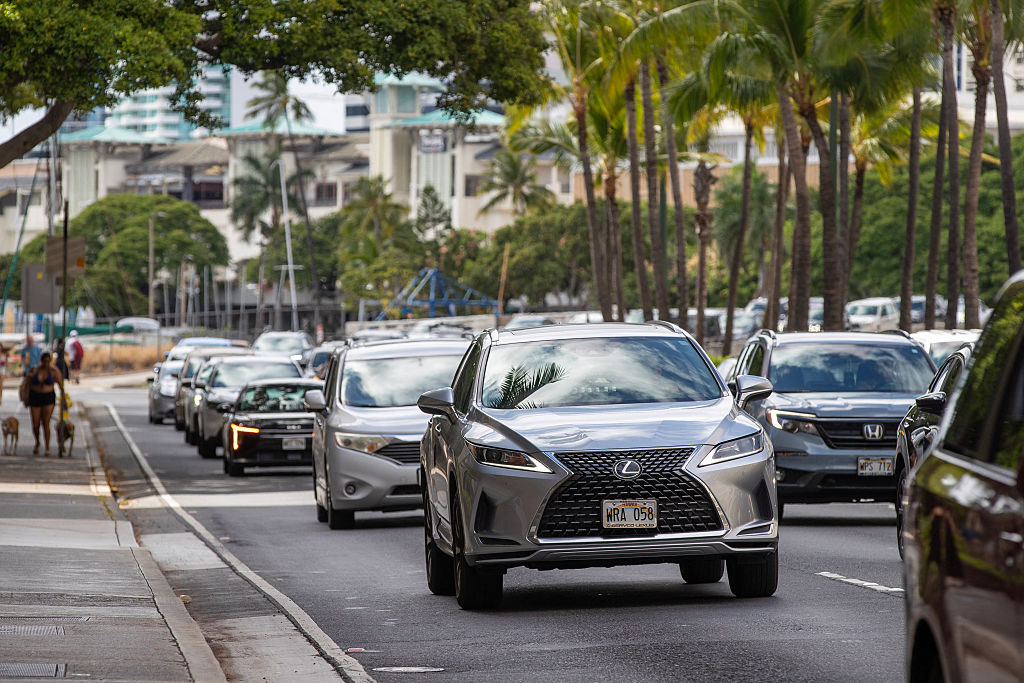
“The roads are really crowded,” said Jenny Welch, a tourist from California visiting Wailea. “There’s one road out of that area. And so we were headed back to our hotel and actually decided to turn around and head back out of the area … traffic’s really bad.”
Welch added that her family was caught off guard. “They had no idea what was happening until their friends in California texted and asked if they were OK. ‘And at that point, we had not heard anything about it,'” she said. “And then about five minutes after that, our phone, the phone alarm started going off, and then the sirens started going off once we were in closer to Wailea. So yeah, it was a surprise for sure.”
As tsunami waves continue to ripple across the Pacific, coastal communities across North America, South America, Asia, and Australia are now on high alert. The scale of this event is global — but the danger is deeply local.
For now, the Pacific holds its breath.












