



The U.N. is pleading for money after reductions in funding under the Trump administration have left some agencies scrambling to stay afloat.
U.N. Secretary-General Antonio Guterres warned in late January that the organization is nearing a financial crisis driven largely by unpaid dues from member states. That warning was echoed Thursday by officials from the U.N. Office of the High Commissioner for Human Rights (OHCHR), who said the agency is now operating in “survival mode” after donor funding dried up.
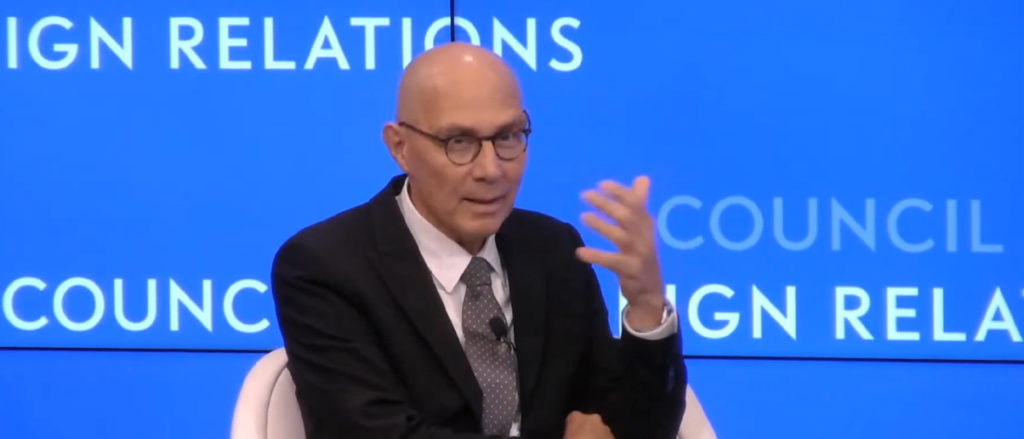
“We are currently in survival mode, delivering under strain,” U.N. Human Rights Commissioner Volker Türk told delegates in a speech in Geneva on Thursday, according to Reuters. “This means more hate speech and attacks, and fewer laws to stop them.”
Human rights need you.
In 2025, @UNHumanRights supported hundreds of thousands of people – a lifeline for the abused & a voice for the silenced. But we are in survival mode. We need to step up investment in this low-cost, high-impact work.
➡️ Our appeal: https://t.co/YUTOzhQSPI pic.twitter.com/10pQZuzEW5— Volker Türk (@volker_turk) February 5, 2026
Since returning to office, President Donald Trump has aggressively moved to reduce U.S. funding for U.N. agencies and programs deemed wasteful, politically biased or hostile to American interests, while pushing reforms aimed at slashing bureaucracy and forcing other nations to shoulder more of the financial burden.
The U.S. led 193 member countries in enacting $570 million in cuts and trimming 2,900 U.N. staff positions, a State Department spokesperson told the Daily Caller News Foundation.
Turk appealed for $400 million to sustain the office, which oversees global human rights monitoring, reporting and advocacy. He said funding shortfalls — driven largely by declining contributions from the U.S. and Europe — have already forced the agency to scale back operations.
While America’s voluntary contributions to agencies such as the U.N. Human Rights Office have been slashed, mandatory payments to the U.N.’s regular budget have also been withheld by multiple nations, including the U.S..
Contributions to the U.N. regular budget are based on economic size, leaving the U.S. responsible for 22% — more than any other country — while China pays roughly 20%. Payments for the regular budget are due Feb. 8, but only 52 of the UN’s 193 member states have paid their 2026 dues as of Friday, according to the U.N.
“The crisis is deepening, threatening programme delivery and risking financial collapse. And the situation will deteriorate further in the near future,” Guterres wrote in a letter to ambassadors dated Jan. 28, according to Reuters.
“Either all Member States honour their obligations to pay in full and on time – or Member States must fundamentally overhaul our financial rules to prevent an imminent financial collapse,” he added.
The U.S. owes over $2 billion for the regular U.N. budget and another $2.4 billion for current and past peacekeeping missions, and $43 million for tribunals, U.N. officials told the outlet.
Trump declined to say Sunday whether the U.S. will release the funds, telling Politico he could “solve the problem very easily” and get other nations to pay their share.
“If they came to Trump and told him, I’d get everybody to pay up, just like I got NATO to pay up,” the president told the outlet. “All I have to do is call these countries … they would send checks within minutes.”
The State Department spokesperson rejected the U.N.’s framing of a budget collapse, telling the DCNF the situation was a “management crisis, not a cash crisis.”
A spokesperson pointed to U.N. staff salaries that are 115% higher than comparable U.S. government positions, generous benefits and pensions, and a more than 30% increase in senior bureaucratic positions in New York over the past two years. The U.N. also spent $340 million on meetings and conferences in 2025, the spokesperson said.
“These misleading chicken-little complaints from the Office of the UN High Commissioner for Human Rights complain about the United States remind us why President Trump decided to leave the Human Rights Council,” the spokesperson said.
The Trump administration withdrew from the organization in February 2025, arguing the council “protected human rights abusers by allowing them to use the organization to shield themselves from scrutiny.”
In January, the Trump administration also announced it would withdraw from dozens of climate-related organizations, many linked to the U.N., saying they did not serve America’s interests.
The spokesperson also questioned whether OHCHR’s “survival mode” would include giving up business class travel for its staff.
Turk’s appeal came just days after he condemned what he described as the U.S. government’s “now-routine abuse and denigration of migrants and refugees” in response to the fatal January shootings of two protestors by Immigration and Customs Enforcement officials in Minnesota.
“Those who dare to speak up or protest peacefully against heavy-handed immigration raids are vilified and threatened by officials, and on occasion subjected to arbitrary violence themselves,” Turk said in a statement. “I call on leaders at all levels in the US to halt the use of scapegoating tactics that seek to distract and divide.”
The White House declined the DCNF’s request for further comment, while the OHCHR did not respond.
All content created by the Daily Caller News Foundation, an independent and nonpartisan newswire service, is available without charge to any legitimate news publisher that can provide a large audience. All republished articles must include our logo, our reporter’s byline and their DCNF affiliation. For any questions about our guidelines or partnering with us, please contact [email protected].