



A mysterious online bettor made over $400,000 on a website called Polymarket by correctly predicting that the U.S. would invade Venezuela and remove President Nicolás Maduro from power. The surprising win has raised questions about whether the person had inside information about a classified military operation.
Polymarket is an online betting platform where users wager cryptocurrency on real-world events. These events can range from political elections to international conflicts. The website does not require users to share personal information with each other, and transactions are recorded on a public blockchain.
The account in question placed 13 bets between December 27 and January 3. All of them focused on a potential U.S. operation in Venezuela and whether Maduro would still be in power by the end of January. According to public records, the total amount wagered was about $33,934.34. The account made its largest bet—over $14,000—on Friday night, just hours before the public learned that U.S. forces had carried out a special mission to capture Maduro and his wife.
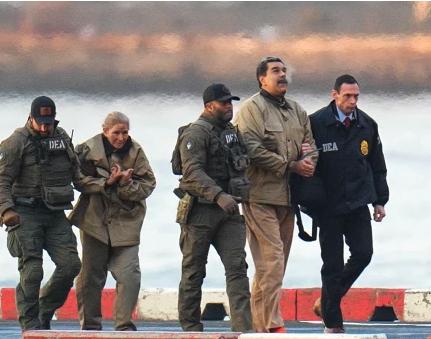
Early Saturday morning, the U.S. military confirmed that the pair had been extradited to the U.S., where Maduro now faces narco-terrorism charges. The mission was reportedly authorized by President Donald Trump before Christmas, but officials say the exact timing wasn’t widely known even within the Pentagon until late Friday.
That same night, the online bettor made the final and largest investment in the prediction market, earning over $400,000 once the outcome was confirmed. The identity of the bettor has not been revealed, but analysts say the person has already cashed out the winnings through a major American cryptocurrency exchange, using Solana.
An account created last night placed a $32,537 bet on the market “Maduro out by January 31, 2026?”
By this morning, the position had won, netting over $400,000 in profit.The account:
• Was brand new (created December 2025)
• Made only four predictions total
• Recorded a… pic.twitter.com/Qnd9kYALyT— DD Geopolitics (@DD_Geopolitics) January 3, 2026


 An account created last night placed a $32,537 bet on the market “Maduro out by January 31, 2026?”
A spokesperson for the blockchain analysis firm Chainalysis said the person did not appear to take steps to hide or launder the money, which could make it easier for regulators or law enforcement to identify them if an investigation is opened.
Four other Polymarket accounts also placed bets related to Maduro’s removal between Thursday and Saturday, with each earning between $7,000 and $14,000. However, these bets were smaller, ranging from $700 to $900. It’s unknown whether those users had access to any nonpublic information or were simply making educated guesses.
Just came across a pretty interesting profile on @Polymarket
Should there be stricter regulations on prediction markets to prevent insider trading?A few hours before the US invasion of Venezuela, they bet just over $30,000 that Maduro would be out by January 31, 2026 – and made over $400,000, a 1,124% gain
Even more interesting – they registered on Polymarket… pic.twitter.com/QaZ5ImhyjX
— Deviron (@0xDeviron) January 3, 2026
This incident has added to growing concerns about how prediction markets could be used by people with inside knowledge. While the idea behind prediction markets is to harness public opinion and data to forecast real events, the lack of clear legal oversight has opened the door to possible misuse.
In a past case, political consultant Sean McElwee allegedly used his access to polling data to place bets on election outcomes while working for a progressive research group. His actions drew scrutiny and raised questions about ethics in political betting.
Prediction markets currently exist in a gray area under U.S. law. Polymarket was previously investigated by the Commodity Futures Trading Commission (CFTC) and agreed to limit access to U.S. users. However, as of late 2025, the CFTC allowed Polymarket to operate more freely in the U.S., and American users are slowly being allowed back onto the platform.
Now, with this latest high-profile betting case linked to a military operation, lawmakers are starting to take notice. Congressman Ritchie Torres (D-NY) plans to introduce the Public Integrity in Financial Prediction Markets Act of 2026. The bill would make it illegal to use nonpublic information to profit from bets placed on these types of platforms.
Legal experts say the courts may need to catch up with how fast this technology is evolving. David Chase, a former SEC attorney, said using secret information to gain an advantage in commodities or stock trading is usually considered fraud. But when it comes to betting markets, the laws are less clear.
For now, it’s not confirmed whether the bettor in this case had inside knowledge or just got extremely lucky. But as prediction markets continue to grow, the chances of someone using them for unfair advantage could become more common — and that’s something regulators may not be able to ignore much longer.