



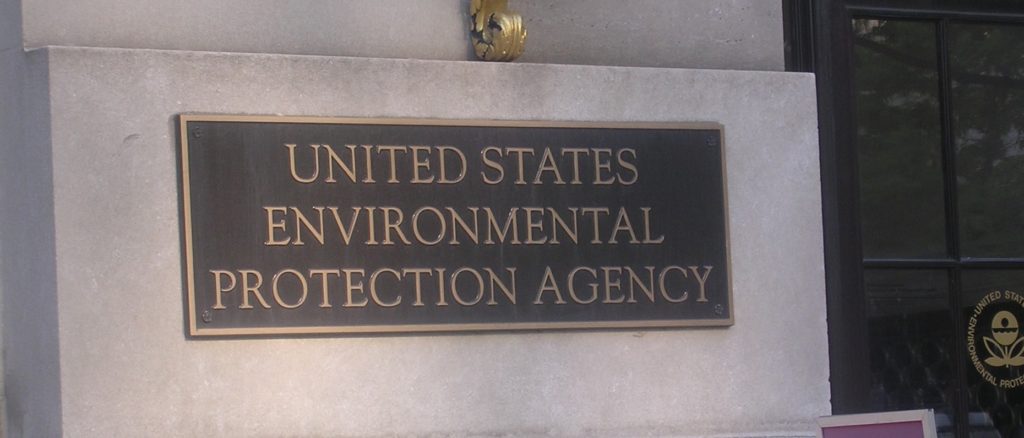

On a crisp, sun-drenched afternoon in the spring of 2023, I found myself walking down Constitution Avenue in Washington, D.C., in front of the William Jefferson Clinton Building, headquarters of the U.S. Environmental Protection Agency (EPA).
Standing in its shadow, I wondered when, or if, sanity would ever return to the building. My mind drifted to the regulatory malfeasance that gave this agency power to treat carbon dioxide (CO2) as a pollutant, the 2009 Endangerment Finding.
For years, this bureaucratic decree masqueraded as settled science. Climate zealots claimed CO2 and other greenhouse gases threatened public health as agents of planetary overheating, ignoring both a paucity of supporting data and contradictory evidence that inexorably accumulated.
Now, three years after my visit, EPA has rescinded the regulation as it applies to motor vehicles. The basis of its action is twofold: First, the agency has concluded that by attempting to regulate greenhouse gases, EPA exceeded its authority under the 1970 Clean Air Act. Second, the environmental effect of regulating tailpipe emissions of greenhouse gases is negligible.
There is more to be done. Reason and good sense would have the EPA remove the Endangerment Finding’s hold over industrial emissions of greenhouse gases, like those coming from power plants, and would undertake to dismantle the rule’s flimsy scientific justifications.
Nevertheless, EPA’s action undermines an ideological foundation for the broad attacks on fossil fuels that have constrained American prosperity and choked the developing world’s aspirations for modern lifestyles.
The 2009 regulation was used to justify the Obama administration’s Clean Power Plan – part of the so-called War on Coal – and tailpipe emissions standards that forced unwanted electric vehicles onto dealership lots. The rule has contributed to the closing of power plants, energy shortages, high electricity prices, and multiple billion-dollar losses for car manufacturers whose customers mostly prefer internal combustion engines. It has also fueled endless litigation against producers of hydrocarbon fuels.
Because CO2 is necessary for all life, beginning with its role in plant photosynthesis, regulation of the gas gave EPA jurisdiction over the entire U.S. economy. Climate crusaders abroad followed EPA’s lead.
Worldwide, the economic waste resulting from the rule is staggering. The Climate Policy Initiative estimates that between 2011 and 2020 that climate spending totaled $4.8 trillion. Estimates for “energy transition investment” – money dumped into the wind, solar and EV rat hole – was $2.3 trillion in 2025 alone.
That is trillions diverted from healthcare, infrastructure, education and genuine alleviation of suffering and advancement of human flourishing. Imagine those resources being directed to improving carbon-intensive energy sectors that have produced the wealthiest and healthiest civilizations in all of history.
Since the dawn of the industrial age, we have witnessed an unprecedented increase in global life expectancy. We have seen a drastic reduction in deaths from natural disasters – not because the weather is milder, but because people are better protected by modern infrastructure and technology made possible by fossil fuels. We have achieved historic highs in agricultural production, feeding a population of 8 billion.
CO2 has played a pivotal role in the greening of the Earth, acting as an atmospheric fertilizer that boosts crop yields and expands forests. Even methane, demonized alongside CO2, is merely a byproduct of a livestock industry essential for providing protein to a ballooning global population. Emissions of neither gas contribute significantly to global temperatures.
Once the EPA designated CO2 a legal hazard, U.S. diplomats, aid agencies and technical experts carried that framing into global climate negotiations, development programs and financing arrangements.
Over time, the EPA’s stance became a de facto reference point for regulators elsewhere. If the U.S. “gold standard” for environmental protection treated CO2 as an endangerment, ministries from Europe to Asia would use similar language in national climate laws.
With the EPA backing away from its regulation of greenhouse gases, developing countries should waste no time in severing whatever restrictions Western climate overseers have placed on their use of fossil fuels. For too long, climate policies have impeded economic growth and denied access to reliable supplies of electricity, to safer indoor fuels for cooking and heating, to refrigeration and to clean water. The result has been higher rates of morbidity and mortality among the world’s poor.
CO2 is not the enemy of humankind. Misguided attempts to criminalize its emissions are!
Vijay Jayaraj is a Science and Research Associate at the CO2 Coalition, Fairfax, Va. He holds an M.S. in environmental sciences from the University of East Anglia and a postgraduate degree in energy management from Robert Gordon University, both in the U.K., and a bachelor’s in engineering from Anna University, India. He served as a research associate with the Changing Oceans Research Unit at University of British Columbia, Canada.
The views and opinions expressed in this commentary are those of the author and do not reflect the official position of the Daily Caller News Foundation.
(Featured Image Media Credit: mccready/Flickr)
All content created by the Daily Caller News Foundation, an independent and nonpartisan newswire service, is available without charge to any legitimate news publisher that can provide a large audience. All republished articles must include our logo, our reporter’s byline and their DCNF affiliation. For any questions about our guidelines or partnering with us, please contact [email protected].