
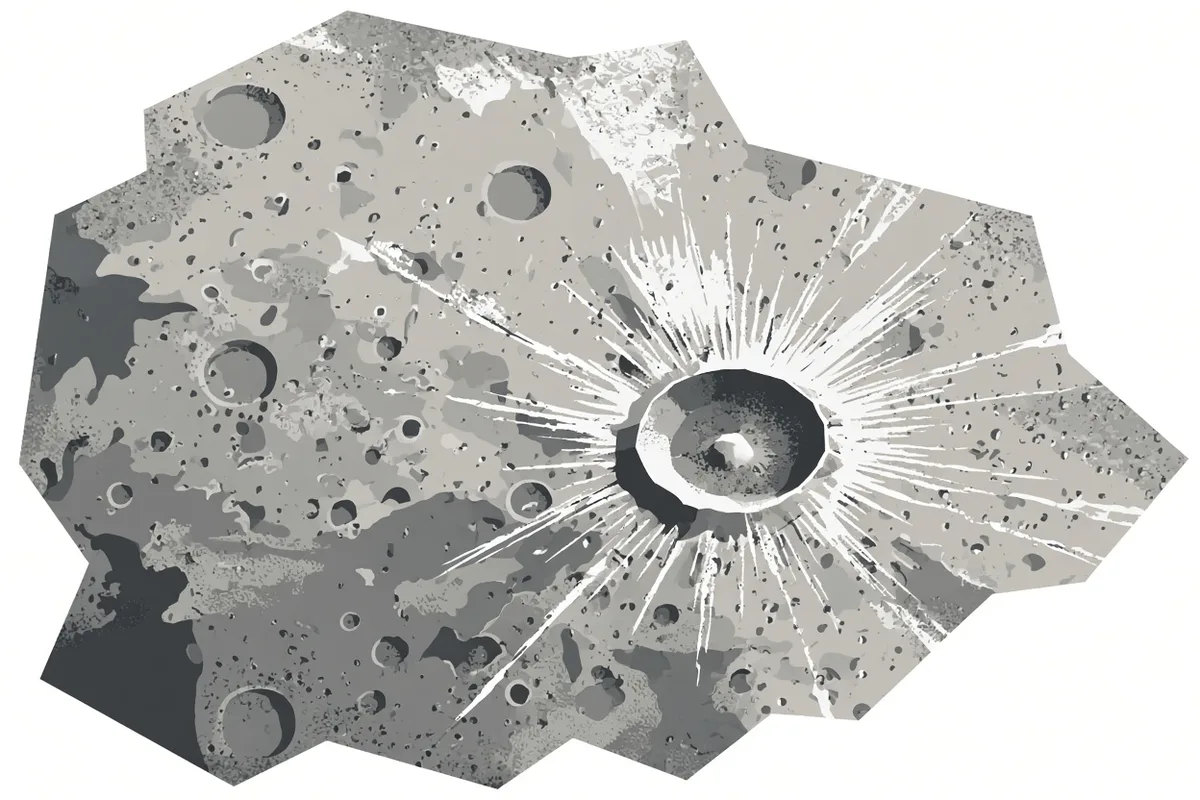
NASA Orbiter Discovers Moon’s Largest Newly Formed Crater
Robert Wagner spotted a bright spot with a dark ring in LRO data: McGetchin crater, 728 feet wide—the Moon’s largest newly formed impact, a 2024 strike scientists call once-in-a-lifetime.
Science · 147 sources · Sep 20, 2026Read it


The journal
Open the journal →The conversation starts in the journal — be the first to post.
About Moon
The Moon is the only natural satellite of Earth. It orbits Earth at an average distance of 384,399 kilometers (238,854 mi). Because the Moon follows an elliptical path, its distance from Earth varies over the year, ranging from 357,000–407,000 kilometers (222,000–253,000 mi). a distance roughly 30 times the width of Earth. It completes an orbit in relation to Earth and the Sun (synodically) every 29.5 days. The Moon and Earth are bound by gravitational attraction, which is stronger on the sides facing each other. The resulting tidal forces are the main driver of Earth's tides, and have pulled the Moon to always face Earth with the same near side. This tidal locking effectively synchronizes the Moon's rotation period to its orbital period.
Everything about Moon →- Inception
- 4527000000 BC
