



The North American Electric Reliability Corporation (NERC) said Thursday that America’s looming electricity demands are outpacing power supply, urging policymakers to focus on reliability.
American energy demand is rapidly growing and energy supply lags behind, as the grid watchdog’s 2025 Long-Term Reliability Assessment released on Thursday noted. Several energy policy experts and top grid regulators have long warned of an impending reliability crisis, citing concerns over stringent mandates and regulations frequently enacted by Democrat politicians.
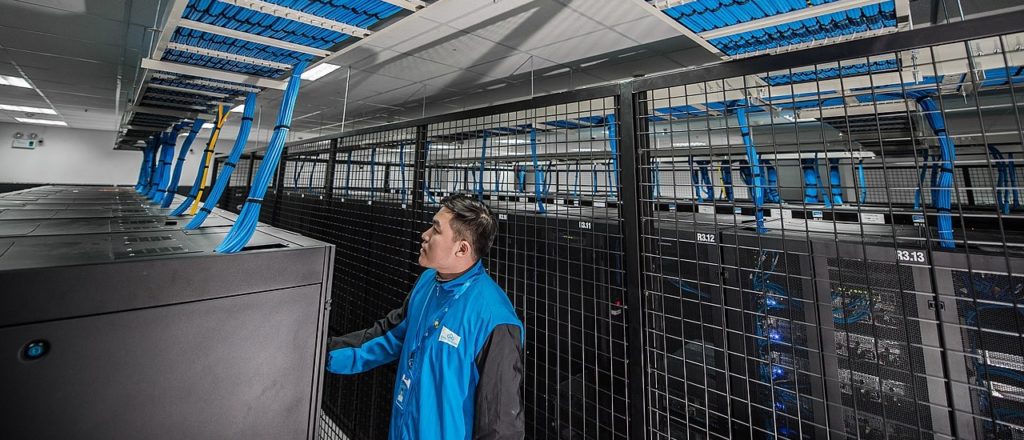
“Projections for resource and transmission growth lag what is needed to support new data centers and other large loads that drive escalating demand forecasts,” NERC’s report reads. “Most new resources in development to come on-line in the next five years consist of battery storage and solar photovoltaic (PV), which are inverter-based and weather-dependent resources that increase the complexity of planning and operating a reliable grid. Meanwhile, more fossil-fired generator retirements loom in the next five years, reducing the amount of generation that has fuel on site and impacting the system’s ability to respond to spikes in demand.”
ltra_infographic_2025 by audreystreb
Several Democrat-led states have enacted strict green energy goals and specific portfolio mandates that distort markets and cut down on dispatchable energy supply, hurting reliability and spiking prices, as a December report from the Institute for Energy Research (IER) noted. Blue states have led the charge in blocking pipelines and fracking while shutting down coal and at times nuclear plants over the past several years in the name of environmentalism.
Instead, Democratic leaders at the federal and state level have championed climate policy and advocated for an energy transition that prioritizes getting “renewable” sources on the grid — which tend to be intermittently available — through government mandates.
“The continuing shift in the resource mix toward weather-dependent resources and less fuel diversity increases risks of supply shortfalls during winter months,” a NERC report summary reads. “Uncertainty and lag in the pace of new resource additions are driving heightened concerns that the industry will not be able to keep up with ascending electricity demand from new data centers and large loads.”
NERC’s report also warned that by 2030, at least five regions could face a “high risk” to grid reliability, including the Midcontinent Independent System Operator, PJM Interconnection (PJM), the Electric Reliability Council of Texas, and the Basin and Northwest subregions of the Western Electricity Coordinating Council. Other grids projected to be at an “elevated risk” include New York’s operator and the Southwest Power Pool.
NERC’s 2024 reliability report explains that state and federal environmental regulations and mandates are mostly responsible for PJM’s predicament.
“The pace of retirements is being driven in large part by these state laws and federal environmental initiatives that create a clear near-term, date-certain requirement for generation to comply or retire. Conversely, there are multiple mandates with renewable portfolio standards (RPS) that account for the majority of over 150 GWs submitted projects,” the report reads. (RELATED:
NERC recommended that states coordinate electric and natural gas system planning and operations in the 2025 reliability report.
NERC’s director of reliability assessments and performance analysis, John Moura, said that “the system is changing faster than the infrastructure needed to support it,” Utility Dive reported.
Though the Trump administration has fought to keep coal plants alive beyond their premature retirement dates, IER argues that states are ultimately responsible for their own energy outcomes.
“More than almost any other product, electricity prices are a direct result of state energy policies because states have the exclusive power to decide which resources supply their grids,” the IER report states. “Electricity prices are especially high in traditionally liberal areas of the country. In total, 86% of states with electricity prices above the national average in the continental U.S. are reliably blue, having voted for the Democratic nominee for president in the 2020 and 2024 elections.”
NERC projected in the report that data center demand will rise 24%
Prominent politicians across party lines like Florida Republican Gov. Ron Desantis and Vermont Independent Sen. Bernie Sanders have been sounding the alarm over consequences regarding rushed data center promulgation. One frequent warning is that artificial intelligence (AI) data centers will drive up power bills and weaken the grid, though some energy analysts argue that new demand is a fragment of the full picture.
“Data center demand is revealing, not causing, this problem,” Emmet Penney, a senior fellow at the Foundation For American Innovation, wrote Thursday for the Free Press. “The antagonism to data centers is providing a ready excuse for continuing to ignore the needs of the power grid rather than giving it the investment it needs. And the inability of builders to make their case for a build-out threatens to make the resistance to fixing our power crisis even worse.”
All content created by the Daily Caller News Foundation, an independent and nonpartisan newswire service, is available without charge to any legitimate news publisher that can provide a large audience. All republished articles must include our logo, our reporter’s byline and their DCNF affiliation. For any questions about our guidelines or partnering with us, please contact [email protected].