



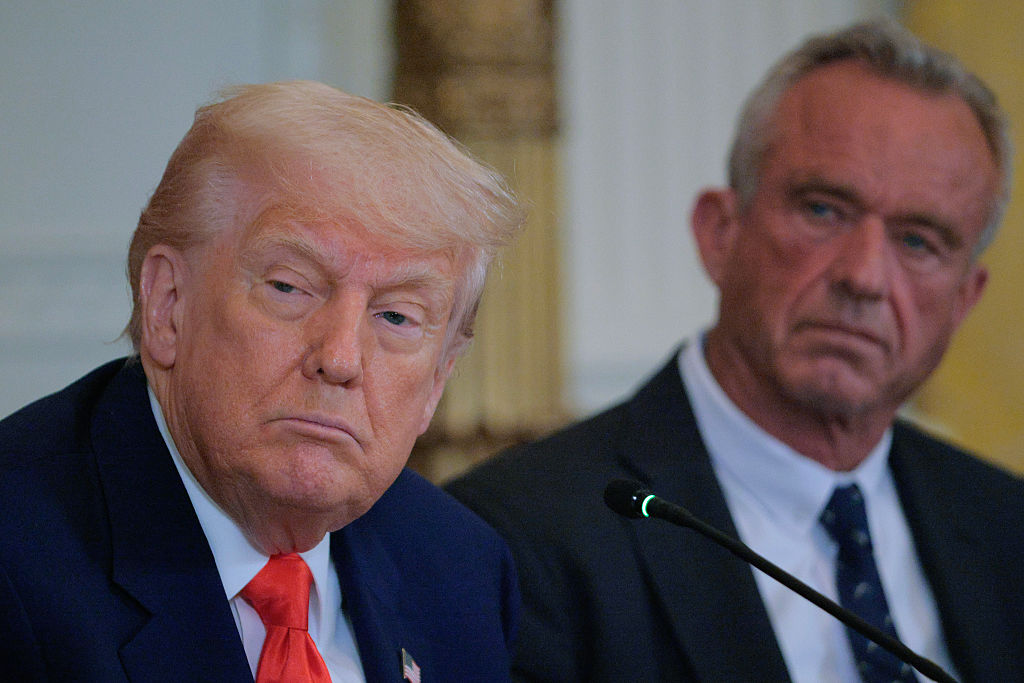
To paraphrase a quote from an old TV commercial, President Donald Trump may not be a doctor, but he played one on TV Monday when he gave his opinion on when children should receive vaccinations.
The president offered advice on the “based on what I feel” during a press conference Monday when he linked Tylenol and vaccinations with autism, The Hill reported.
“We want no mercury in the vaccine. We want no aluminum in the vaccine. The MMR I think should be taken separately,” Trump said, about the measles, mumps and rubella vaccine.
“This is based on what I feel. The mumps, measles and — the three should be taken separately. And it seems to be that when you mix them, there could be a problem,” Trump said. “So there’s no downside in taking them separately. In fact, they think it’s better. So let it be separate.”
Watch:
The focus of Monday’s press conference was to warn pregnant women not to take acetaminophen, the active ingredient in Tylenol. Health officials allege potential links to autism.
Trump also said children should not receive the hepatitis B vaccine until they are 12 years old. The viral infection is sexually transmitted, but it can be spread through used needles and open wounds, the president said.
“You know, I’m making these statements from me,” Trump said. “I’m not making them from them, these doctors.”
Trump said it was “absolutely appropriate” for him to guide the public on vaccines based on his opinion.
The Advisory Committee on Immunization Practices (ACIP) voted to change childhood vaccination schedules by recommending separate MMR and varicella vaccines for children under 4 years old. It put off a vote on changing recommendations for hepatitis B vaccines.
“Hepatitis B is sexually transmitted. There’s no reason to give a baby almost just born hepatitis B [vaccine],” Trump said. “So, I would say wait till the baby is 12 years old and formed and take hepatitis B. And I think if you do those things, it’s going to be a whole different revolution in [a] positive sense.”
Pregnant mothers with hepatitis B can pass it on to their children at birth. Infants who are infected at birth have a 90% chance of developing chronic hepatitis B, the outlet reported.
About a quarter them will die from chronic liver disease.