



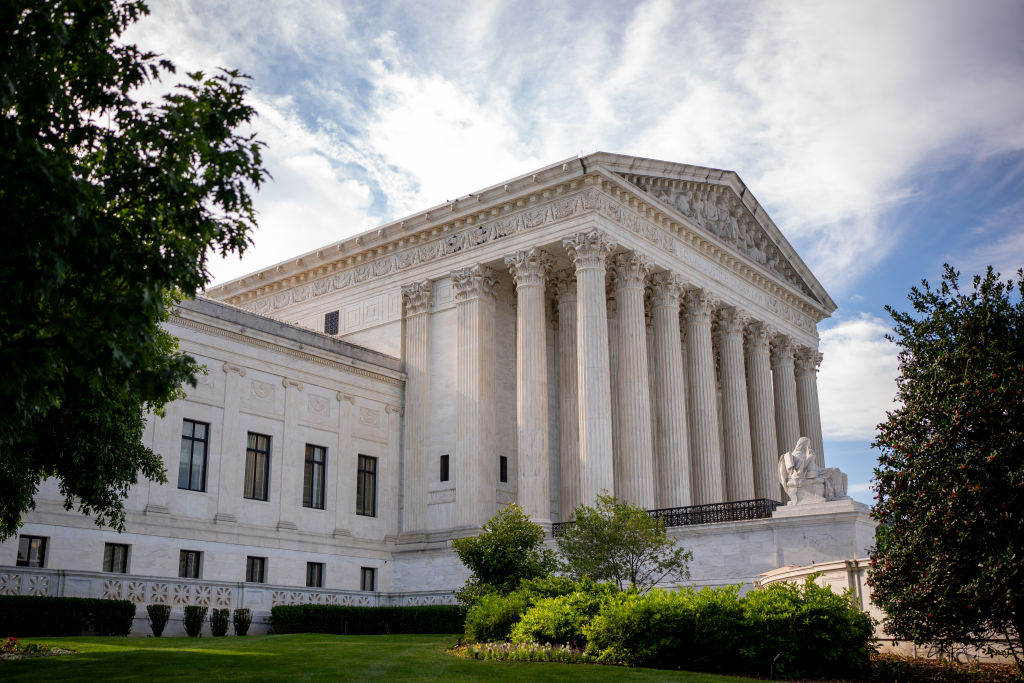
The Supreme Court on Monday debated whether a former Louisiana inmate can seek damages from prison officials who forcibly cut his dreadlocks, a violation of his Rastafari religious beliefs.
According to The Associated Press, the case centers on Damon Landor, who argues that his rights were violated under the Religious Land Use and Institutionalized Persons Act (RLUIPA), a federal law protecting inmates’ religious practices.
During two hours of arguments, the Court’s three liberal justices appeared to support Landor’s claim, but the six conservative justices showed less certainty about allowing lawsuits for money damages under the statute.
“Look, the facts of this case are egregious,” Justice Amy Coney Barrett said, though she noted that every lower court “went the other way.”
Louisiana does not defend the guards’ actions but contends the law doesn’t permit holding officials financially responsible. Lower courts have consistently ruled against such claims, including Landor’s.
Landor served a five-month sentence in 2020 and was transferred to Raymond Laborde Correctional Center for his final weeks. There, guards seized and discarded a court ruling he carried that protected religious hairstyles, then forcibly shaved his head.
After his release, Landor sued, but the 5th U.S. Circuit Court of Appeals dismissed the case, saying the law doesn’t authorize damages. The state has since changed its grooming policy to prevent similar incidents.
The Supreme Court previously allowed Muslim men to sue over the FBI’s no-fly list under a related law, the Religious Freedom Restoration Act — a ruling that could influence Landor’s case.
A decision in Landor v. Louisiana Department of Corrections is expected by spring.